WOMAN CRAZY PART 8 LIST COUNRTY NEW kurang 4th 3th century
https://en.wikipedia.org/wiki/Category:3rd-century_BC_Sri_Lankan_people
https://en.wikipedia.org/wiki/Category:3rd-century_BC_African_people
https://en.wikipedia.org/wiki/Category:3rd-century_BC_Asian_people opo iki
https://en.wikipedia.org/wiki/Category:2nd-century_BC_Germanic_people 105 BC
https://en.wikipedia.org/wiki/Category:1st-century_BC_Berber_people
https://en.wikipedia.org/wiki/Category:1st-century_Armenian_people
https://en.wikipedia.org/wiki/Category:1st-century_Syrian_people
https://en.wikipedia.org/wiki/Category:1st-century_Yemeni_people
https://en.wikipedia.org/wiki/Category:1st-century_people_of_Roman_Egypt
https://en.wikipedia.org/wiki/Category:New_Testament_people
https://en.wikipedia.org/wiki/Berenice_(daughter_of_Salome)
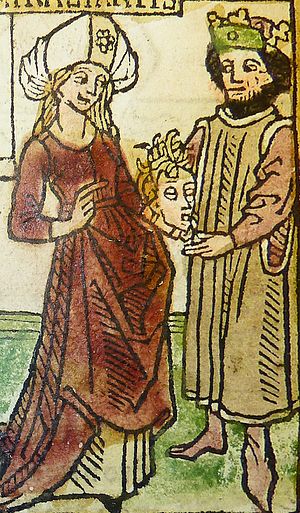 Chiomara was a Galatian noblewoman and the wife of Orgiagon, chieftain of the Tectosagi, one of three Galatian tribes during the Galatian War with Rome, of 189 BC.
Woodcut illustration of Chiomara, printed by Johannes Zainer ca. 1474
https://en.wikipedia.org/wiki/Arsinoe_II
Stratonice (Greek: Στρατονίκη; died about 135 BC) was a princess of Cappadocia and through marriage a queen of Pergamon.
https://en.wikipedia.org/wiki/Apama_II

Illyrian land prior to Roman conquest
Apame IV, sometimes known as Apama IV (Greek: Απάμα Δ΄) was a princess from the Antigonid dynasty. Her father was Philip V, King from 221 BC to 179 BC and her brother was Perseus, King from 179 BC to 167 BC.
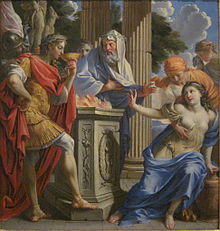 The poisoning of Camma and Synorix in the temple of Diana (Charles Poerson, 17th century). JESUS CHRIST

Alexandra the Maccabee from Nuremberg Chronicle, published in 1493
Aka II of Commagene[1] also known as Aka II or Aka[2] (Greek: Άκα) was a Princess from the Kingdom of Commagene[3] who lived in the second half of the 1st century BC & first half of the 1st century, who was of Armenian, Greek and Median descent.
Aka I of Commagene also known as Aka I (Greek: Άκα) was a Princess from the Kingdom of Commagene, who lived in the 1st century BC. Aka I was of Greek and Armenian descent.
Orodaltis (Greek: Ωροδάλτις) was a princess from Anatolia who lived in the 1st century BC and was a contemporary to the first Roman Emperor Augustus, who ruled from 27 BC to 14 AD.

Territory of Salome I, sister of Herod the Great (in salmon orange) and roman Syria (in red), as given to her in 4 BCE after her brother's death and the partition of his kingdom
Orsabaris,[1] also spelt as Orsobaris[2] (Greek: η Όρσάβαρις, η Ορσοβάριος, meaning in Persian: brilliant Venus,[3] flourished 1st century BC) was a Princess from the Kingdom of Pontus.
Nawidemak was a Kandake of Kush who ruled either early in the 1st century BC or 1st century AD. She is known from the wall relief of her burial chamber, as well as a gold plaque. She may also have been one of the Kandakes referred to in the New Testament of the Bible.
Laodice was a Queen of an unknown Kingdom in Asia. She lived at the time of the Seleucid king of Syria Antiochus X Eusebes who reigned 95 BC-92 or 88 BC.
Shaqilath II (fl. 70), was a queen of the Nabataeans.

Engraving depicting Maria Prophetissima from Michael Maier's book Symbola Aurea Mensae Duodecim Nationum (1617).

coin: Kamnaskires and Anzaze
Laodice VII Thea Philadelphus (Greek: Λαοδίκη ἡ Θεά καὶ Φιλάδελφος, "Laodice the goddess and brother-loving", born after 122 BC–?), was a Greek–Syrian princess of the Seleucid Empire and future queen of Commagene. She was the daughter of Greek–Syrian King Antiochus VIII Grypus and Greek Ptolemaic Princess Cleopatra Tryphaena (see Cleopatra VI of Egypt), a daughter of Ptolemy VIII Physcon.
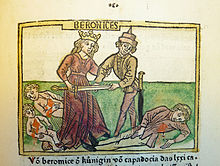
Woodcut illustration of Berenice (or Laodice) of Cappadocia, wife of Ariarathes VI from an incunable German translation by Heinrich Steinhöwel of Giovanni Boccaccio's De mulieribus claris, printed by Johann Zainer at Ulm ca. 1474
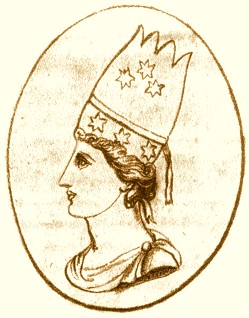 Laodice (130/129 BC – about 90 BC) w
Queen Erato of the Artaxiad Dynasty
Liang Na (Chinese: 梁妠; 116–150), formally Empress Shunlie (順烈皇后, literally "the kind and achieving empress"), was an empress during the Han Dynasty. Her husband was Emperor Shun of Han. She later served as regent for his son Emperor Chong, and the two subsequent emperors from collateral lines, Emperor Zhi and Emperor Huan. As empress dowager and regent, she appeared to be diligent and honest, but she overly trusted her violent and corrupt brother Liang Ji, whose autocratic nature would eventually draw a coup d'etat from Emperor Huan after Empress Dowager Liang's death, leading to the destruction of the Liang clan.
Empress Yan Ji (閻姬) (died 126), formally Empress Ansi (安思皇后, literally "the peaceful and deep-thinking empress"), was an empress during Han Dynasty. Her husband was Emperor An. She was known for her conspiratorial and nepotistic behavior, both as empress and (briefly) as empress dowager. However, her plan, along with her brothers, to hold on to power for a long time ultimately resulted in failure and the deaths of her clan members.
Bruriah (Hebrew: ברוריה, also Beruriah) is one of several women quoted as a sage in the Talmud. She was the wife of the Tanna Rabbi Meir and the daughter of Hananiah ben Teradion.
Amanikhatashan was a ruling queen of Kush (c. 62-c. 85).[1][2][3][4] Her proper title is Kandake. Her pyramid is at Meroe in the Sudan. She was preceded by Amanitenmemide [5](c. 50-62) and succeeded by Teritnide.
 kandake
Relief depicting Kandake Amanitore
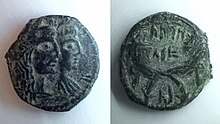 Nabataean Kingdom, Aretas IV and Shaqilat, 9 b. C. - 40 a. D., AE18. Obverse: Jugate busts of Aretas IV ad Shaqilat; reverse: Crossed cornucopia; name of Aretas IV and Shaqilath in Nabataean script. Grading VF[1][2]
https://en.wikipedia.org/wiki/Category:3rd-century_BC_African_people
https://en.wikipedia.org/wiki/Category:3rd-century_BC_Asian_people opo iki
https://en.wikipedia.org/wiki/Category:2nd-century_BC_Germanic_people 105 BC
https://en.wikipedia.org/wiki/Category:1st-century_BC_Berber_people
https://en.wikipedia.org/wiki/Category:1st-century_Armenian_people
https://en.wikipedia.org/wiki/Category:1st-century_Syrian_people
https://en.wikipedia.org/wiki/Category:1st-century_Yemeni_people
https://en.wikipedia.org/wiki/Category:1st-century_people_of_Roman_Egypt
https://en.wikipedia.org/wiki/Category:New_Testament_people
https://en.wikipedia.org/wiki/Berenice_(daughter_of_Salome)
Athenais Philostorgos I, her surname can be spelt as Philostorgus (Greek: η Άθηναἷς Φιλόστοργος Α', meaning Athenais the loving one, flourished 1st century BC) was a Queen of Cappadocia.
Athenais was a Greek noblewoman of obscure origins. She was the wife of the Cappadocian Persian nobleman and King Ariobarzanes I Philoromaios [1] and through her marriage became a Queen of Cappadocia. Ariobarzanes I reigned as King of Cappadocia from 95 to 63/62 BC.
Athenais Philostorgos II (Greek: η Άθηναἷς Φιλόστοργος Β), also known as Athenais Philostorgus II or Athenais of Pontus, was a princess from the Kingdom of Pontus and, through marriage, a Roman Client Queen of Cappadocia. Her name in Greek translates to "Athenais the loving one". The child of King Mithridates VI of Pontus from his second marriage to the Anatolian Greek Macedonian noblewoman and Pontian Queen Monime, she was a princess of Persian and Greek Macedonian ancestry.[1] Born and raised in the Kingdom of Pontos, her parents gave her a traditional ancient Greek name.
Athenais married the Cappadocian Prince and later King Ariobarzanes II Philopator,[2] who was of Persian and Greek descent. Ariobarzanes II succeeded his father as King in 63 BC-62 BC
| Shanakdakheto | |||||
|---|---|---|---|---|---|
| Ruling Queen of Kush | |||||

Shanakdakheto statue (Cairo Museum)
| |||||
| Reign | (ca. 170–160 BCE) or (ca. 170–150 BCE) | ||||
| Predecessor | Unknown Qore | ||||
| Successor | Tanyidamani | ||||
| Burial | ca. 160 BCE
Pyramid at Meroë (Beg. N11)
| ||||
| |||||
| Dynasty | Meroitic | ||||
Iotapa (born in 43 BC-unknown date of death) was a princess of Media Atropatene, daughter of King Artavasdes I of Media Atropatene. She was Queen consort of King Mithridates III of Commagene.
| Cleopatra IV | |
|---|---|
| Queen of Egypt | |
| Reign | 116–115 BC |
| Coronation | 116 BC |
| Predecessor | Ptolemy VIII Cleopatra III |
| Successor | Ptolemy IX Cleopatra III |
| Co-rulers | Ptolemy IX Cleopatra III |
| Seleucid Queen | |
| Tenure | 114–112 BC (in opposition to queen consort Tryphaena) |
| Coronation | 114 BC |
| Predecessor | Tryphaena |
| Successor | Cleopatra Selene |
| Born | c. 138 – 135 BC |
| Died | 112 BC (aged 22–26) |
| Spouse |
|
| Issue |
|
| Dynasty | Ptolemaic |
| Father | Ptolemy VIII Physcon |
| Mother | Cleopatra III of Egypt |
 Chiomara was a Galatian noblewoman and the wife of Orgiagon, chieftain of the Tectosagi, one of three Galatian tribes during the Galatian War with Rome, of 189 BC.
Laodice (sister-wife of Mithridates VI of Pontus)
Laodice (130/129 BC – about 90 BC)
Laodice (wife of Mithridates III of Pontus)
Laodice (fl. late 3rd – early 2nd centuries BCE)
| Laodice V | |
|---|---|

Coin of Demetrius I with Laodice V (possible)
| |
| Queen consort of Macedon | |
| Tenure | 178/177 BC – 168 BC |
| Coronation | 178 or 177 BC |
| Predecessor | Polycratia |
| Successor | Office abolished |
| Queen consort of the Seleucid Empire | |
| Tenure | 161 BC–150 BC (possible, unconfirmed) |
| Predecessor | Laodice IV |
| Successor | Apama or Cleopatra Thea |
| Born | Seleucid Empire |
| Died | 150 BC |
| Spouse |
|
| Issue |
|
| Dynasty | Seleucid |
| Father | Seleucus IV Philopator |
| Mother | Laodice IV |
Laodice IV (flourished second half 3rd century BC and first half 2nd century BC) was a Greek Princess, Head Priestess and Queen of the Seleucid Empire. Antiochus III appointed Laodice in 193 BC, as the chief priestess of the state cult dedicated to her late mother Laodice III in Media. She later was married to three Kings of the Seleucid Empire, all her brothers.
Thalassia (fl. 2nd century BCE) was the wife of Hyspaosines, king of Characene, a small kingdom on the Persian gulf in what is now known as Iraq. Thalassia is a rare Greek name.
Thalassia is known from cuneiform texts found in Babylon, where she appears as Talasi'asu. In these texts it is reported that after the death of her husband in 124 BCE, she tried to install their son on the throne of the kingdom. The son is not named and therefore it remains open whether she was successful. The king following Hyspaosines was Apodakos, who might be this son. Thalassia is also known from a building inscription found in Bahrain, where she is mentioned together with her husband. In this inscription, the Greek version of her name is attested.
Amastris
| |
|---|---|

Didrachm of Amastris. Amastris was the first woman to issue coins in her own name. British Museum.
| |
| Born | |
| Died | c. 284 BC |
| Spouse(s) | Craterus Dionysius Lysimachus |
| Children | Clearchus II and Oxyathres |
| Parent(s) |
|
| Arsinoe III Thea Philopator | |||||
|---|---|---|---|---|---|
| Queen of Egypt | |||||
 | |||||
| Born | c. 246–245 BC | ||||
| Died | 204 BC | ||||
| Spouse | Ptolemy IV | ||||
| Issue | Ptolemy V Epiphanes | ||||
| |||||
| Dynasty | Ptolemaic | ||||
| Father | Ptolemy III | ||||
| Mother | Berenice II | ||||
Stratonice (Greek: Στρατονίκη; died about 135 BC) was a princess of Cappadocia and through marriage a queen of Pergamon.
Nicaea (fl. 245 BC), was the spouse of Alexander of Corinth and queen of Macedon as the spouse of Demetrius II of Macedon.
Olympias (in Greek Ὀλυμπιάς, pronounced [olympiás]; lived 3rd century BC) was a queen and regent of Epirus.
She was daughter of Pyrrhus, king of Epirus and his first wife Antigone. She was the wife of her own paternal half-brother Alexander II.
After his death she assumed the regency of the kingdom on behalf of her two sons, Pyrrhus II and Ptolemy; and in order to strengthen herself against the Aetolian League she gave before 239 BC
| Queen Teuta of Illyria | |
|---|---|
 | |
| Queen[A] of the Ardiaei | |
| Reign | 231–227 BC[1] |
| Successor | Gentius |
| Burial |
Unknown, tomb undiscovered.
|
| Spouse | Agron |
| House | Ardiaei |
Laodice (wife of Mithridates II of Pontus)
Laodice (Greek: Λαοδίκη; flourished 3rd century BC) was a Greek Princess of the Seleucid Empire. She was one of the daughters and youngest child born to the Seleucid Monarchs Antiochus II Theos and Laodice I.[1] Among her siblings were her brothers Seleucus II Callinicus and Antiochus Hierax. Laodice was born and raised in the Seleucid Empire.
Anywhere from 245 BC to 239 BC
Laodice (wife of Mithridates III of Pontus)
Laodice (fl. late 3rd – early 2nd centuries BCE)
Sanghamitra
| |
|---|---|
சங்கமித்திரை
| |

Sangamitta Statue at a Monastery in Sri Lanka
| |
| Other names | Sanghamitrā (Sanskrit) |
| Personal | |
| Born | 281 BC |
| Died | 202 BC |
| Resting place | Sri Lanka |
| Religion | Buddhism |
| Nationality | Indian |
| Spouse | Aggibrahmā |
| Children | Son – Sumana |
| Parents | |
| Sect | Theravada |
| Known for | Establishing a Theravāda Buddhist nunnery in Sri Lanka |
| Other names | Sanghamitrā (Sanskrit) |
| Stratonice | |
|---|---|

Antiochus I and Stratonice by Jacques-Louis David (1774)
| |
| Queen consort of the Seleucid Empire | |
| Tenure | 300–294 BC 281–268 BC |
| Coronation | 300 BC at Rhosus, on the Pierian coast in Macedonia |
| Born | c. 317 BC |
| Died | September/October 254 BC (aged 62 or 63) Sardis |
| Spouse | Seleucus I Nicator (300–294 BC) Antiochus I Soter (294–261 BC) |
| Issue |
|
| House | Antipatrid |
| Father | Demetrius Poliorcetes |
| Mother | Phila |
Stratonice of Cappadocia
Stratonice (Greek: Στρατονίκη; fl. 3rd century BC) was a princess of the Seleucid Empire. She was one of the daughters born to the Seleucid Monarchs Antiochus II Theos and Laodice I.[1] Among her brothers was the Seleucid King Seleucus II Callinicus and prince Antiochus Hierax.
In c. 257 BC, Antiochus II Theos arranged for Stratonice to marry Ariarathes III[2]. Between 255 BC-250 BC, Antiochus II Theos recognized the Seleucid client state of Cappadocia to become an independent kingdom. In 255 BC, Ariarathes III of Cappadocia started co-ruling with his father, Ariamnes II. Ariarathes III would later proclaim himself as the first king of Cappadocia.[2]
Phila (daughter of Seleucus)
Phila (Greek: Φίλα) a daughter of Seleucus I Nicator and Stratonice. She became the wife of Antigonus II Gonatas and was mother of Demetrius II Aetolicus.[1][2]
| Padmavati | |
|---|---|
| Queen | |
| Died | 263 BC |
| Spouse | Ashoka |
| Issue | Kunala |
| Dynasty | Maurya |
Laodice of Pontus
Laodice (in Greek Λαοδικη; lived in the 3rd century BC), was a princess of Pontus and was one of the daughters of Mithridates II of Pontus and Laodice. Her sister was Laodice III, the first wife of Antiochus III the Great [1], and her brother was Mithridates III of Pontus. She married her distant maternal cousin, the Seleucid general Achaeus. When Achaeus fell into the power of Antiochus III (213 BC), Laodice was left in possession of the citadel of Sardis, in which she held out for a time, but she was quickly compelled by the dissensions among her own troops to surrender to Antiochus III.[2] Polybius incidentally mentions that she was brought up before her marriage at Selge, in Pisidia (modern Turkey), under the care of Logbasis, a citizen of that place.[3]
| Laodice II | |
|---|---|
| Queen consort of the Seleucid Empire | |
| Spouse | Seleucus II Callinicus |
| Issue | |
| Father | Achaeus |
| Laodice IV | |
|---|---|
| Head Priestess of the Seleucid Empire | |
| Queen consort of the Seleucid Empire | |
| Tenure | 196–193 BC (with Laodice III) |
| Predecessor | Laodice III |
| Successor | Laodice III |
| Queen consort of the Seleucid Empire (Queen consort of Syria) | |
| Tenure | 187–175 BC |
| Predecessor | Euboea |
| Successor | Herself |
| Queen consort of the Seleucid Empire (Queen consort of Syria) | |
| Tenure | 175–163 BC |
| Predecessor | Herself |
| Successor | Unknown (Antiochus V Eupator unmarried, consort of Timarchus unknown) |
| Born | Seleucid Empire |
| Spouse | |
| Issue | |
| Dynasty | Seleucid |
| Father | Antiochus III the Great |
| Mother | Laodice III |
| Occupation | Priestess |
| Laodice III | |
|---|---|
| Princess of Pontus | |
| Queen consort of the Seleucid Empire | |
| Tenure | c. 222 BC – c. 191 BC |
| Coronation | c. 222 BC (ceremony at Zeugma) |
| Predecessor | Consort of Seleucus III Ceraunus |
| Successor | Euboea |
| Died | after 176 BC |
| Spouse | Antiochus III the Great |
| Issue |
|
| Dynasty | Seleucid |
| Father | Mithridates II of Pontus |
| Mother | Laodice |
| Laodice I | |
|---|---|
| Queen consort of the Seleucid Empire | |
| Died | before 236 BC |
| Spouse | Antiochus II Theos |
| Issue | |
| Father | Achaeus |
| Karuvaki | |
|---|---|
| Empress consort of the Maurya Empire | |
| Born | 288 BC Kalinga, India |
| Spouse | Ashoka |
| Issue | Tivala (son) |
| House | Maurya |
| Religion | Buddhism |

| Deidamia II | |
|---|---|
| Queen of Epirus | |
| Reign | 235 - c. 231 BC |
| Predecessor | Ptolemy of Epirus |
| Successor | Epirote Republic |
| Died | c. 233 BC |
| House | Aeacidae |
| Father | Pyrrhus II of Epirus |
| Religion | Ancient Greek religion |
| Etazeta of Bithynia | |
|---|---|
| Rulers of Bithynia | |
| Reign | c. 255-254 BC |
| Predecessor | Nicomedes I |
| Successor | Ziaelas |
| Berenice Phernophorus | |
|---|---|
| Seleucid Queen | |
| Tenure | 252 - 246 BC |
| Successor | Ptolemy III Euergetes |
| Born | c. 275 BC Alexandria |
| Died | September/October 246 BC Antioch |
| Spouse | Antiochus II Theos |
| Issue | Antiochus |
| House | Ptolemaic dynasty |
| Father | Ptolemy II Philadelphus |
| Mother | Arsinoe I |
| Rhodogune | |
|---|---|

Anachronistic painting of Rhodogune with Cleopatra II of Egypt by the 18th-century French painter Charles-Antoine Coypel. The Seleucid ruler Antiochus VIII Grypus is to the far right.
| |
| Spouse | Demetrius II Nicator |
| Dynasty | Arsacid |
| Father | Mithridates I |
| Religion | Zoroastrianism |
Nysa or Nyssa (Greek: Νύσ(σ)α, flourished second half of 2nd century BC) was a Princess from the Kingdom of Cappadocia in Anatolia.
Nysa (wife of Pharnaces I of Pontus)
| Nysa | |
|---|---|
| Queen of Pontus | |
| Spouse | Pharnaces I of Pontus |
| Issue | Mithridates V of Pontus, Nysa of Cappadocia |
| Father | Antiochus |
| Mother | Laodice IV |
Nysa or Nyssa (Greek: Νύσ(σ)α, flourished early 2nd century BC) was a Greek Seleucid princess and a queen of the Kingdom of Pontus.
Laodice VII Thea Philadelphus (Greek: Λαοδίκη ἡ Θεά καὶ Φιλάδελφος, "Laodice the goddess and brother-loving", born after 122 BC–?), was a Greek–Syrian princess of the Seleucid Empire and future queen of Commagene. She was the daughter of Greek–Syrian King Antiochus VIII Grypus and Greek Ptolemaic Princess Cleopatra Tryphaena (see Cleopatra VI of Egypt), a daughter of Ptolemy VIII Physcon.
Laodice married Mithridates I Callinicus, a prince and future king from the Kingdom of Commagene. The fathers of Laodice and Mithridates had arranged their marriage as part of a peace alliance between their kingdoms. Mithridates embraced the Greek culture. Laodice bore Mithridates, a son Antiochus I Theos of Commagene (c. 86 BC–38 BC). Antiochus became a prince and future king of Commagene.
The name Antiochis, in Greek Ἀντιoχίς is the female name of Antiochus. Antiochis in Greek antiquity may refer to:
| Salome Alexandra | |
|---|---|

Salome Alexandra, from Guillaume Rouillé's Promptuarii Iconum Insigniorum
| |
| Queen of Judaea | |
| Predecessor | Alexander Jannaeus |
| Successor | Hyrcanus II |
| Spouse | Aristobulus I (c. 104–103 BCE), Alexander Jannaeus (c. 103 – 76 BCE), then widow after. |
| Religion | Judaism |
Iotapa (born c. 20 BC) i
Iotapa (spouse of Antiochus III)
Iotapa (spouse of Sampsiceramus II)
Iotapa (born around 20 BC-unknown date of death) was a princess of Commagene, daughter of King Mithridates III of Commagene, Queen consort of Syrian King Sampsiceramus II of Emesa.
Eunoë
| |
|---|---|

Eunoë from Magnum ac Novum Opus
| |
| Known for | Queen of Mauretania, Julius Caesar's mistress |
| Spouse(s) | Bogudes |
Saint Elizabeth
| |
|---|---|

Elizabeth (left) visited by Mary, the Visitation, by Philippe de Champaigne
| |
| Righteous | |
| Born | 1st century BC Hebron |
| Died | 1st century BC (or early AD) (probably Hebron) |
| Venerated in | Roman Catholic Church Eastern Orthodox Church Oriental Orthodox Church Anglican Church Lutheran Church Islam |
| Canonized | Pre-Congregation |
| Feast | November 5 (Roman Catholic, Lutheran) September 5 (Eastern Orthodox, Anglican) |
| Patronage | Pregnant women |
Antiochis of Commagene (Ancient Greek: Aντιoχίς) — was a Princess from the Kingdom of Commagene, who lived in the 1st century BC. She was of Greek and Armenian descent.


Aka II of Commagene[1] also known as Aka II or Aka[2] (Greek: Άκα) was a Princess from the Kingdom of Commagene[3] who lived in the second half of the 1st century BC & first half of the 1st century, who was of Armenian, Greek and Median descent.
Aka I of Commagene also known as Aka I (Greek: Άκα) was a Princess from the Kingdom of Commagene, who lived in the 1st century BC. Aka I was of Greek and Armenian descent.
| Adobogiona | |
|---|---|
| Born | c. 80 BC |
| Died | c. 50 BC |
| Spouse | Brogitarus of Galatia |
| Issue | Amyntas of Galatia |
| Father | Deiotarus of Galatia |
| Mother | Berenice, Princess of Pergamon |
Orodaltis (Greek: Ωροδάλτις) was a princess from Anatolia who lived in the 1st century BC and was a contemporary to the first Roman Emperor Augustus, who ruled from 27 BC to 14 AD.

| Pythodorida | |
|---|---|
| Queen of Pontus Queen consort of the Bosporan Kingdom Queen consort of Cilicia Queen consort of Cappadocia | |
| Born | 30 BC or 29 BC Smyrna |
| Died | AD 38 (aged 67 or 68) Pontus |
| Spouse | King Polemon I of Pontus King Archelaus of Cappadocia |
| Issue | Artaxias III of Armenia Polemon II of Pontus Antonia Tryphaena, Queen of Thrace |
| Father | Pythodoros of Tralles |
| Mother | Antonia |
Nawidemak was a Kandake of Kush who ruled either early in the 1st century BC or 1st century AD. She is known from the wall relief of her burial chamber, as well as a gold plaque. She may also have been one of the Kandakes referred to in the New Testament of the Bible.
| Musa | |
|---|---|
 | |
| Queen of the Parthian Empire | |
| Reign | 2 BC – 2 AD |
| Predecessor | Phraates IV |
| Successor | Orodes III |
| Co-ruler | Phraates V (2 BC – 2 AD) |
| Died | 2 AD |
| Spouse | Phraates IV |
| Issue | Phraates V |
Laodice was a Queen of an unknown Kingdom in Asia. She lived at the time of the Seleucid king of Syria Antiochus X Eusebes who reigned 95 BC-92 or 88 BC.
Shaqilath II (fl. 70), was a queen of the Nabataeans.
| Trưng Sisters Queen of Me Linh | |

The Trưng sisters ride elephants into battle in this Đông Hồ style painting.
| |
| Vietnamese | Hai Bà Trưng |
|---|---|
| Hán-Nôm | 𠄩婆徵 |
| Literal meaning | Two ladies Trưng |
Aka II of Commagene[1] also known as Aka II or Aka[2] (Greek: Άκα) was a Princess from the Kingdom of Commagene[3] who lived in the second half of the 1st century BC & first half of the 1st century, who was of Armenian, Greek and Median descent.
The name Antiochis, in Greek Ἀντιoχίς is the female name of Antiochus. Antiochis in Greek antiquity may refer to:
Berenice was the daughter of Mariamne, daughter of Herod Agrippa I, and Julius Archelaus[1], son of Chelcias (maybe Hilkiya in Hebrew who was a friend and an officer at the court).[2] She was born sometime after 50 AD. After her parents had divorced, she lived with her mother in Alexandria.[3]
Ima Shalom (1st century CE) is one of the few women who are named and quoted in the Talmud.[1][2][3] She was the wife of Eliezer ben Hurcanus, a prominent Mishnaic sage, and the sister of Rabban Gamaliel II of Yavneh, the first person to lead the Sanhedrin as Nasi after the fall of the Second Temple, which occurred in 70 CE.
Ganna (seeress)
Ganna (Greek Γάννα) was a seeress among the Semnones, a Germanic people. She was the successor of Veleda at the end of the 1st century. She was politically active and acted as a diplomat and representative of her tribe in negotiations with Roman Emperor Domitian (ruled 81–96).
Drusilla of Mauretania (Greek: Δρουσίλλη) may be the Drusilla mentioned by Tacitus as a granddaughter of Antonius and Cleopatra. If so, she would have been a princess of Mauretania, the youngest child of queen Cleopatra Selene II and king Juba II and a sister to king Ptolemy of Mauretania. Her birthdate is uncertain but is thought to be about 8 BCE.[1]
Iotapa (born c. 20 BC) is a daughter of King Mithridates III of Commagene. She reigned as Queen of Commagene after marrying her King brother Antiochus III.
Iotapa (born around 20 BC-unknown date of death) was a princess of Commagene, daughter of King Mithridates III of Commagene, Queen consort of Syrian King Sampsiceramus II of Emesa.
Iotapa (born c. 20 BC) is a daughter of King Mithridates III of Commagene. She reigned as Queen of Commagene after marrying her King brother Antiochus III.
Iotapa (born around 20 BC-unknown date of death) was a princess of Commagene, daughter of King Mithridates III of Commagene, Queen consort of Syrian King Sampsiceramus II of Emesa.
Iotapa (daughter of Sampsiceramus II)
Iotapa (daughter of Artavasdes I)
| Julia Iotapa | |
|---|---|

Coins of Antiochus IV Epiphanes of Commagene and his wife Julia Iotapa
| |
| Queen of Commagene | |
| Predecessor | Sames II Theosebes Dikaios |
| Successor | Antiochus I Theos of Commagene |
| Spouse | Antiochus IV of Commagene |
| Issue | Prince Gaius Prince Callinicus Iotapa, Queen of Cetis |
| Dynasty | Orontid Dynasty |
| Father | Antiochus III of Commagene |
| Mother | Iotapa (spouse of Antiochus III) |

Martha daughter of Boethus (d. AD 70), in the Mishnah and Babylonian Talmud, was one of the richest women in Jerusalem in the period prior to the destruction of the Second Temple in 70 C.E. (Talmud Gittin 56a; see also Talmud Ketubot 104a.)
| Salome | |
|---|---|
| Queen of Chalcis and Armenia Minor | |
.jpg)
Salome with the Head of the Baptist, 1761, Mariano Salvador Maella
| |
| Spouse | Philip the Tetrarch Aristobulus of Chalcis |
| Father | Herod II |
| Mother | Herodias |
| Salome Alexandra | |
|---|---|
Salome Alexandra, from Guillaume Rouillé's Promptuarii Iconum Insigniorum
| |
| Queen of Judaea | |
| Predecessor | Alexander Jannaeus |
| Successor | Hyrcanus II |
| Spouse | Aristobulus I (c. 104–103 BCE), Alexander Jannaeus (c. 103 – 76 BCE), then widow after. |
| Religion | Judaism |
| Amanishakheto | |
|---|---|
| Kushite Queen of Meroe | |

Stele of Amanishakheto (center) from the temple of Amun in Naqa
| |
| Predecessor | Amanirenas |
| Successor | Amanitore |
| Died | 1 |
| Burial |
Meroe (Beg. N 6)
|
| Amanitore | |
|---|---|
| Queen of Kush | |

Amanitore at Wad ban Naqa
| |
| Reign | 1 BCE – 20 CE |
| Predecessor | Teriteqas (50 BCE–1 BCE)[1] |
| Successor | Kandake Amanitaraqide[1] |
| Born | BCE |
| Died | 20 CE |
| Burial |
Pyramid at Meroë
|
| Egyptian | Merkare |
| Dynasty | Meroitic |
| Arsinoë IV | |
|---|---|

Rescue of Arsinoe, by Jacopo Tintoretto, 1555-1556
| |
| Queen of Egypt | |
| Reign | September 48 BC with Ptolemy XIII (December 48 – January 47 BC) |
| Successor | Ptolemy XIV of Egypt and Cleopatra VII |
| Born | betw. 68 – 59 BC Alexandria, Egypt |
| Died | 41 BC Ephesus |
| Burial | |
| Dynasty | Ptolemaic |
| Father | Ptolemy XII Auletes |
| Mother | Unknown |

| Anula | |
|---|---|
| Queen of Anuradhapura | |
| Reign | 47 BC–42 BC |
| Predecessor | Niliya |
| Successor | Kutakanna Tissa |
| Died | 42 BC |
| Consort | Chora Naga Kuda Tissa |
Amanirenas (also spelled Amanirena) was a queen of the Meroitic Kingdom of Kush.
Her full name and title was Amnirense qore li kdwe li ("Ameniras, Qore and Kandake").[1]
Said among locals to have meant (" Amani is her name ") and the term kandake, pronounced kandaka means queen or strong female ruler.
She reigned from about 40 BC to 10 BC. She is one of the most famous kandakes, because of her role leading Kushite armies against the Romans in a war that lasted five years, from 27 BC to 22 BC. After an initial victory when the Kushites attacked Roman Egypt, they were driven out of Sudan by Gaius Petronius and the Romans established a new frontier at Hiere Sycaminos (Maharraqa).[2][3] Amanirenas was described as brave, and blind in one eye.
Symacho (fl. early 1st century CE) was the daughter of King Abinergaos I of Characene. She was converted to Judaism by Ananias of Adiabene. Symacho married Izates bar Monobaz during the latter's sojourn in Charax as a youth. She presumably went with him when he left to take up his throne in Adiabene.
The Bible records only that Elizabeth was a descendant of Aaron and a cousin (or relative) of Mary.[2] The name of Sobe first appears in writings of about the 8th century by Hippolytus of Thebes, Andrew of Crete,[3] and Epiphanius Monachus,[4] and later in Nicephorus Callistus[5] and Andronicus.[6] All recount essentially the same passage, given by the last two as follows:
The story of Mary of Bethezuba is a story of cannibalism told by Josephus in his “Jewish War” (VI,193)[1] which occurred as a consequence of famine and starvation during the siege of Jerusalem in August AD 70 by Roman legions commanded by Titus. The tale is only one account of the horrors suffered at Jerusalem in the summer of 70.
| Cleopatra VII Philopator | |||||
|---|---|---|---|---|---|

The Berlin Cleopatra, a Roman sculpture of Cleopatra wearing a royal diadem, mid-1st century BC (around the time of her visits to Rome in 46–44 BC), discovered in an Italian villa along the Via Appia and now located in the Altes Museum in Germany[1][2][3][note 1]
| |||||
| Queen of the Ptolemaic Kingdom | |||||
| Reign | 51 BC to 10 or 12 August 30 BC (21 years)[4][note 2] | ||||
| Predecessor | Ptolemy XII Auletes | ||||
| Successor | Ptolemy XV Caesarion | ||||
| Co-rulers |
| ||||
| Born | Early 69 BC Alexandria, Ptolemaic Kingdom | ||||
| Died | 10 or 12 August 30 BC (aged 39)[note 2] Alexandria, Egypt | ||||
| Burial |
Unlocated tomb
(probably in Egypt) | ||||
| Spouse | |||||
| Issue | |||||
| |||||
| Dynasty | Ptolemaic | ||||
| Father | Ptolemy XII Auletes | ||||
| Mother | Presumably Cleopatra VI Tryphaena (also known as Cleopatra V Tryphaena)[not | ||||
| Cleopatra Selene | |
|---|---|

Jugate bronze coin depicting Cleopatra Selene in the foreground with her son Antiochus XIII in the background
| |
| Queen consort of Egypt | |
| Tenure | 115–107 BC 107–102 BC |
| Predecessor | Cleopatra IV |
| Successor | Berenice III |
| Queen consort of Syria | |
| Tenure | 102–96 BC 95 BC 95–92 BC |
| Predecessor | Tryphaena |
| Queen regnant of Syria | |
| Reign | 82–69 BC (regent for Antiochus XIII between 82-75 BC) |
| Predecessors | Antiochus XII Philip I |
| Successor | Antiochus XIII |
| Born | c. 135–130 BC |
| Died | 69 BC Seleucia |
| Spouse |
|
| Issue Detail | Antiochus XIII |
| Dynasty | Ptolemaic (by birth) Seleucid (by marriage) |
| Father | Ptolemy VIII |
| Mother | Cleopatra III |
Dynamis, nicknamed Philoromaios (Greek: Δύναμις Φιλορωμαῖος, Dynamis, friend of Rome, c. 67 BC – AD 8),
Athenais (flourished 1st century BC) was a Princess from the Kingdom of Commagene who, through marriage, became a Queen of Media Atropatene and possibly of Sophene.
Athenais was a monarch of Armenian and Greek descent. She was one of the five children and youngest one born to King Antiochus I Theos of Commagene who reigned from 70 BC until 38 BC,
Cleopatra VI Tryphaena (Greek: Κλεοπάτρα Τρύφαινα) was an Egyptian Ptolemaic queen. She may be identical with Cleopatra V.
There were at least two, perhaps three Ptolemaic women called Cleopatra Tryphaena:
| Cleopatra V of Egypt | |
|---|---|
| Cleopatra V Tryphaena | |
| Queen from the Ptolemaic Dynasty of Egypt | |
| Reign | with Ptolemy XII and Berenice IV |
| Predecessor | Ptolemy XII (brother or cousin and husband) |
| Successor | Berenice IV (daughter) |
| Consort | Ptolemy XII (brother or cousin) |
| Children | Known: Berenice IV Probably: Cleopatra VII Possibly: Cleopatra Tryphaena Arsinoe IV Ptolemy XIII Ptolemy XIV |
| Father | Uncertain: Ptolemy IX or Ptolemy X |
| Mother | Uncertain: Possibly an unknown mistress of Ptolemy IX, Cleopatra IV or Berenice III |
| Died | c. 69/68 BC or c. 57 BC |
Laodice VII Thea Philadelphus (Greek: Λαοδίκη ἡ Θεά καὶ Φιλάδελφος, "Laodice the goddess and brother-loving", born after 122 BC–?), was a Greek–Syrian princess of the Seleucid Empire and future queen of Commagene. She was the daughter of Greek–Syrian King Antiochus VIII Grypus and Greek Ptolemaic Princess Cleopatra Tryphaena (see Cleopatra VI of Egypt), a daughter of Ptolemy VIII Physcon.
_of_Cappadocia,_wife_of_Ariarathes_VI_-_Penn_Provenance_Project.jpg)
 Laodice (130/129 BC – about 90 BC) w
| Berenice IV | |||||
|---|---|---|---|---|---|
| Queen of Egypt | |||||
| Reign | 58–55 BC | ||||
| Successor | Ptolemy XII Auletes | ||||
| Born | 77 BC Alexandria, Egypt | ||||
| Died | 55 BC Alexandria, Egypt | ||||
| Burial |
Alexandria, Egypt
| ||||
| Spouse | Seleucus VII Kybiosaktes Archelaus I of Comana | ||||
| |||||
| Dynasty | Ptolemaic | ||||
| Father | Ptolemy XII Auletes | ||||
| Mother | Cleopatra V of Egypt | ||||
| Berenice III | |
|---|---|
 | |
| Ptolemaic Queen of Egypt | |
| Reign | with Ptolemy X Alexander I (first reign) with Ptolemy IX Soter (second reign) with Ptolemy XI Alexander II |
| Born | 115/114 BC[1] |
| Died | April 80 BC (aged 34–35)[1] Alexandria, Egypt |
Mariamne II was the third wife of Herod the Great. She was the daughter of Simon Boethus the High Priest. Josephus recounts their wedding thus: [1]
Malthace
 |
show
This article may be expanded with text translated from the corresponding article in German. (October 2014) Click [show] for important translation instructions.
|
Malthace (Greek: Μαλθάκη) was a Samaritan woman who lived in the latter half of the 1st century BC. She was one of the wives of Herod the Great and the mother by Herod of Herod Antipas, Archelaus, and a daughter Olympias. She died in 4 BC at Rome, while her sons Archelaus and Antipas were disputing the will of their father before the emperor Augustus.[1][2]
Athenais Philostorgos II (Greek: η Άθηναἷς Φιλόστοργος Β), also known as Athenais Philostorgus II or Athenais of Pontus, was a princess from the Kingdom of Pontus and, through marriage, a Roman Client Queen of Cappadocia. Her name in Greek translates to "Athenais the loving one". The child of King Mithridates VI of Pontus from his second marriage to the Anatolian Greek Macedonian noblewoman and Pontian Queen Monime, she was a princess of Persian and Greek Macedonian ancestry.[1] Born and raised in the Kingdom of Pontos, her parents gave her a traditional ancient Greek name.
Laodice VII Thea
 |
This article needs additional citations for verification. (September 2017) (Learn how and when to remove this template message)
|
Laodice VII Thea Philadelphus (Greek: Λαοδίκη ἡ Θεά καὶ Φιλάδελφος, "Laodice the goddess and brother-loving", born after 122 BC–?), was a Greek–Syrian princess of the Seleucid Empire and future queen of Commagene. She was the daughter of Greek–Syrian King Antiochus VIII Grypus and Greek Ptolemaic Princess Cleopatra Tryphaena (see Cleopatra VI of Egypt), a daughter of Ptolemy VIII Physcon.
Laodice (wife of Mithridates II of Commagene)
| Laodice | |
|---|---|
| Queen of Commagene | |
| Spouse | Mithridates II of Commagene |
| Issue | Mithridates III of Commagene |
| House | Orontid Dynasty |
Laodice (Greek: η Λαοδίκη), was a Greek woman who lived in the 1st century BC. She had married the Greek King from the Kingdom of Commagene, Mithridates II of Commagene, the first son and heir to Greek King Antiochus I Theos of Commagene and Greek Queen Isias of Commagene. Mithridates II reigned as King of Commagene from 38 BC-20 BC.
Laodice (130/129 BC – about 90 BC)
Isias
Isias, surnamed Philostorgos or Philostorgus (Greek: η Ισιάς Φιλόστοργος, meaning Isias the loving one) was a Princess of Cappadocia who lived in the 1st century BC. Through her marriage to King Antiochus I Theos of Commagene, she became the Queen of Commagene. Very little is known on her. She was half Persian and half Greek. Isias was the daughter of King Ariobarzanes I of Cappadocia and his wife Queen Athenais Philostorgos I, while her brother was King Ariobarzanes II of Cappadocia.
Isias and Antiochus I had five children who were:
Mary (Miriam)
| |
|---|---|

The Madonna in Sorrow, by Giovanni Battista Salvi da Sassoferrato, 17th century.
| |
| Born | day unknown; traditionally celebrated September 8 (Nativity of Mary) c. 18 BC[1] |
| Home town | |
| Spouse(s) | Joseph |
| Children | Jesus,[a] possibly the brothers and sisters of Jesus. |
| Parent(s) | unknown; according to some apocryphal writings: Joachim and Anne[b] |
| Agathokleia | |
|---|---|

Portrait of Agathokleia
| |
| Indo-Greek queen | |
| Reign | 110–100 BCE |
| Successor | Strato I |
| Born | Gandhara |
| Died | Gandhara or Punjab |
| Burial |
Stupas in Gandhara
|
| Spouse | Menander I or Nicias |
| Issue | Strato I |
| Berenice III | |
|---|---|
| |
| Ptolemaic Queen of Egypt | |
| Reign | with Ptolemy X Alexander I (first reign) with Ptolemy IX Soter (second reign) with Ptolemy XI Alexander II |
| Born | 115/114 BC[1] |
| Died | April 80 BC (aged 34–35)[1] Alexandria, Egypt |
| Spouse | Ptolemy X Ptolemy XI Alexander II |
| Issue | Cleopatra V of Egypt |
| Dynasty | Ptolemaic |
| Father | Ptolemy IX Soter |
| Mother | Cleopatra Selene |
| Cleopatra I Syra | |
|---|---|
| Queen of Egypt | |
 | |
| Queen of Egypt | |
| Reign | 193 - 176 BC |
| Coronation | 192 BC |
| Predecessor | Ptolemy V of Egypt |
| Successor | Ptolemy VI of Egypt |
| Co-regent | Ptolemy V of Egypt and Ptolemy VI of Egypt |
| Born | c. 204 BC |
| Died | 176 BC[2] or 178/177 BC[3] |
| Spouse | Ptolemy V of Egypt |
| Issue | Ptolemy VI of Egypt Ptolemy VIII Physcon Cleopatra II of Egypt |
| Dynasty | Ptolemaic |
| Father | Antiochus III the Great |
| Mother | Laodice III |
| Cleopatra II | |
|---|---|
 | |
| Queen of Egypt | |
| Reign |
|
| Consort | Ptolemy VI of Egypt, Ptolemy VIII of Egypt |
| Children |
|
| Father | Ptolemy V Epiphanes |
| Mother | Cleopatra I of Egypt |
| Born | c. 185 BC |
| Died | 116/115 BC |
| leopatra III | |
|---|---|

Cleopatra III at Kom Ombo
| |
| Queen of Egypt | |
| Reign | 142—131 BC |
| Predecessor | Ptolemy VIII and Cleopatra II |
| Successor | Cleopatra II |
| Co-rulers | Ptolemy VIII Cleopatra II |
| Reign | 127–101 BC |
| Predecessor | Cleopatra II |
| Successor | Ptolemy X and Berenice III |
| Co-rulers | Ptolemy VIII (127–116 BC) Cleopatra II (124–116 BC) Ptolemy IX (116–107 BC) Ptolemy X (107–101 BC) |
| Born | c. 160 – 155 BC |
| Died | 101 BC |
| Spouse | Ptolemy VIII of Egypt (uncle and step-father) |
| Issue | Ptolemy IX Ptolemy X Cleopatra IV Cleopatra Selene Tryphaena |
| Dynasty | Ptolemaic |
| Father | Ptolemy VI of Egypt |
| Mother | Cleopatra II of Egypt |
| Cleopatra Thea | |
|---|---|

Gold coin of Cleopatra, Ake mint
| |
| Seleucid Queen | |
| Reign | 150 BC–126 BC |
| Coronation | 150 BC |
| Predecessor | Laodice V |
| Seleucid Queen | |
| Reign | 126–121 BC |
| Coronation | 126 BC |
| Successor | Tryphaena |
| Co-rulers | Seleucus V Philometor (126–125 BC) Antiochus VIII Grypus (125–121 BC) |
| Born | ca. 164 BC Egypt |
| Died | 121 BC |
| Spouse | |
| Issue |
with Alexander Balas:
with Demetrius II:
with Antiochus VII:
|
| Dynasty | Ptolemaic |
| Father | Ptolemy VI |
| Mother | Cleopatra II |
| Lü Zhi | |||
|---|---|---|---|
_(15648981106).jpg) | |||
| Empress Regent of the Han dynasty | |||
| Reign | 195–180 BC (15 years) | ||
| Regent | Emperor Hui Emperor Qianshao of Han Emperor Houshao | ||
| Empress Consort of the Han dynasty | |||
| Reign | 202–195 BC (7 years) | ||
| Successor | Empress Zhang Yan | ||
| Empress Dowager of the Han dynasty | |||
| Reign | 195–180 BC (15 years) (mother of the emperor 195–188 BC and grandmother of the emperor 188–180 BC) | ||
| Successor | Consort Bo | ||
| Born | 241 BC Shanfu, China | ||
| Died | 180 BC (aged 60–61) | ||
| Spouse | Emperor Gaozu of Han | ||
| Issue | Princess Yuan of Lu Emperor Hui of Han | ||
| Father | Lü Wen, Prince Xuan of Lü | ||
| Chinese name | |||
| Traditional Chinese | 呂雉 | ||
| Simplified Chinese | 吕雉 | ||
| |||
| Pan Htwar | |
|---|---|

Queen Pan Htwar statue
| |
| Queen regnant of Beikthano | |
| Reign | c. 200 BCE |
| Predecessor | new founded |
| Successor | Duttabaung (as victory) |
| Queen consort of Sri Ksetra | |
| Predecessor | herself |
| Consort | Duttabaung |
| House | Beikthano Sri Ksetra (by marriage) |
| Father | Sula Thamawa |
| Mother | Sanda Muhki |
| Religion | Theravada Buddhism |
Nysa or Nyssa (Greek: Νύσ(σ)α, flourished 150s BC-126 BC) was a princess from the Kingdom of Pontus and was a Queen of Cappadocia. She was the ruler of Cappadocia on behalf of her minor son in 130-126 BC.
Laodice VI (Greek: Λαοδίκη ΣΤ΄; died 115–113 BCE) was a Greek Seleucid princess and through marriage was a queen of the Kingdom of Pontus.
Laodice was a Queen of an unknown Kingdom in Asia. She lived at the time of the Seleucid king of Syria Antiochus X Eusebes who reigned 95 BC-92 or 88 BC.
Laodice (130/129 BC – about 90 BC) was a Pontic Princess and Queen who was first wife and sister to King Mithridates VI of Pontus.[1] She was of Persian and Greek ancestry.
Laodice (flourished 2nd century BC) was a Princess and Queen of the Kingdom of Pontus.
Kamasarye II Philoktenos (Greek: Καμασαρύη Φιλότεκνος) or Comosarye was a daughter of Spartokos V[1] and a Spartocid queen of the Bosporan Kingdom from 180-150 BC. She was the wife of her cousin Paerisades III[2] and a granddaughter of Leukon II.
Amage (fl. 2nd-century), was a Sarmatian queen. According to the writings of Polyaenus, she was the wife and co-ruler of the Sarmatian king Medosacus. They were from the coast of the Euxine Sea.
Stratonice of Pontus (Greek: Στρατoνίκη; fl. 1st century BC) was a Greek woman from the Kingdom of Pontus who was one of the mistresses and the fourth wife of King Mithridates VI of Pontus.[1]
Salome is the daughter of Herod the Great (Herod I) and his wife Elpis, born in ~14 BCE. She should not be confused with Salome, whose mother was Herodias, and who is alleged to have played a role in the death of John the Baptist.
Orsabaris,[1] also spelt as Orsobaris[2] (Greek: η Όρσάβαρις, η Ορσοβάριος, meaning in Persian: brilliant Venus,[3] flourished 1st century BC) was a Princess from the Kingdom of Pontus.
Olympias the Herodian was the daughter of Herod the Great and wife Malthace, a Samaritan. This was Herod's fourth marriage. Olympias' better known brothers were Herod Archelaus and Herod Antipas. She married Herod's nephew Joseph ben Joseph and bore him a daughter, Mariamne, who was the first wife of Herod of Chalcis.
Monime, sometimes known as Monima[1] (Greek: Μονίμη; died 72/71 BC), was a Greek Macedonian noblewoman from Anatolia and one of the wives of King Mithridates VI of Pontus.
Gepaepyris (Greek: Γηπαίπυρις, flourished 1st century) was a Thracian princess, and a Roman Client Queen of the Bosporan Kingdom, the longest known surviving Roman Client Kingdom.
Gepaepyris (Greek: Γηπαίπυρις, flourished 1st century) was a Thracian princess, and a Roman Client Queen of the Bosporan Kingdom, the longest known surviving Roman Client Kingdom.
Chuldu
She ruled jointly with her husband from around 9 CE until around 16 CE
Boudica
| |
|---|---|
_by_John_Opie.jpg)
Queen Boudica in John Opie's painting Boadicea Haranguing the Britons
| |
| Born | |
| Died | c. 60 or 61 AD |
| Other names | Boudicea, Boadicea, Buddug |
| Occupation | Queen of the Iceni |
| Spouse(s) | Prasutagus |
| Amanishakheto | |
|---|---|
| Kushite Queen of Meroe | |
Stele of Amanishakheto (center) from the temple of Amun in Naqa
| |
| Predecessor | Amanirenas |
| Successor | Amanitore |
| Died | 1 |
| Burial |
Meroe (Beg. N 6)
|
Empress Yan Ji (閻姬) (died 126), formally Empress Ansi (安思皇后, literally "the peaceful and deep-thinking empress"), was an empress during Han Dynasty. Her husband was Emperor An. She was known for her conspiratorial and nepotistic behavior, both as empress and (briefly) as empress dowager. However, her plan, along with her brothers, to hold on to power for a long time ultimately resulted in failure and the deaths of her clan members.
Bruriah (Hebrew: ברוריה, also Beruriah) is one of several women quoted as a sage in the Talmud. She was the wife of the Tanna Rabbi Meir and the daughter of Hananiah ben Teradion.
Amanikhatashan was a ruling queen of Kush (c. 62-c. 85).[1][2][3][4] Her proper title is Kandake. Her pyramid is at Meroe in the Sudan. She was preceded by Amanitenmemide [5](c. 50-62) and succeeded by Teritnide.
 kandake
Antonia Tryphaena
| Cartimandua | |
|---|---|
| Queen of the Brigantes | |

"Caractacus, King of the Silures, deliver'd up to Ostorius, the Roman General, by Cartismandua, Queen of the Brigantes" – print by F. Bartolozzi, British Museum
| |
| Reign | c. AD 43 – c. AD 69 |
| Predecessor | unknown |
| Successor | Venutius |
| Born | c. 1st century AD |
| Died | after c. AD 69 |
| Spouse | Venutius (divorced) Vellocatus |
| Father | unknown |
| Mother | unknown |
| Empress Dou (竇皇后) | |
|---|---|
| Empress | |
| Died | 97 CE |
| Emperor Zhang | |
| House | Eastern Han |
| Father | Dou Xun (竇勳) |
| Mother | Princess Piyang (沘陽公主) |
| Occupation | empress dowager, regent |
| Pythodorida | |
|---|---|
| Queen of Pontus Queen consort of the Bosporan Kingdom Queen consort of Cilicia Queen consort of Cappadocia | |
| Born | 30 BC or 29 BC Smyrna |
| Died | AD 38 (aged 67 or 68) Pontus |
| Spouse | King Polemon I of Pontus King Archelaus of Cappadocia |
| Issue | Artaxias III of Armenia Polemon II of Pontus Antonia Tryphaena, Queen of Thrace |
| Father | Pythodoros of Tralles |
| Mother | Antonia |
| Nawidemak | |
|---|---|
| Kushite Queen of Meroe | |
| Predecessor | Amanishakheto |
| Burial |
Meroe (Beg. N 6)
|
Pythodoris II
Pythodoris II or Pythodorida II (reigned 38–46) was client ruler of the Odrysian kingdom of Thrace under Roman rule, in association with her cousin Rhoemetalces III.
Pythodoris succeeded her mother Antonia Tryphaena and brother Rhoemetalces II. She was a daughter of Tryphaena and the former Thracian King Cotys VIII, and was named after her maternal grandparents and her paternal grandmother.

Triteuta (Ancient Greek: Τριτεύτα; fl. 230–219 BC)
| Tishyaraksha | |
|---|---|
| Born | c. 260 BC- c.250 BC |
| Died | 235 BC |
| Spouse | Ashoka |
| House | Maurya |


Comments
Post a Comment