woman crazy part 7
Hephzibah or Hepzibah (English: /ˈhɛfzɪbə/ or /ˈhɛpzɪbə/; Hebrew: חֶפְצִי־בָהּ, Modern: ḥefṣīva, Tiberian: ḥep̄ṣīḇā, my delight is in her) is a figure in the Books of Kings in the Bible. She was the wife of Hezekiah, King of Judah (reigned c. 715 and 686 BCE)
Maitreyi ("friendly one"[1]) was an Indian philosopher who lived during the later Vedic period in ancient India. She is mentioned in the Brihadaranyaka Upanishad[2] she is estimated to have lived around the 8th century BCE. In the Hindu epic Mahabharata and the Gṛhyasūtras, however, Maitreyi is described as an Advaita philosopher who never married. In ancient Sanskrit literature, she is known as a brahmavadini (an expounder of the Veda).
Abital or Avital (Hebrew: אֲבִיטַל ’Ăḇîṭāl) is a Hebrew female name which means my father is [the] dew. (ab-i means my father; -i is possessive pronoun for "my".)[1][2]
Abital is mentioned in the Bible as one of King David's wives (2 Samuel 3:4), the mother of David's fifth son Shephatiah.[3][4]
Ahinoam (Hebrew: אֲחִינֹעַם, romanized: ăħinoʕam) is a Hebrew name literally meaning brother of pleasantness, thus meaning pleasant.
There are two references in the Bible to people who bear that name:
Jehosheba (alternately Jehoshabeath) (Hebrew: יְהוֹשֶׁ֫בַע Yehosheba, "the LORD is an oath"[1]), or Josaba, is a figure in the Hebrew Bible. She was the daughter of King Jehoram of Judah, sister to King Ahaziah of Judah and wife of Jehoiada the priest. She was a daughter of Jehoram, but not necessarily of Athaliah. After the death of Ahaziah, his mother, Athaliah, made herself Queen of Judah and ordered the execution of all members of the royal family that could claim the throne. However, according to 2 Kings 11:2, Jehosheba saved from the massacre her infant nephew Jehoash, Ahaziah's son and Athaliah's grandson:
Haggith (Hebrew: חַגִּית Ḥaggîṯ; sometimes Hagith, Aggith) is a biblical figure, one of the wives of David.[1] Her name means "festive."[2]
Maacah (Codex Alexandrinus: Maacha, KJV: Maachah, Hebrew: מעכה ma`akhah "Crushed") is a non-gender-specific personal name used in the Bible to refer to a number of people.
Nauny or Nany (earlier reading: Entiuny) was an ancient Egyptian princess during the Twenty-first dynasty, probably a daughter of High Priest, later Pharaoh Pinedjem I. The name of her mother, Tentnabekhenu is known only from Nauny's funerary papyrus.[1]
| Tai Si 太姒 | |
|---|---|
 | |
| Spouse | King Wen of Zhou |
| Issue | Boyi Kao Fa, King Wu of Zhou Guan Shu Xian Dan, Duke of Zhou Cai Shu Du Cao Shu Zhen Duo Cheng Shu Wu Huo Shu Chu Kang Shu Feng Ran Ji Zai, Ruler of Dan |
| Tai Si | |
|---|---|
| Chinese | |
| Nodjmet | |
|---|---|
| Queen consort of Egypt | |

Nodjmet depicted as a queen, from her Book of the Dead papyrus.
| |
| Died | c. 1064 BCE |
| Burial |
Thebes, eventually in TT320
|
| Spouse | possibly Piankh, then Herihor |
| Issue | Pinedjem I and others (see text) |
| Father | Ramesses XI? |
| Mother | Hrere |
 JESUS CHRIST
| Tamar | |
|---|---|
| Princess of Israel | |

Thamar by Alexandre Cabanel[1]
| |
| Born | circa 1000 Judah, Israel |
| House | House of David |
| Father | King David |
| Mother | Maacah bat Talmai |
 SEMUT
SEMUT| AWAN KINTON Daji 妲己 | |||||
|---|---|---|---|---|---|
.jpg)
Daji, as depicted on a relief at Ping Sien Si Temple in Perak, Malaysia
| |||||
| Born | around 1076 BC | ||||
| Died | after 1046 BC | ||||
| Spouse | King Zhou of Shang | ||||
| |||||


Queen Gwendolen, also known as Gwendolin, or Gwendolyn (Latin: Guendoloēna) was a legendary ruler of ancient Britain. She is said to have been queen during the 11th century BC.

Abigail (Hebrew: אֲבִיגַיִל, ’Ǎḇîḡayil) was the wife of Nabal; she became a wife of the future King David after Nabal's death (1 Samuel 25).[1] Abigail was David's third wife, after Saul's daughter, Michal, whom Saul later married to Palti, son of Laish when David went into hiding, and Ahinoam.

The Interpreter's Bible[6] notes that

| Bathsheba | |
|---|---|

Bathsheba holding king David's letter by Willem Drost, 1654, Louvre Museum
| |
| Queen consort of Israel | |
| Spouse | Uriah the Hittite King David |
| Issue | Unnamed son Solomon Nathan Shammua Shobab |
| House | House of David |
| Father | Eliam |
| Mother | Unknown |
| Religion | Judaism |
Messene (mythology)
In Greek legendary history, Messene (/mɪˈsiːni/; Ancient Greek: Μεσσήνη) was the daughter of Triopas, king of Argos (or, alternately, daughter of Phorbas and sister of Triopas[1]). She was married to Polycaon, son of king Lelex, of Laconia. Messene was said to have been very ambitious. After her father-in-law died, her husband's brother Myles inherited the throne to Laconia. It was not her intent to be wed to an anonymous man, so she went about gathering an armed force from both Argos and Laconia. Once their army was ready, the newly married couple invaded a nearby territory. This territory was then named Messenia, after the aggressive princess of Argos. Following the establishment of the new kingdom, they founded the city Andania, where they built their palace.[2] Glaucus, the son of Aepytus and grandson of Cresphontes, established a hero cult of Messene.[3] There was a heroon of her in Messenia with a statue of gold and Parian marble.[4] It is estimated that the story took place in 10th century B.C.[5]
Pausanias remarks that he checked through The Great Ehoiai, Naupactica and the works of Cinaethon and Asius of Samos in search for information concerning children of Polycaon and Messene, but found no relevant information.[6]

Karimala (sometimes written as Katimala or Kadimalo) was a Nubian queen. She is known from a relief found at the temple in Semna in Nubia.
Karimala had the title of Great Royal Wife and princess. In the scene at Semna, the queen is shown with double feather crown, scourge and long robe. Isis is standing in front of the queen, and here is a longer inscription, written in Egyptian hieroglyphics, which are difficult to read.[1] The text seems to allude to a conflict between Makarasha and an unnamed king who was the husband of Karimala.[2]
Although the precise dating of the inscription and hence Karimala is not certain, it can be assumed that it dates back to the Twenty-First or Twenty-Second Dynasty. This period (about 1000 - 750 BC)
Jezebel Queen of Israel
| |
|---|---|

19th-century painting by John Liston Byam Shaw
| |
| Personal | |
| Died | c. 842 BC |
| Religion | Baalism |
| Spouse | King Ahab |
| Children | Ahaziah, Jehoram, and Athaliah |
| Parents | Ithobaal I |

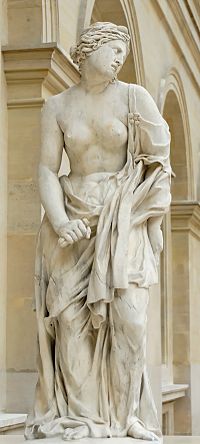
Dido (/ˈdaɪdoʊ/ DY-doh; Ancient Greek: Δῑδώ, Latin pronunciation: [ˈdiːdoː]) was, according to ancient Greek and Roman sources, the founder and first queen of Carthage. She is primarily known from the account given by the Roman poet Virgil in his epic Aeneid. In some sources she is also known as Alyssa or Elissa (/iːˈlɪsə/ ə-LISS-ə, Ἔλισσα).[1]
jesus christ
 Athaliah (Hebrew: עֲתַלְיָה, ʻAtalya; Greek: Γοθολία; Latin: Athalia) was queen consort of Judah as the wife of King Jehoram, a descendant of King David, and later queen regnant c. 841–835 BC.
| Tabiry | |||||
|---|---|---|---|---|---|
| Queen consort of Nubia and Egypt Main King's Wife, The Great One of the Foreign Country, etc | |||||

A Queen from the 25th Dynasty of Egypt
| |||||
| Burial |
Pyramid Ku53 in Kuru, Nubia
| ||||
| Spouse | Pharaoh Piye | ||||
| Issue | unknown | ||||
| |||||
| Dynasty | 25th Dynasty of Egypt | ||||
| Father | Alara of Nubia | ||||
| Mother | Kasaqa | ||||
| Nasalsa | |||||
|---|---|---|---|---|---|
| Queen consort of Nubia and Egypt King's Mother, Lady of Upper and Lower Egypt, etc | |||||

Shabti of Queen Nasalsa (British Museum)
| |||||
| Burial |
Nuri (Nuri 24)
| ||||
| Spouse | Pharaoh Senkamanisken | ||||
| Issue | King Anlamani, King Aspelta, Queen Madiqen | ||||
| |||||
| Dynasty | 25th Dynasty of Egypt | ||||
Cratesipolis (Greek: Kρατησίπoλις meaning "conqueror of the city") was the ruler of Sicyon in 314-308 BC
Mania or Manya (circa 440 BC - died circa 399 BC)
Queen Marcia was the legendary third female ruler and a regent of the Britons, as recounted by Geoffrey of Monmouth.[1] She is presented by Geoffrey as "one of the most illustrious and praiseworthy of women in early British history".[2]
Onomaris was a Celtic woman who is described in the anonymous collection of Greek stories known in Latin as Tractatus De Mulieribus Claris en Bello.[1]
Queen Dowager Xuan (Chinese: 宣太后; 338–265 BC), also called Mi Yue (Chinese: 芈月|w=Mi Yue), was a girl from the royal family of the Kingdom of Chu and one of the imperial concubines (consorts but not the wife) of King Huiwen of Qin. She gave birth to King Zhaoxiang of Qin (r. 306–251 BC)
Apama (Ancient Greek: Ἀπάμα, romanized: Apáma), sometimes known as Apama I or Apame I,[1] was the wife of the first ruler of the Seleucid Empire, Seleucus I Nicator. They married at Susa in 324 BC.
https://en.wikipedia.org/wiki/Artakama
Mania or Manya (circa 440 BC - died circa 399 BC)
Queen Marcia was the legendary third female ruler and a regent of the Britons, as recounted by Geoffrey of Monmouth.[1] She is presented by Geoffrey as "one of the most illustrious and praiseworthy of women in early British history".[2]
Onomaris was a Celtic woman who is described in the anonymous collection of Greek stories known in Latin as Tractatus De Mulieribus Claris en Bello.[1]
Queen Dowager Xuan (Chinese: 宣太后; 338–265 BC), also called Mi Yue (Chinese: 芈月|w=Mi Yue), was a girl from the royal family of the Kingdom of Chu and one of the imperial concubines (consorts but not the wife) of King Huiwen of Qin. She gave birth to King Zhaoxiang of Qin (r. 306–251 BC)
Apama (Ancient Greek: Ἀπάμα, romanized: Apáma), sometimes known as Apama I or Apame I,[1] was the wife of the first ruler of the Seleucid Empire, Seleucus I Nicator. They married at Susa in 324 BC.
https://en.wikipedia.org/wiki/Artakama
Cleophis (Sanskrit: Kripa)[1] was a key figure in the war between the Assacani people and Alexander the Great. Cleophis was the mother of Assacanus, the Assacanis' war-leader at the time of Alexander's invasion in 326 BCE. After her son's death in battle, Cleophis assumed command and negotiated a settlement that allowed her to retain her status. Later accounts claim Cleophis had a son by Alexander, a notion dismissed by historians.[2]
Durdhara was the wife of Chandragupta Maurya, the founder of the 4th-century BCE Maurya Empire of ancient India, according to the 12th century CE Jain text Parishishtaparvan by Hemachandra.[1] She is stated by this text to be the mother of the second Mauryan emperor, Bindusara.[2]
.jpg)
Parysatis, the youngest daughter of Artaxerxes III of Persia, married Alexander the Great in 324 BC at the Susa weddings. She may have been murdered by Alexander's first wife, Roxana, in 323 BC.
| General Cynane | |
|---|---|
| Princess of Macedon | |
| Born | Cynane |
| Died | 323 BC |
| Burial | |
| Spouse | Amyntas IV of Macedon |
| Issue | Eurydice |
| House | Argead |
| Father | Philip II of Macedon |
| Mother | Audata |
.jpg)

Amastris
| |
|---|---|

Didrachm of Amastris. Amastris was the first woman to issue coins in her own name. British Museum.
| |
| Born | |
| Died | c. 284 BC |
| Spouse(s) | Craterus Dionysius Lysimachus |
| Children | Clearchus II and Oxyathres |
| Parent(s) |
|
| Ada | |
|---|---|

Portrait of a young woman from the Mausoleum at Halicarnassus, sometimes identified as Ada. British Museum.
| |
| Reign | 344–340 BC; 334-326 BC |
| Satrap of Caria | |
| Predecessor | Idrieus |
| Successor | Pixodarus |
| Queen of Caria | |
| Predecessor | Orontobates |
| Successor | Alexander III (the Great) of Macedon |
| Consort | Idrieus |
| House | Hecatomnids |
| Father | Hecatomnus |
Youtab (meaning "unique" in Old Persian, born 4th century BC) was a legendary ancient Persian noblewoman.[1][2]
Pheretima or Pheretime (Ancient Greek: Φερετίμη, died 515 BC),

 Artemisia I of Caria (Ancient Greek: Ἀρτεμισία; fl. 480 BC)

| Amestris | |
|---|---|
| Queen of Persia | |
| Reign | 486-466 |
| Died | c. 424 BC[1] |
| Spouse | Xerxes I of Persia |
| Issue | Darius Hystaspes Artaxerxes I of Persia Amytis Rhodogyne |
| House | Persia |
| Father | Otanes |
| Religion | Zoroastrianism[2] |
Artazostre (or Artozostre) (Old Persian *Arta-zausri) was a Persian princess, daughter of king Darius the Great (521-485 BC) by Artystone, daughter of Cyrus the Great.
According to the Greek historian Herodotus (VI, 43) Artazostre was given in marriage to Mardonius, young son of the noble Gobryas, not much before he took the command of the Persian army in Thrace and Macedon (c. 493/492 BC).
Artystone (Greek Ἀρτυστώνη Artystone; Elamite Ir-taš-du-na, Ir-da-iš-du-na; from Old Persian *Artastūnā, "pillar of Arta, the deified true"[1]) was a Persian princess, daughter of king Cyrus the Great, and sister or half-sister of Cambyses II, Atossa and Smerdis (Bardiyā).[2] Along with Atossa and her niece Parmys, Artystone married king Darius I. It is argued that by marrying the female offspring of Cyrus, the founder of the empire, the new king aimed to prevent his rule from being contested,[3] since Darius himself was not of royal blood.[4]
Damaspia (from Old Persian *Jāmāspi- [1]) was a queen of Persia, wife of King Artaxerxes I, and mother of Xerxes II, his legitimate heir. She was Persian.
Irdabama (fl. early 5th-century BC),
Mibtahiah (476 BC - before 416 BC),
Parmida (Elamite Uparmiya) was a Persian princess, the only daughter of Bardiya (Smerdis), son of Cyrus the Great. She was the grand daughter of Cyrus the Great, and Cassandane.
Stateira (died about 400 BC
Stateira (wife of Artaxerxes II)
| Vajira | |
|---|---|
| Empress consort of the Magadha Empire | |
| Reign | c. 492 – c. 460 BCE |
| Spouse | Ajatashatru |
| Issue | Udayibhadra[1] |
| House | Hariyanka (by marriage) Ikshvaku (by birth) |
| Father | Pasenadi |
| Religion | Buddhism |
_2.jpg)
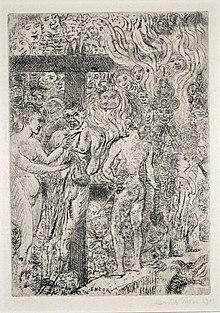
| Bāo Sì 褒姒 | |
|---|---|
| Queen of China | |

An 18th century depiction of Bao Si
| |
| Reign | 779/771 - 771 BC |
| Spouse | King You of Zhou |
| Issue | Bofu |
| House | Zhou dynasty |
Abijah is a person named in the Old Testament. She was the daughter of a Zechariah, possibly Zechariah the son of Jeberechiah (2 Chronicles 29:1; compare Book of Isaiah 8:2), and afterwards the wife of King Ahaz (reigned c. 732 - 716 BCE)
Abijah (Hebrew: אֲבִיָּה Aviya) is a Biblical Hebrew[1] unisex name[2] that means "my Father is Yah".[1][3]
Zabibe (also transliterated Zabibi, Zabiba, Zabibah, arabic: زبيبة) was a queen of Qedar who reigned for five years between 738 and 733 BC. She was a vassal of Tiglath-Pileser III, king of Assyria, and is mentioned in the Annals of Tiglath-Pileser III among a list of monarchs who paid tribute to the king in 738 BC.[1] The title accorded her is queen of the Aribi (Arabs).[2] Israel Eph'al argues that, until the time of Assurbanipal, the title "queen of the Arabs" in Assyrian manuscripts was a general one accorded to leaders of the nomadic tribes of the Syrian desert.[2] So, he infers that Zabibe would have been properly titled "queen of the Qidri" (Qedarites). Zabībah is an ancient Arabic name, likely derived from zabīb (arabic: زبيب), meaning "raisin".[3] She was succeeded by another queen, Samsi, who also reigned for five years.
Yatie (also Iati'e) (Arabic: يثيعة) was a queen of the Nomadic Arab tribes of Qedar who ruled in the 8th century BC, circa 730 BC.[1]

| Goneril | |
|---|---|
| King Lear character | |

Goneril and Regan by Edwin Austin Abbey
| |
| Created by | William Shakespeare |

ainul mardhiah

Cordelia of Britain
Queen Cordelia was a legendary Queen of the Britons, as recounted by Geoffrey of Monmouth. She was the youngest daughter of Leir and the second ruling queen of pre-Roman Britain. There is no independent historical evidence for her existence.
Te'el-hunu (also Te'el-humu) was a queen regnant of the Nomadic Arab tribes of Qedar who ruled in the 7th century BC, circa 690 BC.[1] She succeeded Yatie and was succeeded by queen Tabua.[1]
Tabua was a queen regnant of the Nomadic Arab tribes of Qedar who ruled in the 7th century BC, circa 675 BC.[
 Zheng Mao (Chinese: 鄭瞀) was the primary wife of King Cheng of the State of Chu during the Spring and Autumn period of ancient China. She is one of 125 women whose biographies are included in the Biographies of Exemplary Women, written by Liu Xiang.
| Wen Jiang 文姜 | |
|---|---|
| Duchess of Lu | |
| Died | 673 BC |
| Spouse | Duke Huan of Lu |
| Issue | Duke Zhuang of Lu Shu Ya (叔牙) Ji You (季友) |
| Father | Duke Xi of Qi |
Serua-eterat or Serua-etirat (Akkadian: Šērū’a-ēṭirat[1] or Šeru’a-eṭirat[2], meaning "Šerua is the one who saves"[3])

Naqi’a (c. 730–668 BC, Assyria) held an advisory position to the throne under the title of queen mother during the reigns of Esarhaddon and Ashurbanipal, her son and grandson.
Li Ji (Chinese: 驪姬; pinyin: Lí Jī; died 651 BCE) was a concubine and later wife of Duke Xian of Jin, ruler of the State of Jin between 676 and 651 BC during the Spring and Autumn period of ancient China. Li Ji is best known for starting the Li Ji Unrest which led to the suicide of Prince Shensheng. She also placed her own son Xiqi on the Jin throne after the death of Duke Xian. She was nicknamed as the "Witch of the Age" (一代妖姬) because of her devious acts.
Hephzibah or Hepzibah (English: /ˈhɛfzɪbə/ or /ˈhɛpzɪbə/; Hebrew: חֶפְצִי־בָהּ, Modern: ḥefṣīva, Tiberian: ḥep̄ṣīḇā, my delight is in her) is a figure in the Books of Kings in the Bible. She was the wife of Hezekiah, King of Judah (reigned c. 715 and 686 BCE), and the mother of Manasseh of Judah (reigned c. 687–643 BCE).
| Amanimalel | ||||||||||||||||||
|---|---|---|---|---|---|---|---|---|---|---|---|---|---|---|---|---|---|---|
| Queen consort of Nubia | ||||||||||||||||||

Granite statue of Amanimalel from Jebel Barkal, now in the National Museum of Sudan
| ||||||||||||||||||
| Burial |
uncertain, perhaps pyramid 22 at Nuri
| |||||||||||||||||
| Spouse | uncertain, possibly Senkamanisken | |||||||||||||||||
| Issue | uncertain, possibly queens Asata and Madekan | |||||||||||||||||
| ||||||||||||||||||
| Dynasty | Kingdom of Kush | |||||||||||||||||
| Father | uncertain, Atlanersa | |||||||||||||||||


The Qedarite Kingdom, or Qedar (Arabic: مملكة قيدار, romanized: Mamlakat Qaydar), was a largely nomadic, ancient Arab tribal confederation. Described as "the most organized of the Northern Arabian tribes", at the peak of its power in the 6th century BCE it had a kingdom and controlled a vast region in Arabia.[1][2][3][4]
Addagoppe of Harran /ˈædəˌɡɒpi/ (c. 648-544 BC)
Phaedymia (or Phaedyme, Phædima; Greek: Φαιδύμη) was the daughter of Otanes, a Persian noble mentioned in the Histories of Herodotus. She was married in turn to Cambyses II, Gaumata (False Smerdis) and Darius I.
Parmida (Elamite Uparmiya) was a Persian princess, the only daughter of Bardiya (Smerdis), son of Cyrus the Great. She was the grand daughter of Cyrus the Great, and Cassandane.
Nitocris of Babylon (c. 550 BC)
She lived during the 6th century BCE
Sundarī Nandā
| |
|---|---|

Nanda before Buddha
| |
| Personal | |
| Born | 6th century BCE |
| Religion | Buddhism |
| Occupation | bhikkhuni |
| Mandane | |
|---|---|
| Born | c. 584 BC Ecbatana |
| Died | 559 BC ? Persis |
| Spouse | Cambyses I |
| Issue | Cyrus the Great |
| House | Achaemenid |
| Father | Astyages |
| Mother | Aryenis |
| Religion | Zoroastrianism |
Bhadda Kundalakesa was a former Jain ascetic who was converted to Buddhism by Sariputra, one of the two chief disciples of Gautama Buddha. She attained arahantship faster than any other nun and lived in the 6th century BCE in what is now Bihar and Uttar Pradesh in India.
| Kosala Devi | |
|---|---|
| Empress of the Magadha Empire | |
| Spouse | Bimbisara |
| Issue | Ajatashatru |
| Dynasty | Haryanka (by marriage) Ikshvaku (by birth) |
| Father | King Maha-Kosala |
| Religion | Buddhism |
Khema (Pali: Khemā; Sanskrit: Kṣemā) was a Buddhist bhikkhuni, or nun, who was considered one of the foremost female disciples of the Buddha. She was born into a noble family in the ancient Kingdom of Madra, and was the wife of King Bimbisara of the ancient Indian kingdom of Magadha. Khema was convinced to visit the Buddha by her husband, who hired poets to sing about the beauty of the monastery he was staying at to her. She attained arahantship, or the final stage of enlightenment, as a layperson while listening to one of the Buddha's sermons. Following her attainment, Khema entered the monastic life under the Buddha as a bhikkhuni. The Buddha declared her his female disciple foremost in wisdom. Khema is considered the first of the Buddha's two chief female disciples, along with Uppalavanna. Her male counterpart was Sariputta.
Amuhia or Amytis of Media (c. 630–565 BC)
Aryenis of Lydia was, according to Herodotus, the daughter of King Alyattes of Lydia and the sister of King Croesus of Lydia.[1]
Artystone (Greek Ἀρτυστώνη Artystone; Elamite Ir-taš-du-na, Ir-da-iš-du-na; from Old Persian *Artastūnā, "pillar of Arta, the deified true"[1]) was a Persian princess, daughter of king Cyrus the Great, and sister or half-sister of Cambyses II, Atossa and Smerdis (Bardiyā).[2] Along with Atossa and her niece Parmys, Artystone married king Darius I. It is argued that by marrying the female offspring of Cyrus, the founder of the empire, the new king aimed to prevent his rule from being contested,[3] since Darius himself was not of royal blood.[4]
Artystone and Darius had at least two sons, Arsames and Gobryas, and a daughter, Artazostre. According to the Greek historian Herodotus Artystone was Darius' favourite wife. She is also mentioned in the Persepolis Fortification Tablets, an administrative archive from Persepolis.
Cassandane or Cassandana (Ancient Greek: Κασσανδάνη Kassandanē) was an Achaemenian Persian noblewoman and the "dearly loved" wife of Cyrus the Great. She was a daughter of Pharnaspes. She bore four children for Cyrus (it may be 5 based on the documented children listed under Cyrus the Great): Cambyses II, who succeeded his father and conquered Egypt; Smerdis (Bardiya), who also reigned as the king of Persia for a short time; a daughter named Atossa, who later wed Darius the Great; and another daughter named Roxana.[1]
.JPG)
| Atossa | |
|---|---|

Bust of a Persian woman
| |
| The Great Queen of Achaemenid Empire | |
| Reign | 522-475 BC |
| Coronation | 522 BC |
| Predecessor | Cassandane |
| Regent of Achaemenid Empire | |
| Reign | 522-475 BC |
| Born | Pasargadae |
| Died | 475 BC (aged 74–75) Persia |
| Burial | |
| Spouse | Cambyses II Darius the Great |
| Issue | Mandane Xerxes I Hystaspes Masistes Achaemenes |
| House | Achaemenid |
| Father | Cyrus the Great |
| Mother | Cassandane |
| Religion | Zoroastrianism |
 jesus christ
| Artemisia II | |
|---|---|

Original and reconstitution of the statue traditionally identified as Artemisia, from the Mausoleum at Halicarnassus, now in the British Museum.
| |
| Satrap of Caria | |
| Reign | 353–351 BCE |
| Predecessor | Mausolus |
| Successor | Idrieus |
| Consort | Mausolus |
| House | Hecatomnids |
| Father | Hecatomnus |
| Hecatomnid dynasty (Dynasts of Caria) | ||||||||||||||||
|---|---|---|---|---|---|---|---|---|---|---|---|---|---|---|---|---|
|


Comments
Post a Comment