PART 3 FAMOUS KING

Edward Murray (c. 1800 - 9 June 1874) was the Registrar of Slaves and later Marshal of the Island of Trinidad in the 19th century.
Teodora Alonso Realonda
| |
|---|---|
 | |
| Born |
Teodora Alonso Realonda y Quintos
November 8, 1826 |
| Died | August 16, 1911 (aged 84) |
| Spouse(s) | Francisco Mercado |
| Children | 11 (including, Saturnina, Paciano and José) |

Ah Mekat Tutul Xiu established an alliance between Uxmal, Chichen Itza and Mayapan in the span of thirteen years (987–1007 AD). He founded the League of Mayapan; a confederation between the Maya in Yucatán. Other than the three capitals, it included the manors of Izamal, Tulum, Ichpatún, the Cocom and others. This alliance existed from 987 to 1461. In 1194, the Itza for the second time abandoned Chichén Itzá to settle in the Petén. Later, Hunac Ceel would separate the Itza from the rest of the League.[1]
Ansfried, was a Lotharingian count in the 10th century, who held 15 counties in Lotharingia, a "middle kingdom" which was in this period contested for by the larger eastern and western kingdoms surrounding it. He is sometimes referred to as "the elder" in order to distinguish him from his nephew, Bishop Ansfried of Utrecht, who was also a powerful count until he became a cleric.
Bakjur was a Circassian military slave (mamluk or ghulam) who served the Hamdanids of Aleppo and later the Fatimids of Egypt. He seized control of Aleppo in 975 and governed it until 977,

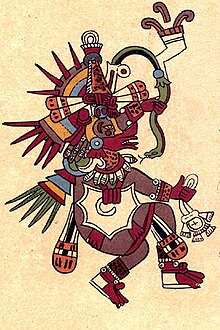
| Ce Acatl Topiltzin | |
|---|---|
| Emperor of the Toltecs | |
| Reign | 923-947[1] |
| Predecessor | Xochitl |
| Successor | Matlacxochtli |
| Born | 895[2] Tepoztlán, Toltec Empire[3] |
| Died | 947 Tlapallan, Gulf of Mexico[4] |
| Father | Mixcōatl |
| Mother | Chimalman |
| Religion | Toltec religion |
Dharmakīrtiśrī (Tibetan: Serlingpa; Wylie: gser gling pa; Chinese: 金州大師, literally "from Suvarnadvīpa"), also known as Kulānta and Suvarṇadvipi Dharmakīrti,[1][2] was a renowned 10th century Buddhist teacher remembered as a key teacher of Atiśa. His name refers to the region he lived, somewhere in Lower Burma, the Malay Peninsula or Sumatra.[3] BUDDHA


Genadio of Astorga
| |
|---|---|
| Diocese | Diocese of Astorga |
| Installed | 899 |
| Term ended | 920 |
| Orders | |
| Ordination | Benedictine |
| Personal details | |
| Birth name | Genadio de Astorga |
| Born | c. 865 El Bierzo, province of León |
| Died | c. 936 (71 aged) Peñalba de Santiago, Ponferrada |
| Occupation | Monk, hermit and bishop |
| Sainthood | |
| Feast day | 25 May |
Hagano[1] was a petty nobleman (mediocris) who achieved influence in Lotharingia and West Francia during the rule of Charles the Simple (898–922). He was a relative of Charles' first wife, Frederuna, and was originally from Lotharingia. Though Frederuna had died in 917
Halfdan Haraldsson or Halfdan the Black (not to be confused with his grandfather and namesake) was a son of Harald I of Norway by his first wife, Åsa, the daughter of Jarl Håkon Grjotgardsson of Lade. He was made sub-king of the Trondelag by his father, along with his brother Halfdan the White. According to Heimskringla, Halfdan the Black was poisoned, possibly at the behest of his sister in law Gunnhild, Mother of Kings.
Hugh I (est. 885-930)
Hugh II (est. birth 910 - 915) (died 967)
Hugh III (fl. late tenth century)
Ibn al-Dahhak (died 927)
Rajanaka Kṣemarāja (क्षेमराज) (late 10th to early 11th century)
Lambert (10th century), was a Lotharingian nobleman with lands somewhere near modern Dutch Limburg, and associated with the Gembloux Abbey in French-speaking Belgium. Its founder Wicbert was probably a close relative. Lambert is known from one record, known from two versions, one made much later in the 16th century, which has however been the subject of much published discussion
Lawapa or Lavapa (Wylie: la ba pa; grub chen la ba pa; wa ba pa[1]) was a figure in Tibetan Buddhism who flourished in the 10th century. He was also known as Kambala and Kambalapada (Sanskrit: Kaṃbalapāda). Lawapa, was a mahasiddha, or accomplished yogi, who travelled to Tsari.[2] Lawapa was a progenitor of the Dream Yoga sādhanā and it was from Lawapa that the mahasiddha Tilopa received the Dream Yoga practice lineage. BUDDHA
| Princess Nakrang 낙랑공주 | |
|---|---|
| Princess of Goryeo | |
| Born | ? Kingdom of Goryeo |
| Died | ? Kingdom of Goryeo |
| Spouse | Gyeongsun of Silla |
| Issue | Prince Daean Prince Uiseong Prince Gangreung Prince Eonyang Prince Samcheok Unnamed princess Lady Sinran |
| House | Kaesong Wang |
| Father | Taejo of Goryeo |
| Mother | Queen Shinmyeongsunseong |
Count Nibelung or Nevelung (b. abt 890-900 d. abt 939-943)
Onlafbald[note 1] and Scula (Old Norse: Skúli) were two early 10th century Viking chieftains, notable for receiving lands through successful campaigning in what is now northern England. Onlafbald is also said to have been killed by the spirit of the 7th-century English saint Cuthbert of Lindisfarne, after he profaned the long-dead saint. The legacy of Scula is preserved in the place name of School Aycliffe, a village in County Durham, which is derived from his name (Old Norse: Skúli).[1][4][6]
He created his works at the Parkhali monastery of Tao-Klarjeti.[2] His calligraphic works are written in the Nuskhuri script of the Georgian alphabet.
Joseph Rabban
.png)
Robrecht I of Namur (d. before 981),

Halfdan Egedius: Illustration for Olav Trygvasons saga (1899)

Sveneld
| |
|---|---|
Свенельд
| |
| Voivode of Kiev | |
| Monarch | Igor I of Kiev Svyatoslav I of Kiev |
| Preceded by | Oleg |
| Succeeded by | Blud |
| Personal details | |
| Born |
Sveinaldr
c. 920s |
| Died | c. 970s |
| Nationality | Varangian |
| Children | Lyut Mstisha |
| Military service | |
| Allegiance | Kievan Rus |
| Years of service | 940s - 970s |
| Rank | Voivode |
| Commands | Expedition forces to Albania |
| Battles/wars | Expedition against Ulichs Expedition against Albania Expedition against Byzantium (Siege of Dorostolon) Rus Civil War of 970s |

Vagn Åkesson
Vellan Kumaran
| |
|---|---|
| Nickname(s) | Chaturanana Pandita |
| Born | Nandikkarai Puttur (Kerala) |
| Allegiance | Chola Empire |
| Rank | Perumpatai Nayaka |
| Battles/wars | Battle of Takkolam (948–49 CE) |
| Relations | Rajasekhara (father, chieftain of Valluvanatu) |

John Pulling was an American captain, vestryman and Patriot who signaled Paul Revere from the Old North Church in Boston before Revere's midnight ride.
In the days before April 18, 1775,
Abraham Trembley
| |
|---|---|

Abraham Trembley
| |
| Born | 3 September 1710 |
| Died | 12 May 1784 (aged 73) |
| Nationality | Genevan |
| Known for | hydra (genus) |
| Awards | Copley Medal, 1743 |
| Scientific career | |
| Fields | Naturalist |
Abu Isa al-Warraq
| |
|---|---|
| Born |
Muhammad ibn Harun al-Warraq
889 [1] |
| Died | 24 June 994 (aged 104–105)
Baghdad
|
| Known for | Scholar |
Ali al-Uraidhi ibn Ja'far al-Sadiq, (Arabic: علي العريضي بن جعفر الصادق ʿAlī al-ʿUrayḍī ibn Jaʿfar al-Sādiq) better known simply as Ali al-Uraidhi, was the son of Ja'far al-Sadiq and the brother of Imam Isma'il, Imam Musa al-Kadhim, Abdullah al-Aftah, and Muhammad Al-Dibaj. He was known by the title al-Uraidhi, because he lived in an area called Uraidh, about 4 miles (or 6.4 km) from Medina. He was also known by the nickname Abu Hasan (i.e. father of Hasan). He was a great Muslim scholar.
ʿAli ibn al-Husayn ibn Quraysh ibn Shibl (Arabic: علي بن الحسين بن قريش بن شبل) (also known as al-Bukhari) was a Muslim military commander who gained control of the Abbasid province of Fars in the mid-860s. He ruled Fars until 869, when he was defeated and captured by Ya'qub ibn al-Layth, the Saffarid amir of Sistan.
Bulchan (Bulčan) or Bluchan (Blučan) was, according to Georgian chronicles, a Khazar general around the year 800 CE. According to the Georgian sources, Bulchan led the Khazar army in its capture of Tbilisi. As part of the surrender terms a Georgian princess named Shushan was supposed to accompany Bulchan back to the khagan's court and marry the Khazar ruler, but the girl killed herself instead. When he returned home with the news, the hapless Bulchan was killed by the khagan in a fit of rage.
The connection between Bulchan and Bulan, if any, is unknown; Peter B. Golden has commented on the common etymological roots of the two names.[1]
Ermentar of Noirmoutier, also called Ermentarius Tornusiensis (died mid-860s),
Genadio of Astorga
| |
|---|---|
| Diocese | Diocese of Astorga |
| Installed | 899 |
| Term ended | 920 |
| Orders | |
| Ordination | Benedictine |
| Personal details | |
| Birth name | Genadio de Astorga |
| Born | c. 865 El Bierzo, province of León |
| Died | c. 936 (71 aged) Peñalba de Santiago, Ponferrada |
| Occupation | Monk, hermit and bishop |
| Sainthood | |
| Feast day | 25 May |
He created his works in Shatberdi monastery of Tao-Klarjeti which was built by Gregory of Khandzta during the reign of Bagrat I of Iberia. In 897 Mikaeli with the request of Soprom Shatberdeli re-wrote Adysh Gospels which is kept in Historical-Ethnographical Museum of Svaneti, in Mestia. It was written on parchment.
Mir Jafar bin Mir Hasan Dasni (Kurdish: Mîr Ceferê Dasnî, Arabic: الأمير جعفر بن الأمير حسن الداسني), also known as Jafar bin Faharjis, was a Yazidi and a leader who in 838 launched an uprising against Abbasid Caliph al-Mutasim in the area north of Mosul. After being defeated at Babagesh he resided in castles in Dasin.[1][2] Mutasim in response sent an army under command of Abdullah bin Ans al-Azdi, resulting in an armed confrontation between the Arab army and Kurdish Yazidis. Due to the difficulty of the terrain, the Arab army proved unsuccessful, suffered heavy casualties and a number of its commanders including Abdullah's uncle Ishaq bin Ans and his father-in-law were killed.
Mutassim had purchased a Khazar slave, called Itakh. He appointed him as commander of his army. Itakh defeated Mir Jafar's troops in 841 and killed many Yazidis.[3] In order to avoid being captured alive, Mir Jafar committed suicide by drinking poison.
Abū al-Mukarram Rabīʿah ibn Aḥmad ibn Ṭūlūn(Arabic: ابو المكارم ربيعة بن أحمد بن طولون) was the fourth son of the founder of the Tulunid dynasty, Ahmad ibn Tulun.[1] In 879, when his eldest brother Abbas rebelled against their father and fled to Alexandria and thence to Barqah, he remained in charge of affairs in Fustat until the return of Ahmad ibn Tulun.[2] In 897, he rebelled against his nephew, Harun ibn Khumarawayh, in Alexandria, with the support of Berber troops. The uprising was defeated, and he was executed by lashing in the same autumn.[3]
Ubba (probably died 878) GOG MAGOG
| Edmund | |
|---|---|
| King of the East Angles | |

A medieval illumination depicting the death of Edmund the Martyr on 20 November 869 by the Vikings
| |
| Reign | 25 December 855 (traditionally) – 20 November 869 (or 870) |
| Predecessor | Ethelweard |
| Successor | Oswald |
| Born | circa 841 |
| Died | killed in battle 20 November 869 (or 870) see ...legends |
| House | unknown |
| Father | possibly Æthelweard |
| Religion | Christian |
Velasco the Basque (Arabic: بلشك الجلشقي, Balask al-Galaski)[1] was the Basque ruler of Pamplona in the early 9th century.[2]
Alexander Carolus Curtius (Lithuanian: Aleksandras Karolis Kuršius) was a Lithuanian nobleman and scholar[1] purported to be the first Lithuanian immigrant to The New World.[2][3] He founded the first Latin school in New York in 1659 and became its headmaster.[4] Due to disciplinary problems and disputes over salary, he returned to Holland in 1661.
John Ferrar (2 December 1588 – 28 December 1657)
Marie Huber (4 March 1695 – 13 June 1753)
| Krishnarao Parshuram Pant Pratinidhi | |
|---|---|
| Shrimant | |
Pratinidhi  to Tarabai in Kolhapur to Tarabai in Kolhapur1st Chief of Vishalgad | |
| Reign | 1716-17?? |
| Coronation | 1716 |
| Predecessor | Parshuram Pant Pratinidhi |
| Successor | Amrutrao Krishnaji Pant Pratinid |
| Born | 1684 Aundh, Satara (Satara District, Maharashtra) |
| Died | Vishalgad, Kolhapur (Kolhapur District, Maharashtra) |
| Issue |
|
| Father | Parshuram Pant Pratinidhi |
Laurent du Bois was the first pastor of the first French Church in Boston, organizing a congregation in 1685
Sulayman ibn Yaqzan al-Kalbi (al-A'rabi meaning the Bedouin) was an Arab Wali (governor) of Barcelona and Girona in the year 777.
For the history of al-Arabi, we must rely on the Muslim historian Abu al-Hassan Ali ibn Muhammad ibn Muhammad (1160-1233)
Alp Tarkhan
| |
|---|---|
| Allegiance | Khazar |
| Rank | General |
| Battles/wars | Khazar-Arab Wars |
Ras Tarkhan
Theodwin was abbot of Lobbes Abbey from 737 until his death some time around 750. During his abbacy he added Fontaine-Valmont (now part of Merbes-le-Château) to the abbey's domains. Unlike his predecessor, Ermin of Lobbes, and his successor, he was not a bishop alongside being abbot.[1]
Yazid ibn Hatim al-Muhallabi (Arabic: يزيد بن حاتم المهلبي) (died March 13, 787) was a member of the Muhallabid family who served as the governor of Adharbayjan, Egypt (762–769) and Ifriqiya (771–787) for the Abbasid Caliphate.
Abdallah al-Battal (Arabic: عبدالله البطال; "Abdallah the Hero", died in 740) was a Muslim Arab commander in the Arab–Byzantine Wars of the early 8th century, participating in several of the campaigns launched by the Umayyad Caliphate against the Byzantine Empire. Historical facts about his life are sparse, but an extensive pseudo-historical and legendary tradition grew around him after his death, and he became a famous figure in both Arabic and later Turkish epic literature as Sayyid Battal Ghazi.
Barjik (died 731) was a Khazar prince who flourished in the late 720s. He is described by al-Tabari as "the son of the Khagan"; his exact status and position is unknown though he may have been the Bek.
Ishaq ibn Muslim al-Uqayli
| |||||||||||
|---|---|---|---|---|---|---|---|---|---|---|---|
| Allegiance | Umayyad Caliphate Abbasid Caliphate Abbasid Caliphate | ||||||||||
| Years of service | ca. 738 – after 750 | ||||||||||
| Wars | Arab–Khazar wars, Third Fitna, Abbasid Revolution
| ||||||||||
Prince Juansher II (Georgian: ჯუანშერ II) was a Georgian prince of royal Chosroid dynasty. Prince of Kakheti in 786-807.[1][2][3]
Martin of Arades
Martin of Corbie | |
|---|---|
| Died | 26 November 726[1] Saint-Priest-sous-Aixe[1] |
| Venerated in | Catholic Church Eastern Orthodox Church[2] |
| Major shrine | Saint-Priest-sous-Aixe[1] |
| Feast | 26 November[2] |
| Patronage | Aixe-sur-Vienne, Saint-Priest-sous-Aixe, gout[3] |
Abd-Allah ibn Aamir Hadhrami was the governor of the Arabic city of Kufah during the 7th century. He had a prominent role in the Battle of the Camel.[1]
Adalgisel or Adalgis (Adalgyselus ducis in contemporary Latin) was a Frankish duke and the mayor of the palace of Austrasia. He assumed that office in December 633 or January 634
Apputhi Adigal
| |
|---|---|
 | |
| Personal | |
| Born | 7th century CE |
| Religion | Hinduism |
| Philosophy | Shaivism, Bhakti |
| Honors | Nayanar saint, |
| Damjing | |||
|---|---|---|---|
.jpg) | |||
| Chinese name | |||
| Traditional Chinese | 曇徵 | ||
| |||
| Korean name | |||
| Hangul | 담징 | ||
| Hanja | 曇徵 | ||
| |||
| Japanese name | |||
| Kanji | 曇徴 | ||
| Hiragana | どんちょう | ||
.jpg)
Demetrius the Hypatos(c. 590-627).
Wahshi ibn Harb
| |
|---|---|
| Died | c.660 C.E. |
| Nationality | Afro-Arabs |
Bishr ibn Marwan
| |
|---|---|
| Umayyad governor of Kufa | |
| In office 690/91–694 | |
| Monarch | Abd al-Malik |
| Preceded by | Mus'ab ibn al-Zubayr (non-Umayyad) |
| Succeeded by | Al-Hajjaj ibn Yusuf |
| Umayyad governor of Basra | |
| In office 692/93–694 | |
| Monarch | Abd al-Malik |
| Preceded by | Khalid ibn Abdallah ibn Khalid ibn Asid |
| Succeeded by | Al-Hajjaj ibn Yusuf |
| Personal details | |
| Born | c. 650s |
| Died | 694 (aged mid-40s) Basra |
| Parents | Marwan I (father) Qutayya bint Bishr (mother) |
Somasi Mara Nayanar
| |
|---|---|
 | |
| Personal | |
| Born | 7th century CE |
| Religion | Hinduism |
| Philosophy | Shaivism, Bhakti |
| Honors | Nayanar saint, |
Stephen of Kakheti
Prince Stephanoz (Georgian: სტეფანოზ) was a Georgian prince of royal Chosroid dynasty. Prince of Kakheti in 685–736.[1][2][3][4]
He was son of Prince Adarnase II of Iberia.
He had two sons, Prince Archil of Kakheti and Prince Mirian of Kakheti.
Stephen is mentioned in the inscriptions at Ateni Sioni Church dated 735 AD.[5]
Al-Hurr ibn Yazid
حر بن یزید | |
|---|---|
.png)
Arabic text with the name of Hurr bin Yazid Ar-Riyahi
| |
| Died | Muharram 10, 61 AH |
Thönmi Sambhota
| |
|---|---|

Inventing Tibetan Script
| |
| Born |
Thönmi Sambhota ཐོན་མི་སམྦྷོ་ཊ་
|
| Known for | Tibetan Script Inventor 650 AD |

Casper Van Senden
Vacca (grammarian)
Saragurs
The Saragurs or Saraguri (Greek: Σαράγουροι, Syriac: s.r.w.r.g.wr,[1] Šarağurs) was a Eurasian Oghur (Turkic)[2] nomadic tribe mentioned in the 5th and 6th centuries. They originated from Western Siberia and the Kazakh steppes, from where they were displaced north of the Caucasus by the Sabirs.[3]
Around 463 AD, the Akatziri and other tribes that had been part of the Hunnic union were attacked by the Saragurs, one of the first Oghur tribes that entered the Pontic-Caspian steppe as the result of migrations set off in Inner Asia by the Hephthalite Uar attacking the Kidarite Xiyon.[4] The Akatziri had lived north of the Black Sea, west of Crimea.[5] According to Priscus, in 463 Ernakh and Dengizich sent the representatives of Saragurs, Oghurs (or Urogi,[5] perhaps a Byzantine error for Uyghurs[6]) and Onogurs came to the Emperor in Constantinople,[7] and explained they had been driven out of their homeland by the Sabirs, who had been attacked by the Avars in Inner Asia.[8][9] In 469, the Saragurs requested and received Roman protection.[10] In the late 500s, the Saragurs, Kutrigurs, Utigurs and Onogurs held part of the steppe north of the Black Sea.[11] In 555, Pseudo-Zacharias Rhetor mentions the Saragurs as one of thirteen nomadic tribes north of Caucasus, however, it is uncertain if the tribe still existed at this time.[12]
| Yakub Shah Chak | |||||
|---|---|---|---|---|---|
| Ruler of Kashmir | |||||
| Sultan of Kashmir | |||||
| Reign | 1586-1589 CE | ||||
| Predecessor | Yusuf Shah Chak | ||||
| Successor | office abolished | ||||
| |||||
| Father | Yusuf Shah Chak | ||||
| Religion | Shia Islam | ||||
John Wardall was Master of St Catharine's College, Cambridge from 1487 until 1506.[1]
Wardall was born in Beelsby and educated at St Catharine's. After graduating MA he was ordained and held livings at Sparham and Lamport.[2] He was buried at St Mary Bothaw on 5 February 1506.[3]
Shakti Singh Sisodia, also referred to as Shakta, Sakta or Sakat, was the son of Maharana Udai Singh II Sisodia and Sajja Bai Solankini.[1]
At some point during Udai Singh's lifetime, due to hostile relations with his father, he joined the Mughal Emperor Akbar and was later given the title of Mir (lord). In 1567, he ran away from Dhaulpur while Akbar was encamped there to inform his father about Akbar's plan to capture Chittor, which angered Akbar.[2][3] At the Battle of Haldighati, he returned to his brother's side.[4] His descendants are known as the Shaktawats.
Fouke (or Fulke) Salisbury was Dean of St Asaph from 1493 until 1543.[1]Guillaume de Saint-André (fl. 15th/16th centuries) was the secretary and biographer of John IV of Brittany.
Nunuku-whenua was a Moriori chief and famous sixteenth century pacifist.
Richard Puskyn, Rector of Bodfari,[1] was Dean of St Asaph from 1543 until 1556.[2]
George North (fl. 1561–1581)
Jørundur Skógdrívsson (or Jørund Skogdrivsson), was, from 1479 to 1524, the lawman of the Faroe Islands.
https://en.wikipedia.org/wiki/Isa_Khan_Niazi
Hugh Evans was Dean of St Asaph[1] from 26 April 1560 until his death on 17 December 1587.[2]
George North (fl. 1561–1581)
Jørundur Skógdrívsson (or Jørund Skogdrivsson), was, from 1479 to 1524, the lawman of the Faroe Islands.
https://en.wikipedia.org/wiki/Isa_Khan_Niazi
| Jagmal Singh | |
|---|---|
| Ruler of Jahazpur and Sirohi | |
| Reign | c. 1572-1583 (Jahazpur), 1581-1583 (Sirohi)(as co-ruler) |
| Died | 17th October 1583 |
| Spouse | Daughter of Maharao Man Singh II of Sirohi |
| Issue | Thakur Vijai Singh |
| Father | Udai Singh II |
| Mother | Dheerbai Bhattyani |
John Higgins (c. 1544 – by 1620)
John Ferrar (2 December 1588 – 28 December 1657)
John Gruffith was Dean of St Asaph from 1556 until his death in 1557.[1] He was also Treasurer of Llandaff and a Canon of Salisbury.[2]
Andrea Gasparo Corso was a Corsican trader and secret agent who worked for the court of the Spanish king Philip II during the 16th century, and was active in the Ottoman Empire Regency of Algiers. He often worked with his brother Francisco Gasparo Corso. They were both known by Cervantes, who witnessed their activities during his captivity in Algiers.[1] Andrea Gasparo Corso had become a friend of Abd el-Malik during the latter's residence in Algiers, before his becoming Sultan of Morocco.
Maurice Blayne was Dean of St Asaph from 5 August 1557[1] until 27 February 1559.[2]
Andrea Gasparo Corso was a Corsican trader and secret agent who worked for the court of the Spanish king Philip II during the 16th century, and was active in the Ottoman Empire Regency of Algiers. He often worked with his brother Francisco Gasparo Corso. They were both known by Cervantes, who witnessed their activities during his captivity in Algiers.[1] Andrea Gasparo Corso had become a friend of Abd el-Malik during the latter's residence in Algiers, before his becoming Sultan of Morocco.
Maurice Blayne was Dean of St Asaph from 5 August 1557[1] until 27 February 1559.[2]
Yousuf Shah Chak (Urdu; یُوسف شاہ چک) was a ruler of Kashmir. He was successor of his father Ali Shah Chak and ruled Kashmir from 1579 to 1586 AD.
Edmund Birkhead, D.D. was Bishop of St Asaph from 1513 until 1518.[1]
Amir Husain Al-Kurdi, (أمیر حسین الکردي), named the Mirocem or Mir-Hocem [1] by the Portuguese, was a governor of the city of Jeddah[2] in the Red Sea, then part of the Egyptian Mamluk Sultanate, in early 16th century. He stood out as admiral of the Mamluk fleet fought by the forces of the Portuguese Empire in the Indian Ocean.[3] Shortly after the arrival of the Portuguese to the Indian sea, Mirocem was sent by the last Mamluk Sultan, Al-Ashraf Qansuh al-Ghawri, to defend his interests in the sea, including the defense of the fleets of Muslim pilgrims to Mecca, then part of the sultanate.
Simund de Freine (Simon de Fresne) (fl. 1200) was an Anglo-Norman cleric and poet. He was a canon of Hereford Cathedral and a friend of Giraldus Cambrensis.[1]Sæwulf (fl. 1102) was an English pilgrim to Palestine, who left a Latin account of his voyage.[1]Robert of Rouen (died before 1112) was the first bishop of Lydda and Ramla from 1099.Robert fitz-Fulk the Leper, also known as Robert the Leprous (died in August 1119), was a powerful baron in the Principality of Antioch.Giolla Domhnaill O'Foramain was an Irish priest in the second half of the twelfth century: the first recorded Archdeacon of Derry.[1]Kockar Ata (Khodzha-Kochkari, Koçqər-i Chodja or Koçkır-i Baba) was a dervish of Ahmad Yasavi. "Ram" is the meaning of his name. According to common belief Koçkar Ata is from Teke Turcomans. In his time the people were making the rams fight and since his ram was the champion of each match, he was named as Kochkar. His real name is not to be known. After Koçkar Ata's death, his ram could not resist the separation and it died on his grave. So a ram statue had been put over Koçkar Ata's grave. There is scripture in Arabic alphabet as"ya Allah, ya Muhammed, ya Ali".Andrew III of Vitré (c. 1150 – 9 June 1211[1]) was Baron de Vitré from 1173 to 1210/11.
Abraham Ben Yijū was a Jewish merchant and poet born in Ifriqiya, in what is now Tunisia, around 1100. He is known from surviving correspondence between him and others in the Cairo Geniza fragments.[1]Bernat or Bernart d'Auriac was a minor troubadour notable mainly for initiating a cycle of five short sirventes in the summer of 1285. According to a rubric of the chansonnier in which the cycle is preserved, Bernart was a mayestre de Bezers (master of Béziers). Baidar was the sixth son of Chagatai Khan. He participated in the European campaign ("The elder boys campaign" as it was known in Mongolia) with his nephew Büri from 1235-1241
The Mongols under Baidar display the head of Henry II to terrorize Wroclaw
Andrew III of Vitré (c. 1200 † 8 February 1250 at the Battle of Al Mansurah, in Egypt) was Baron of Vitré and Aubigné from 1211 to 1250.Andrew III of Vitré (c. 1150 – 9 June 1211[1]) was Baron de Vitré from 1173 to 1210/11.Albert von Behaim or Albertus Bohemus (ca. 1180 – 1260) Adam of Damerham (sometimes Adam of Domerham[1] (died after 1291), was a Benedictine monk of Glastonbury Abbey, who wrote a history of the abbey, and was active in the ecclesiastical politics of his time.[2]Abu l-Makārim Saʿdullāh ibn Jirjis ibn Masʿūd (Arabic: ابو المكارم سعد الله بن جرجس بن مسعود) (d.1208)
Edmund Birkhead, D.D. was Bishop of St Asaph from 1513 until 1518.[1]
Amir Husain Al-Kurdi, (أمیر حسین الکردي), named the Mirocem or Mir-Hocem [1] by the Portuguese, was a governor of the city of Jeddah[2] in the Red Sea, then part of the Egyptian Mamluk Sultanate, in early 16th century. He stood out as admiral of the Mamluk fleet fought by the forces of the Portuguese Empire in the Indian Ocean.[3] Shortly after the arrival of the Portuguese to the Indian sea, Mirocem was sent by the last Mamluk Sultan, Al-Ashraf Qansuh al-Ghawri, to defend his interests in the sea, including the defense of the fleets of Muslim pilgrims to Mecca, then part of the sultanate.
Abbot of Vale Royal
Vale Royal Abbey is a medieval abbey, and later a country house, located in Whitegate, between Northwich and Winsford in Cheshire, England. Over its 278-year period of operation, it had at least 21 abbots (possibly 22).
The abbey was founded in 1270 by Prince Edward for monks of the austere Cistercian order. Edward intended the abbey to be on the grandest scale. However, financial difficulties meant that these ambitions could not be fulfilled and the final building was considerably smaller than planned. The project ran into problems in other ways. The abbey was frequently grossly mismanaged, relations with the local population were so poor as to regularly cause outbreaks of large-scale violence on a number of occasions, and internal discipline was frequently bad.
S.M. Imamul Huq
| |
|---|---|
| Education |
PhD (Doctor of Engg. in Plant Physiology and Plant Biology) |
| Awards | Bangladesh Academy of Sciences Gold Medal |
Amiram Tamari
| |
|---|---|
| Born | 1913
Israel
|
| Died | 1981 |
| Nationality | Israeli, Jewish |
| Education | Académie de la Grande Chaumière |
| Known for | Painting |
| Movement | Israeli art |
| Awards | Dizengoff Prize for Painting |
Great Peacemaker
| |
|---|---|
| |
| Onondaga, adopted Mohawk, or Huron orator and statesman | |
| Personal details | |
| Born | 15th century[1][2] Huron or Onondaga |
| Died | 15th century[1][2] Haudenosaunee |
Abraham Ben Yijū was a Jewish merchant and poet born in Ifriqiya, in what is now Tunisia, around 1100. He is known from surviving correspondence between him and others in the Cairo Geniza fragments.[1]Bernat or Bernart d'Auriac was a minor troubadour notable mainly for initiating a cycle of five short sirventes in the summer of 1285. According to a rubric of the chansonnier in which the cycle is preserved, Bernart was a mayestre de Bezers (master of Béziers).
 Baidar was the sixth son of Chagatai Khan. He participated in the European campaign ("The elder boys campaign" as it was known in Mongolia) with his nephew Büri from 1235-1241
Vale Royal Abbey is a medieval abbey, and later a country house, located in Whitegate, between Northwich and Winsford in Cheshire, England. Over its 278-year period of operation, it had at least 21 abbots (possibly 22).
The abbey was founded in 1270 by Prince
Shmuel Schneurson was a leader of the underground Zionist movement Hechalutz in the Soviet Union from 1922 to 1928. Though he had the option of remaining in British Palestine during his 1927Gangubai Kothewali was the madam of a brothel in Kamathipura, Maharashtra, India in the 1960's.[1]


Comments
Post a Comment