https://en.wikipedia.org/wiki/Abantidas 500BC
Zhuansun Shi (b. 503 BC),
Titus Quinctius Capitolinus Barbatus (513 BC - after 423 BC)
Yuan Xian (born 515 BC),
Leotychidas (also Leotychides, Latychidas; Ancient Greek: Λεωτυχίδας; c. 545 BC–c. 469 BC) was co-ruler of Sparta between 491–476 BC, alongside Cleomenes I and later Leonidas I and Pleistarchus. He led Spartan forces during the Persian Wars from 490 BC to 478 BC.
Yan Wuyou (Chinese: 顏無繇; Wade–Giles: Yen Wu-yu; born 545 BC), courtesy name Lu (路), also known as Yan Lu (Chinese: 顏路; Wade–Giles: Yen Lu), was one of the earliest disciples of Confucius. He was the father of Yan Hui, Confucius' favourite disciple.[1]
Hecataeus of Miletus (/ˌhɛkəˈtiːəs/; Greek: Ἑκαταῖος ὁ Μιλήσιος; c. 550 BC – c. 476 BC), son of Hegesander, was an early Greek historian and geographer.[1]
Phocylides (Greek: Φωκυλίδης ὁ Μιλήσιος), Greek gnomic poet of Miletus, contemporary of Theognis of Megara, was born about 560 BC.

Yan Ying
| |
|---|---|

The Chinese characters are 晏平仲 (Yàn Píng Zhòng) in ancient form from right to left.
| |
| Born | 578 BC Ancient Yiwei (modern day Gaomi, Shandong) |
| Died | 500 BC Zibo, Shandong |
| Occupation | Prime minister of the state of Qi |
| Period | Spring and Autumn |
| Subject | Philosopher, statesman, diplomat |
| Notable works | Yanzi chunqiu |
| Croesus | |
|---|---|

Portrait of Croesus, Attic red-figure amphora, painted ca. 500–490 BC
| |
| Lydian King | |
| Reign | c. 560 – c. 546 BC |

| Mandane | |
|---|---|
| Born | c. 584 BC Ecbatana |
| Died | 559 BC ? Persis |
| Spouse | Cambyses I |
| Issue | Cyrus the Great |
| House | Achaemenid |
| Father | Astyages |
| Mother | Aryenis |
| Religion | Zoroastrianism |
Simonides of Ceos

| Bimbisara | |
|---|---|

Bimbisara welcomes the Buddha
| |
| Founder of Haryanka dynasty | |
| Reign | c. 544 – c. 492 BC (52 years) or c. 400 BC |
| Predecessor | Bhattiya |
| Successor | Ajatashatru |
| Born | 558 BC |
| Died | 491 BC |
| Spouse | Kosala Devī Chellanā Kṣemā / Khemā Nandā[1] Padmāvatī / Padumavatī Ambapālī |
| Issue | Ajatashatru |
| Dynasty | Haryanka |
| Father | Bhattiya |
| Religion | Hinduism, Jainism and Buddhism |
Sun Tzu
| |
|---|---|

Statue of Sun Tzu in Yurihama, Tottori, in Japan
| |
| Born | 544 BC (traditional) Qi or Wu, Zhou Kingdom |
| Died | 496 BC (traditional; aged 47–48) |
| Occupation | Military general, tactician, writer, philosopher |
| Period | Spring and Autumn |
| Subject | Military strategy |
| Notable works | The Art of War |
Servius Sulpicius Camerinus Cornutus (probably born c. 540 BC, still living 463 BC)
Epicharmus of Kos or Epicharmus Comicus or Epicharmus Comicus Syracusanus (Greek: Ἐπίχαρμος ὁ Κῷος), thought to have lived between c. 550 and c. 460 BC, was a Greek dramatist and philosopher who is often credited with being one of the first comic writers, having originated the Doric or Sicilian comedic form.[1]
https://en.wikipedia.org/wiki/Cleostratus BULAN https://en.wikipedia.org/wiki/Cleostratus BULAN
Shang Qu (Chinese: 商瞿; Wade–Giles: Shang Ch'ü; 522 BC – ?),
Fu Buqi (Chinese: 宓不齊; Wade–Giles: Fu Pu-ch'i; born 521 BC),
Onomacritus (Greek: Ὀνομάκριτος; c. 530 – c. 480 BCE),
Gao Chai (Chinese: 高柴; pinyin: Gāo Chái; Wade–Giles: Kao Ch'ai; born 521 BC),
https://en.wikipedia.org/wiki/Aristides
Zhao Dun, posthumously known as Zhao Xuanzi was a nobleman and minister of the State of Jin. He was the son of Zhao Cui and Shu Kui of Qionggaoru. He led the Zhao clan between 621 and 601 BCE.
Themistoclea (/ˌθɛmɪstəˈkliːə/; Greek: Θεμιστόκλεια Themistokleia; also Aristoclea (/ˌærɪstəˈkliːə/; Ἀριστοκλεία Aristokleia), Theoclea (/ˌθiːəˈkliːə/; Θεοκλεία Theokleia); fl. 6th century BCE) was a priestess at Delphi.
https://en.wikipedia.org/wiki/Lucius_Tarquinius_Superbushttps://en.wikipedia.org/wiki/Scylax_of_Caryanda SUNGAI
Pleistoanax (Greek: Πλειστοάναξ; reigned 458–409 BC)
Phrynichus (/ˈfrɪnɪkəs/; Greek: Φρύνιχος), son of Polyphrasmon the Elder and pupil of Thespis, was one of the earliest of the Greek tragedians.[1] Some of the ancients regarded him as the real founder of tragedy.[citation needed] Phrynichus is said to have died in Sicily. His son Polyphrasmon was also a playwright.
Parmida (Elamite Uparmiya) was a Persian princess, the only daughter of Bardiya (Smerdis), son of Cyrus the Great. She was the grand daughter of Cyrus the Great, and Cassandane.
https://en.wikipedia.org/wiki/Onesimos_(vase_painter)
Onesilus or Onesilos (Greek: Ὀνήσιλος, "useful one"; died 497 BC) was the brother of king Gorgos (Gorgus) of the Greek city-state of Salamis on the island of Cyprus. He is known only through the work of Herodotus (Histories, V.104–115).
https://en.wikipedia.org/wiki/Megabates GAMBAR KETURUNAN KOTAK KOTAK
Shang Qu (Chinese: 商瞿; Wade–Giles: Shang Ch'ü; 522 BC – ?),
Fu Buqi (Chinese: 宓不齊; Wade–Giles: Fu Pu-ch'i; born 521 BC),
Onomacritus (Greek: Ὀνομάκριτος; c. 530 – c. 480 BCE),
Gao Chai (Chinese: 高柴; pinyin: Gāo Chái; Wade–Giles: Kao Ch'ai; born 521 BC),
https://en.wikipedia.org/wiki/Aristides
The Elder
Rāhula
| |
|---|---|

Rāhula asking the inheritance from the Buddha
| |
| Title | Patriarch of the Dharma (East Asian Buddhism) |
| Other names | 1. Pali: Rāhula-bhadda, lit. 'Rāhula the Lucky', Sanskrit: Rāhula-bhadra; 2. Chinese: 長子; Japanese pronunciation: chōshi; "The Eldest Child" |
| Personal | |
| Born | |
| Died |
Sources differ
|
| Religion | Buddhism |
| Parents | Prince Siddhārtha (father), Princess Yaśodharā (mother) |
| Known for | 1. Pali: sikkhākāmanaṃ, lit. 'Eagerness for learning'; 2. pinyin: mixing diyi; literally: 'Practicing with discretion' |
| Other names | 1. Pali: Rāhula-bhadda, lit. 'Rāhula the Lucky', Sanskrit: Rāhula-bhadra; 2. Chinese: 長子; Japanese pronunciation: chōshi; "The Eldest Child" |
| Senior posting | |
| Teacher | Gautama Buddha, the Elder Śariputra |
| Predecessor | Āryadeva |
| Successor | Sanghānandi |
| Initiation | 7–15 years in the Buddha's ministry Park of Nigrodha by Śāriputra |
Themistocles
| |
|---|---|

Herm of Themistocles (1875 illustration)
| |
| Native name |
Θεμιστοκλῆς
|
| Born | c. 524 BC Frearrioi (modern Feriza close to Anavyssos) |
| Died | 459 BC (aged 64–65 years old) Magnesia on the Maeander |
| Allegiance | Athens (to c. 471 BC) Achaemenid Empire (469–459 BC) |
| Rank | Athenian General (Strategos) Achaemenid Governor of Magnesia |
| Battles/wars | First Persian invasion of Greece
|
| Mahavira | |
|---|---|
24th Jain tirthankara
| |

| |
| Other names | Vīr, Ativīr, Vardhamāna, Sanmati, Nāyāputta[1] |
| Venerated in | Jainism |
| Predecessor | Parshvanatha |
| Symbol | Lion[2] |
| Age | 72 years |
| Tree | Shala |
| Complexion | Golden |
| Personal information | |
| Born | c. 497 BCE (historical)[3][4] c. 599 BCE (traditional)[3] |
| Died | c. 425 BCE (historical)[3][4] c. 527 BCE (Svetambara)[3] c. 510 BCE (Digambara)[3] |
| Parents |
|
Zhao Dun, posthumously known as Zhao Xuanzi was a nobleman and minister of the State of Jin. He was the son of Zhao Cui and Shu Kui of Qionggaoru. He led the Zhao clan between 621 and 601 BCE.
| Battus III of Cyrene | |
|---|---|
| King of Cyrenaica | |
| Reign | 550-530 BC |
| Predecessor | Learchus |
| Successor | Arcesilaus III |
| Born | Cyrene |
| Died | 530 BC Cyrene |
Exekias
| |
|---|---|
 | |
| Born |
Exekias
before 550 BC
Probably Athens
|
| Died | About 525 BC |
| Nationality | Greek |
| Known for | Vase painting |
Notable work
| High-quality vases for export and home consumption |
| Movement | Black-figure style, Group E |
| Udjaḥorresnet | |
|---|---|

Naophoros statue of Udjahorresnet. Rome, Museo Gregoriano Egizio
| |
| Dynasty | 26th-27th Dynasty |
| Pharaoh | Amasis II, Psamtik III, Cambyses II, Darius I |
| Burial | shaft tomb at Abusir? |
Publius Valerius Publicola
| |
|---|---|
 | |
| Consul of the Roman Republic | |
| In office 509 BC – 29 August BC 507 [1]
Serving with (consuls from 509 BC to 508 BC) Lucius Junius Brutus, Spurius Lucretius Tricipitinus, Marcus Horatius Pulvillus (consuls from 509 BC until 507 BC) Titus Lucretius Tricipitinus, Marcus Horatius Pulvillus,
| |
| Preceded by | Lucius Tarquinius Collatinus, Lucius Junius Brutus |
| Succeeded by | Agrippa Menenius Lanatus, Publius Postumius Tubertus |
| In office 1 September 504 BC – 29 August 503 BC
Serving with Titus Lucretius Tricipitinus
| |
| Preceded by | Spurius Lartius,Titus Lucretius Tricipitinus |
| Succeeded by | Agrippa Menenius Lanatus, Publius Postumius Tubertus |
| Personal details | |
| Born | Unknown Ancient Rome |
| Died | 503 BC Ancient Rome |
| Children | Publius Valerius Poplicola (consul 475 BC) |
Opiter Verginius Tricostus
| |
|---|---|
| Consul of the Roman Republic | |
| In office 1 September 502 BC – 29 August 501 BC [1]
Serving with Spurius Cassius Viscellinus
| |
| Preceded by | Agrippa Menenius Lanatus, Publius Postumius Tubertus |
| Succeeded by | Postumus Cominius Auruncus, Titus Lartius |
| Personal details | |
| Born | Unknown Ancient Rome |
| Died | Unknown Ancient Rome |
| Children | Lucius Valerius Potitus (consul in 483 and 470 BC), Proculus Verginius Tricostus Rutilus, Titus Verginius Tricostus Rutilus, Opiter Verginius Tricostus Esquilinus (consul 478 BC) Aulus Verginius Tricostus Rutilus |
Shen Zhuliang
| |
|---|---|
沈諸梁
| |
| Born | circa 529 BCE |
| Died | after 478 BCE |
| Monuments | Mausoleum and Temple of Duke of Ye, Ye County, Henan |
| Nationality | State of Chu, Ancient China |
| Other names | Zigao (子高) |
| Known for | Founding ancestor of the Ye surname |
| Title | Duke of Ye Lingyin (Prime Minister) Sima (Chief Military Commander) |
| Parent(s) | Shen Yin Shu |
Shen Yin Shu
| |
|---|---|
沈尹戍 or 沈尹戌
| |
| Died | 506 BC
Yongshi (in present-day Jingshan County)
|
| Nationality | State of Chu, Ancient China |
| Other names | Shen Yin Xu |
| Known for | Battle of Boju |
| Title | Sima (Chief commander of army) |
| Children | Shen Zhuliang (Duke of Ye), Shen Houzang |
Śāriputra
| |
|---|---|
| Title | Foremost disciple, right hand side chief disciple (Dakkhinasāvaka), first chief disciple (Paṭhamasāvaka), foremost of the wise |
| Personal | |
| Born |
Upatiṣya (Pali: Upatissa)
c. 568 BCE |
| Died | c. 484 BCE (aged 84) full moon day of the Kartik month |
| Religion | Buddhism |
| Parents | Vaṇganta or Tisya (father), Sāri (mother) |
Pleistoanax (Greek: Πλειστοάναξ; reigned 458–409 BC)
Postumus Cominius Auruncus was a two-time consul of the early Roman Republic.
In 501 BC
Pythagoras (boxer)
Pythagoras of Samos (Greek: Πυθαγόρας ο Σάμιος) lived in the period around the last part of 6th century BC and early 5th century BC, and was an ancient Greek boxer and a winner in boxing at ancient Olympic Games.[1]
One of the most popular festivals of ancient Greece were the Olympic Games, participation in which was the great dream of Pythagoras. In 588 BC,
Phrynichus (/ˈfrɪnɪkəs/; Greek: Φρύνιχος), son of Polyphrasmon the Elder and pupil of Thespis, was one of the earliest of the Greek tragedians.[1] Some of the ancients regarded him as the real founder of tragedy.[citation needed] Phrynichus is said to have died in Sicily. His son Polyphrasmon was also a playwright.
Parmida (Elamite Uparmiya) was a Persian princess, the only daughter of Bardiya (Smerdis), son of Cyrus the Great. She was the grand daughter of Cyrus the Great, and Cassandane.
https://en.wikipedia.org/wiki/Onesimos_(vase_painter)
Onesilus or Onesilos (Greek: Ὀνήσιλος, "useful one"; died 497 BC) was the brother of king Gorgos (Gorgus) of the Greek city-state of Salamis on the island of Cyprus. He is known only through the work of Herodotus (Histories, V.104–115).
https://en.wikipedia.org/wiki/Megabates GAMBAR KETURUNAN KOTAK KOTAK
Agrippa Menenius Lanatus (died 493 BC), sometimes called Menenius Agrippa, was a consul of the Roman Republic in 503 BC, with Publius Postumius Tubertus. He was victorious over the Sabines and was awarded a triumph which he celebrated on 4 April, 503 BC. According to Livy, he also led Roman troops against the Latin town of Pometia.[2][3][4]
Titus Lartius
The Lartii, whose nomen is also spelled Larcius and Largius, were an Etruscan family at Rome during the early years of the Republic. Their nomen is derived from the Etruscan praenomen Lars. Titus' brother, Spurius Lartius, was one of the heroes of the Republic, who defended the wooden bridge over the Tiber at the side of Horatius Cocles and Titus Herminius. He was also twice consul, in 501 and 498 BC.[3][4][5][6]
1 September 506 BC – 29 August 505 BC
Spurius Lartius, surnamed either Flavus or Rufus, was one of the leading men of the early Roman Republic, of which he was twice consul. However, his greatest fame was won as one of the defenders of the Sublician bridge against the army of Lars Porsena, the King of Clusium.[3]
https://en.wikipedia.org/wiki/Gorgo,_Queen_of_Sparta
Epiktetos was an Attic vase painter in the early red-figure style. Besides Oltos, he was the most important painter of the Pioneer Group. He was active between 520 BC and 490 BC. His name translates as "newly acquired" which is most probably a reference to his slave status.[

Endoeus or Endoios[1] (Greek: Ἔνδοιος) was an ancient Greek sculptor who worked at Athens in the middle of the 6th century BC. Endoeus made an image of Athena dedicated by Callias the contemporary of Pisistratus at Athens about 564 BCDorieus (died c.510 BC; Greek: Δωριεύς)https://en.wikipedia.org/wiki/DemaratusDuke Dao of Cao (6th century BCE) (Chinese: 曹悼公; pinyin: Cáo Dào Gōng) was the twenty-second ruler of the vassal State of Cao during the Chinese Spring and Autumn period (770 – 475 BCE).[1]Damo (/ˈdeɪmoʊ/; Greek: Δαμώ; fl. c. 500 BC)
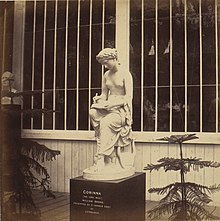
Corinna or Korinna (Ancient Greek: Κόριννα, romanized: Kórinna) was an ancient Greek lyric poet from Tanagra in Boeotia, described by Herbert Weir Smyth as the most famous ancient Greek woman poet after Sappho.[1] Although ancient testimonia portray her as a contemporary of Pindar (who lived between about 522 and 443 BC), not all modern scholars accept the accuracy of this tradition, and some claim that she is more likely to have lived in the Hellenistic period of 323 to 31 BC. PLEACUR
Apollodoros was an ancient Athenian red-figure vase painter who was active in around 500 BCE.
Amestris (Greek: Άμηστρις, Amēstris, perhaps the same as Άμαστρις, Amāstris, from Old Persian Amāstrī-, "strong woman"; died c. 424 BC)[3
Arcesilaus III of Cyrene (Greek: Ἀρκεσίλαος, flourished 6th century BC) was the sixth Greek Cyrenaean King and was a member of the Battiad dynasty. He succeeded his father as king of Cyrene in 530 BC and was ruler until he was killed by Cyrenaean exiles around 515 BC.
Artystone (Greek Ἀρτυστώνη Artystone; Elamite Ir-taš-du-na, Ir-da-iš-du-na; from Old Persian *Artastūnā, "pillar of Arta, the deified true"[1]) was a Persian princess, daughter of king Cyrus the Great, and sister or half-sister of Cambyses II, Atossa and Sme
Aribaeus (Ancient Greek: Ἀρίβαιος), the king of the Cappadocians, was slain by the Hyrcanians, in the time of Cyrus the Great (that is, 6th century BCE), a
https://en.wikipedia.org/wiki/Aridolis


Epiktetos was an Attic vase painter in the early red-figure style. Besides Oltos, he was the most important painter of the Pioneer Group. He was active between 520 BC and 490 BC. His name translates as "newly acquired" which is most probably a reference to his slave status.[
Endoeus or Endoios[1] (Greek: Ἔνδοιος) was an ancient Greek sculptor who worked at Athens in the middle of the 6th century BC. Endoeus made an image of Athena dedicated by Callias the contemporary of Pisistratus at Athens about 564 BCDorieus (died c.510 BC; Greek: Δωριεύς)https://en.wikipedia.org/wiki/DemaratusDuke Dao of Cao (6th century BCE) (Chinese: 曹悼公; pinyin: Cáo Dào Gōng) was the twenty-second ruler of the vassal State of Cao during the Chinese Spring and Autumn period (770 – 475 BCE).[1]Damo (/ˈdeɪmoʊ/; Greek: Δαμώ; fl. c. 500 BC)
According to Hdt. 1.35-45
Corinna or Korinna (Ancient Greek: Κόριννα, romanized: Kórinna) was an ancient Greek lyric poet from Tanagra in Boeotia, described by Herbert Weir Smyth as the most famous ancient Greek woman poet after Sappho.[1] Although ancient testimonia portray her as a contemporary of Pindar (who lived between about 522 and 443 BC), not all modern scholars accept the accuracy of this tradition, and some claim that she is more likely to have lived in the Hellenistic period of 323 to 31 BC. PLEACUR
Duke Ping of Cáo[1] (Chinese: 曹平公, pinyin: Cáo Píng Gōng) was a nobleman in ancient China, who lived during the Zhou Dynasty.[2]
His personal name was 須/须 (Xū).
Pingʻs son Jī Wŭ later became Duke Dao of Cao after Ping died in 524 BC.[4]
Apollodoros was an ancient Athenian red-figure vase painter who was active in around 500 BCE.
Amestris (Greek: Άμηστρις, Amēstris, perhaps the same as Άμαστρις, Amāstris, from Old Persian Amāstrī-, "strong woman"; died c. 424 BC)[3
Arcesilaus III of Cyrene (Greek: Ἀρκεσίλαος, flourished 6th century BC) was the sixth Greek Cyrenaean King and was a member of the Battiad dynasty. He succeeded his father as king of Cyrene in 530 BC and was ruler until he was killed by Cyrenaean exiles around 515 BC.
Artystone (Greek Ἀρτυστώνη Artystone; Elamite Ir-taš-du-na, Ir-da-iš-du-na; from Old Persian *Artastūnā, "pillar of Arta, the deified true"[1]) was a Persian princess, daughter of king Cyrus the Great, and sister or half-sister of Cambyses II, Atossa and Sme
Aribaeus (Ancient Greek: Ἀρίβαιος), the king of the Cappadocians, was slain by the Hyrcanians, in the time of Cyrus the Great (that is, 6th century BCE), a
https://en.wikipedia.org/wiki/Aridolis


Comments
Post a Comment