600 bc dan 400 bc
| Aspelta | |||||
|---|---|---|---|---|---|
| Kushite King of Napata | |||||

Cartouche of Aspelta
| |||||
| Predecessor | Anlamani | ||||
| Successor | Aramatle-qo | ||||
| Died | c. 580 BCE | ||||
| Burial |
Nuri (Nu. 8)
| ||||
| Spouse | Mediken?, Henuttakhebit possibly , Weqemale, Arsata and Artaha | ||||
| Issue | Aramatle-qo, Queen Amanitakaye | ||||
| |||||
| Father | Senkamanisken ? | ||||
| Mother | Nasalsa | ||||
Jeremiah
| |
|---|---|

Jeremiah, as depicted by Michelangelo from the Sistine Chapel ceiling
| |
| Born | c. 650 BC |
| Died | c. 570 BC |
| Occupation | Prophet |
| Parent(s) | Hilkiah |
| Cyrus the Great | |
|---|---|
| |

Cyrus the Great with a Hemhem crown, or four-winged Cherub tutelary divinity, from a relief in the residence of Cyrus in Pasagardae.[2]
| |
| King of Persia | |
| Reign | 559–530 BC |
| Predecessor | Cambyses I |
| Successor | Cambyses II |
| King of Media | |
| Reign | 549–530 BC |
| Predecessor | Astyages |
| Successor | Cambyses II |
| King of Lydia | |
| Reign | 547–530 BC |
| Predecessor | Croesus |
| Successor | Cambyses II |
| King of Babylon | |
| Reign | 539–530 BC |
| Predecessor | Nabonidus |
| Successor | Cambyses II |
| Born | 598–600 BC[3] Anshan, Persia |
| Died | 4 December 530 BC[4] (aged 68–70) Along the Syr Darya |
| Burial | |
| Consort | Cassandane Amitis |
| Issue | Cambyses II Bardiya Artystone Atossa Roxane[4] |
| House | Achaemenid |
| Father | Cambyses I |
| Mother | Mandane of Media |
Peisistratos
| |
|---|---|

"Head of Pisistratus, and hand of Alcibiades" ("Tête de Pisistrate et main gauche d'Alcibiade"), a study by Ingres for The Apotheosis of Homer, circa 1823-1834. Ingres Museum.[1]
| |
| Tyrant of Athens | |
| Assumed office 561 BC, 559-556 BC, 545-528 BC | |
| Personal details | |
| Born | 608 BC Athens, Greece |
| Died | 528/7 BC Athens, Greece |
Anaximander
| |
|---|---|
.jpg) | |
| Born | c. 610 BC |
| Died | c. 546 BC |
| Era | Pre-Socratic philosophy |
| Region | Western philosophy |
| School | |
Main interests
| Metaphysics, astronomy, geometry, geography |
Notable ideas
| The apeiron is the arche Evolutionary view of living things[2][3] Earth floats unsupported Mechanical model of the sky Water of rain from evaporation |


 kambing
Anaxander or Anaxandros (Greek: Ἀνάξανδρος) was the 12th Agiad dynasty King[3] of Sparta[4] (ruled c. 640-615 BC).[
Bel-ibni was a Babylonian nobleman who served as King of Babylon for several years as the nominee of the Assyrian king Sennacherib.[1]
Sennacherib, believing that direct Assyrian rule was too costly, appointed Bel-ibni, a young Babylonian nobleman raised at the Assyrian court, King of Babylon in 703 BC.
Eurycrates (Greek: Εὐρυκράτης Eurykrates) was the 11th Agiad dynasty king of the Greek city-state of Sparta,[1][2] who was preceded by his father Polydorus followed by his son Anaxander.[3][4] He ruled from 665 to 640 BC.
Madius (Ancient Greek: Μάδιος), Madyes, or Madya was the Scythian king after his father Partatua. He "invaded and subjugated Media (c. 628)
Nessos Painter (real name unknown)
| |
|---|---|

Amphora attributed to the Nessos Painter depicting Nessos fighting Heracles
| |
| Born | Before 625 BCE |
| Died | After 600 BCE |
| Nationality | Greek |
| Other names | Netos Painter, Nettos Painter |
| Occupation | Vase painting |
| Known for | 600 BCE |
| Movement | Black-figure style |

The supposed house of Qurdi-Nergal was found near here at Tel Sultantepe

| 𒀭𒀝𒌉𒍑𒌶 Nabû-apla-uṣur | |
|---|---|

Cylinder seal of Nabopolassar, from Babylon. London, British Museum
| |
| King of the Neo-Babylonian Empire | |
| Reign | c. 626 – 605 BC |
| Predecessor | Sinsharishkun (Neo-Assyrian Empire) |
| Successor | Nebuchadnezzar II |
| Born | c. 658 BC |
| Died | 605 BC |

Dou Yuejiao, ancestral name Mi, clan name Ruo'ao, was a Chu politician and aristocrat during 7th century BCE. He was best known for being the initiator of the Ruo'ao rebellion, a rebellion of Ruo'ao clan against King Zhuang of Chu.
Ashur-uballit II, also spelled Assur-uballit II[4] (Akkadian: Aššur-uballiṭ[5], meaning "Ashur has kept alive"[5]), was the final king of Assyria, ruling from his predecessor Sinsharishkun's death at the Fall of Nineveh in 612 BC to his own defeat at Harran in 609 BC.[6][7][8] He was possibly the son of Sinsharishkun and likely the same person as a crown prince mentioned in inscriptions at the Assyrian capital of Nineveh in 626 and 623 BC.
Theopompus (Greek: Θεόπομπος) was a Eurypontid king of Sparta. He is believed to have reigned during the late 8th and early 7th century BC.
Teumman was a king of the ancient kingdom of Elam, ruling it from 664 to 653 BCE,[1] contemporary with the Assyrian king Ashurbanipal (668 - c. 627)
Ummanigash was briefly (from 653-632 BCE)[
Urtak or Urtaku was a king of the ancient kingdom of Elam,[1] which was to the southeast of ancient Babylonia. He ruled from 675 to 664 BCE, his reign overlapping those of the Assyrian kings Esarhaddon (681-669) and Ashurbanipal (668-627).[2]
The Girl of the Uchter Moor ourang medan
Piraeus Painter
| |
|---|---|

Early Attic black-figure amphora by the Piraeus Painter, found in Athens or Piraeus, Athens: National Archaeological Museum.
| |
| Born |
Unknown. Named from the circumstance that the first vase of the style was found in Piraeus.
Before 630 BC |
| Died | About 600 BC |
| Nationality | Probably Greek |
| Known for | Vase painting |
Notable work
| Amphorae and other pottery decorated with animal figures of much higher quality than the human figures. |
| Movement | Black-figure style |
| Heitun (黑臀) | |||||
|---|---|---|---|---|---|
| Duke Cheng of Jin | |||||
| Ruler of Jin | |||||
| Reign | 606–600 BC | ||||
| Predecessor | Duke Ling of Jin | ||||
| Successor | Duke Jing of Jin | ||||
| Died | 600 BC | ||||
| |||||
| Father | Duke Wen of Jin | ||||
| Mother | Princess of Zhou | ||||
Ardys (reigned c.652–c.603 BC; also known as Ardysus)
| King K’uang of Zhou 周匡王 | |||||
|---|---|---|---|---|---|
| King of China | |||||
| Reign | 612–607 BC | ||||
| Predecessor | King Qing of Zhou | ||||
| Successor | King Ding of Zhou | ||||
| Died | 607 BC | ||||
| |||||
| House | Zhou Dynasty | ||||
| Father | King Qing of Zhou[1] | ||||
| Josiah | |
|---|---|
 | |
| King of Judah | |
| Reign | 640 to 609 BCE |
| Predecessor | Amon of Judah |
| Successor | Jehoahaz of Judah |
| Born | c. 648 BCE probably Jerusalem |
| Died | Tammuz (July/August) 609 BCE (aged 38–39) Jerusalem |
| Spouse | Zebudah Hamutal |
| Issue | Johanan Jehoiakim Zedekiah Jehoahaz |
| House | House of David |
| Father | Amon |
| Mother | Jedidah |

| Yigao (夷皋) | |||||
|---|---|---|---|---|---|
| Duke Ling of Jin | |||||
| Ruler of Jin | |||||
| Reign | 620–607 BC | ||||
| Predecessor | Duke Xiang of Jin | ||||
| Successor | Duke Cheng of Jin | ||||
| Regent | Zhao Dun | ||||
| Died | 607 BC | ||||
| |||||
| Father | Duke Xiang of Jin | ||||
| Mother | Mu Ying | ||||
| Duke Kang of Qin 秦康公 | |
|---|---|
| Ruler of Qin | |
| Reign | 620–609 BC |
| Predecessor | Duke Mu of Qin |
| Successor | Duke Gong of Qin |
| Died | 609 BC |
| House | House of Ying |
| Father | Duke Mu of Qin |
| Mother | Mu Ji (daughter of Duke Xian of Jin) |
| Sinsharishkun | |
|---|---|

Letter written by Sinsharishkun to his primary enemy, Nabopolassar of Babylon, in which he recognizes him as King of Babylon and pleads to be allowed to retain his kingdom. Now in the Metropolitan Museum of Art.
| |
| King of the Neo-Assyrian Empire | |
| Reign | 627–612 BC[1] |
| Predecessor | Ashur-etil-ilani |
| Successor | Ashur-uballit II Nabopolassar (Neo-Babylonian Empire) |
| Died | August 612 BC[2] Nineveh |
| Issue | Ashur-uballit II[3] (?) |
| Akkadian | Sîn-šar-iškun Sîn-šarru-iškun |
| Dynasty | Sargonid dynasty |
| Father | Ashurbanipal |
| Mother | Libbali-sharrat |
| Religion | Ancient Mesopotamian religion |
| King Qing of Zhou 周頃王 | |||||
|---|---|---|---|---|---|
| King of China | |||||
| Reign | 618–613 BC | ||||
| Predecessor | King Xiang of Zhou | ||||
| Successor | King Kuang of Zhou | ||||
| Died | 613 BC[1] | ||||
| Issue | King Kuang of Zhou King Ding of Zhou Duke Kang of Liu | ||||
| |||||
| House | Zhou Dynasty | ||||
| Father | King Xiang of Zhou | ||||
| She 舍 | |||||
|---|---|---|---|---|---|
| Ruler of Qi | |||||
| Reign | 613 BC | ||||
| Predecessor | Duke Zhao of Qi | ||||
| Successor | Duke Yì of Qi | ||||
| Died | 613 BC | ||||
| |||||
| House | House of Jiang | ||||
| Father | Duke Zhao of Qi | ||||
| Mother | Zi Shu Ji | ||||
| Duke Zhao of Qi 齊昭公 | |||||
|---|---|---|---|---|---|
| Ruler of Qi | |||||
| Reign | 632–613 BC | ||||
| Predecessor | Duke Xiao of Qi | ||||
| Successor | She | ||||
| Died | 613 BC | ||||
| Spouse | Zi Shu Ji | ||||
| Issue | She, Duke of Qi | ||||
| |||||
| House | House of Jiang | ||||
| Father | Duke Huan of Qi | ||||
| Mother | Ge Ying | ||||
| Duke Gong of Chen 陳共公 | |
|---|---|
| 18th ruler of Chen | |
| Reign | 631–614 BC |
| Predecessor | Duke Mu of Chen |
| Successor | Duke Ling of Chen |
| Died | 614 BC |
| Issue | Duke Ling of Chen |
| Father | Duke Mu of Chen |
| Xiong Shangchen King Mu of Chu | |||||||||
|---|---|---|---|---|---|---|---|---|---|
| King of Chu | |||||||||
| Reign | 625–614 BC | ||||||||
| |||||||||
 | |
| O: diademed head of Ancus Marcius, lituus behind
ANCVS
| R: equestrian statue on 5 arches of aqueduct (Aqua Marcia)
PHILIPPVS A-Q-V-A-(MAR)
|
| Silver denarius struck by Lucius Marcius Philippus in Rome 56 BC. | |
| King Xiang of Zhou 周襄王 | |||||
|---|---|---|---|---|---|
| King of China | |||||
| Reign | 651–619 BC[1] | ||||
| Predecessor | King Hui of Zhou | ||||
| Successor | King Qing of Zhou | ||||
| Died | 619 BC | ||||
| Spouse | Queen Di | ||||
| Issue | King Qing of Zhou | ||||
| |||||
| House | Zhou Dynasty | ||||
| Father | King Hui of Zhou | ||||
| Mother | Queen Hui of Zhou | ||||
| Renhao 任好 | |
|---|---|
| Duke Mu of Qin | |
| Ruler of Qin | |
| Reign | 659–621 BC |
| Predecessor | Duke Cheng of Qin |
| Successor | Duke Kang of Qin |
| Died | 621 BC |
| House | House of Ying |
| Father | Duke De of Qin |
| Ji Chong'er Duke Wen | |||||
|---|---|---|---|---|---|
| Duke of Jin | |||||
_by_Li_Tang_(%E6%9D%8E%E5%94%90),_1140.jpg)
Duke Wen of Jin Recovering His State by Li Tang, 1140
| |||||
| Ruler of Jin | |||||
| Reign | 636–628 BC | ||||
| Predecessor | Duke Huai of Jin | ||||
| Successor | Duke Xiang of Jin | ||||
| Born | 697 BC | ||||
| Died | 628 BC (aged 68–69) | ||||
| Spouse | Ji Kui (zh:季隗) Qi Jiang (zh:齊姜) Huai Ying (zh:懷嬴) | ||||
| Issue | Botiao (伯鯈) Shuliu (叔劉) Duke Xiang Prince Yong (zh:公子雍) Prince Le (zh:公子樂) Duke Cheng | ||||
| |||||
| Father | Duke Xian of Jin | ||||
| Mother | Hu Ji | ||||
| Hu Yan | |||
|---|---|---|---|
| |||
| Chinese | 狐偃 | ||
| |||
| Courtesy name | |||
| Chinese | 子犯 | ||
| Literal meaning | Master Fan Viscount Fan | ||
| |||
| Other names | |
|---|---|
 |
| Duke Xi of Lu 魯僖公 | |||||
|---|---|---|---|---|---|
| Ruler of Lu | |||||
| Reign | 659 BC to 627 BC | ||||
| Predecessor | Duke Min of Lu | ||||
| Successor | Duke Wen of Lu | ||||
| Died | 627 BC | ||||
| Spouse | Unknown | ||||
| |||||
| House | House of Ji | ||||
| Father | Duke Zhuang of Lu | ||||
| Mother | Unknown | ||||
| Cypselus | |
|---|---|
| Tyrant of Corinth | |
| Reign | 657–627 BC |
| Predecessor | Bacchiadae |
| Successor | Periander |
| Born | prior to 670 BC Corinth |
| Died | 627 BC Corinth |
| Consort | Cratea |
| Issue | |
| Greek | Κύψελος |
| House | Cypselid |
| Father | Eëtion |
| Mother | Labda |
| Religion | Greek polytheism |
Zhao Cui (died 622 BCE)
Yuan Taotu 轅濤塗 (died c. 625 BC

Ashurbanipal depicted as king and high priest on a contemporary statue. Exhibited at the British Museum
Ancus Marcius (c. 677–617 BC ;[2] reigned 642–617 BC)[
| Huan (驩) | |||||
|---|---|---|---|---|---|
| Duke Xiang of Jin | |||||
| Ruler of Jin | |||||
| Reign | 627–621 BC | ||||
| Predecessor | Duke Wen of Jin | ||||
| Successor | Duke Ling of Jin | ||||
| Died | 621 BC | ||||
| Spouse | Mu Ying | ||||
| |||||
| Father | Duke Wen of Jin | ||||

Duke Gong of Cao (? – 618 BCE)
| Archelaus I | |
|---|---|

Didrachm of Archelaus I
| |
| King of Macedon | |
| Reign | 413–399 BC |
| Predecessor | Perdiccas II |
| Successor | |
| Spouse | unknown |
| Issue | Orestes Archelaus II several daughters |
| House | Macedon (Ancient Greece) |
| Dynasty | Argead |
| Father | Perdiccas II |
| Mother | unknown slave |
| Religion | Ancient Greek religion |

Painter of the Berlin Dancing Girl

Astyochus or Astyochos (Greek: Ἀστύοχος) was a Spartan navarch who served as commander of the collective Spartan naval forces along the coast of Asia Minor from 412–411 BC.[1]
Arete of Cyrene (/əˈriːtiː/; Greek: Ἀρήτη; fl. 5th–4th century BC)
Ariobarzanes (in Greek Ἀριoβαρζάνης), (Old Persian: Ariyabrdhna, Ariyaubrdhna) Ariobarzan or spelled as Ario Barzan or Aryo Barzan, perhaps signifying "exalting the Aryans" [1] (death: crucified in c. 362 BCE),
Aristophon (Greek: Ἀριστοφῶν; lived 4th century BC) was native of the deme of Azenia in Attica.[1] He lived about and after the end of the Peloponnesian War. In 412 BC,
Brennius was a legendary king of Northumberland and Allobroges, as recounted by Geoffrey of Monmouth. He was the son of Dunvallo Molmutius and brother of Belinus, probably based upon one or both of the historical Brenni.
Brennus (or Brennos) was a chieftain of the Senones. He defeated the Romans at the Battle of the Allia (18 July 390 BC)
Callias (Greek: Kαλλίας) was an ancient Athenian aristocrat and political figure. He was the son of Hipponicus and the daughter of Megacles (she later married Pericles[1]), an Alcmaeonid and the third member of one of the most distinguished Athenian families to bear the name of Callias. He was regarded as infamous for his extravagance and profligacy.
Historians sometimes designate him "Callias III" to distinguish him from his grandfather Callias II and from his grandfather's grandfather Callias ("Callias I").
Clearchus or Clearch (Ancient Greek: Κλέαρχος; born in Sparta circa 450 BC - died at Babylon in 401 BC),
Conon (Greek: Κόνων) (before 444 BC – after 394 BC)
Ctesias, who lived in the fifth century BC, was physician to the Achaemenid king Artaxerxes II, whom he accompanied in 401 BC on his expedition against his brother Cyrus the Younger. Ctesias was part of the entourage of King Artaxerxes at the Battle of Cunaxa (401 BC)
Cyrus the Younger
| |
|---|---|

Anonymous portrait of a Satrap of Asia Minor, around the time of Cyrus the Younger. From a coin of Ionia, Phokaia, circa 478-387 BC
| |
| Died | 401 BC |
| Allegiance | .svg) Achaemenid Empire Achaemenid Empire |
| Rank | Satrap |
| Battles/wars | Battle of Cunaxa tanah merah |
Ephialtes (Greek: Ἐφιάλτης, Ephialtēs) was an ancient Athenian politician and an early leader of the democratic movement there. In the late 460s BC,
Eteonicus first appears on the historical stage when serving under Astyochus in a campaign around Chios sometime during 413 BC – 412 BC without any notable accomplishments.[1]
In 412 BC – 411 BC
Eucleides[1] (Greek: Εὐκλείδης) was archon of Athens towards the end of the fifth century BC. He contributed towards the re-establishment of democracy during his years in office (403-402 BC)
Eudoxus of Cnidus (/ˈjuːdəksəs/; Ancient Greek: Εὔδοξος ὁ Κνίδιος, Eúdoxos ho Knídios; c. 390? – c. 337 BC)

Eurysthenes (Pergamon)

Evagoras or Euagoras (Ancient/Modern Greek: Εὐαγόρας) was the king of Salamis (411–374 BC) in Cyprus,
Himilco (died 396 BC)
Jīvaka Komārabhacca/Kumārabhṛta
| |
|---|---|

Thai image of Jīvaka, wearing prayer beads and a white robe
| |
| Other names | Medicine King, Thrice-crowned Physician, Kumārabhūta[1] |
| Personal | |
| Born |
Rājagṛha, Magadha
|
| Died |
Rājagṛha, Magadha
|
| Religion | Buddhism |
| Nationality | Indian |
| Parents | Father: Unidentified (Pāli tradition), Prince Abhaya (Dharmaguptaka tradition) or King Bimbisāra (other textual traditions); mother: Salāvatī (Pāli tradition) or Āmrapālī (other textual traditions)[2] |
| Alma mater | Takṣaśilā |
| Known for | Indian traditional medicine, Thai massage |
| Other names | Medicine King, Thrice-crowned Physician, Kumārabhūta[1] |
| Profession | Physician, healer |
| Senior posting | |
| Guru | The Buddha, Ātreya Punarvasu |
| Profession | Physician, healer |
| Post | Personal physician to the Buddha, King Bimbisāra, and King Ajātaśatru |
Lamprocles (Greek: Λαμπροκλῆς) was Socrates' and Xanthippe's eldest son. His two brothers were Menexenus and Sophroniscus. Lamprocles was only a boy (μειράκιον meirakion) at the time of Socrates' trial and death. According to Aristotle, Socrates' descendants as a whole turned out to be unremarkable "fools and dullards".[1]
Leon of Salamis (/ˈliːɒn, -ən/; Greek: Λέων) was a historical figure, mentioned in Plato's Apology, Xenophon's Hellenica and Andocides' On the Mysteries (1.94). This Leon may also be the renowned Athenian general Leon of the Peloponnesian War.

Ocellus Lucanus in a XIX century depiction
395 bc lysander born

In 404 BC, Alcibiades, exiled in the Achaemenid Empire province of Hellespontine Phrygia, was assassinated by Persian soldiers, who may have been following the orders of Satrap Pharnabazus II, at the instigation of Sparta. La mort d'Alcibiade. Philippe Chéry, 1791. Musée des Beaux-Arts, La Rochelle.
 (fl. c. 420 to c. 400 BCE).
William Hamilton by Joshua Reynolds, 1777, National Portrait Gallery London, 680, depicting the Meidias Painter's name vase in the bottom right hand corner. 400 bc

Duke Huan of Lu (Chinese: 魯桓公; pinyin: Lǔ Huán Gōng, died 694 BC
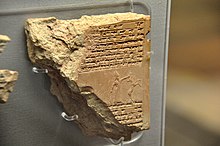 Ashur-nadin-shumi (died 694 BC) was the son of the Assyrian king Sennacherib, and an ancient King of Babylon.Duke Yì of Qi (Chinese: 齊懿公; pinyin: Qí Yì Gōng; died 609 BC)
Crown Prince Yukou (Chinese: 禦寇; pinyin: Yùkòu; died 672 BC)

Lysander
| |
|---|---|
,_maiolica_with_a_dusting_technique,_Castelli_manufacture,_Abruzzo._Italy,_17th_century.jpg)
Encounter between Cyrus the Younger (left), Achaemenid satrap of Asia Minor and son of Darius II, and Spartan general Lysander (right) in Sardis. The encounter was related by Xenophon.[1] Francesco Antonio Grue (1618–1673).
|

Mania or Manya (circa 440 BC - died circa 399 BC),
 (fl. c. 420 to c. 400 BCE).
| Nepherites I | |
|---|---|
| Nefaarud I, Nayfaurud I | |

Sphinx of pharaoh Nepherites I in the Louvre Museum
| |
| Pharaoh | |
| Reign | 399–393 BC (29th Dynasty) |
| Predecessor | Amyrtaeus |
| Successor | Hakor |
| Children | Hakor |
| Died | 393 BC[2] |
| Burial | Mendes? |
| Amyrtaeus | |
|---|---|
| Amenirdisu; Amyrtaios of Sais, Greek Ἀμύρταῖος Σαΐτης | |

Aramaic papyrus from Elephantine, dating to Regnal Year 5 of Amyrtaeus (400 BC).
|

King Huan of Zhou (Chinese: 周桓王; pinyin: Zhōu Húan Wáng; Wade–Giles: Chou Huan Wang; died 697 BC) was the fourteenth king of the Chinese Zhou Dynasty[2][3] and the second of the Eastern Zhou Dynasty (770-256 BC).
Ammeris was a governor of Sais attributed to the so-called "Proto-Saite Dynasty" of ancient Egypt.[1]
Biography[edit]
His name is only attested on Eusebius' epitome of Manetho's Aegyptiaca. Eusebius gave him 12 or 18 years depending on the versions, and calls him Ammeris (or Ameres) "the Nubian", placing him as the first king of the 26th Dynasty.[2]
A reconstructed account of events is as follows: when, around 720 – 716 BCE
Luli or Elulaios was king of the Phoenician city of Tyre (729–694 BC)
Bao Shuya (simplified Chinese: 鲍叔牙; traditional Chinese: 鮑叔牙; pinyin: Bào Shūyá; d.644 BC)
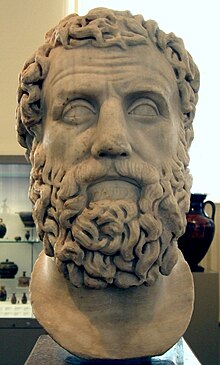
 Mentuemhat (c. 700 BCE –c.650 BCE)
Seated figure of Mentuemhat in Neues Museum, Berlin
Portrait of a bearded man (poet Archilochos ?). Roman copy 2nd c. AD of the Greek original of 4 c. BC.
Duke Xuan of Chen (Chinese: 陳宣公; pinyin: Chén Xuān Gōng; reigned 692 BC – died 648 BC)
Duke Xiang of Song (宋襄公) (died 637 BC)
Duke Hui of Jin (died 637 bc),
Duke Xiao of Qi (Chinese: 齊孝公; pinyin: Qí Xiào Gōng; died 633 BC)
Duke Mu of Chen (Chinese: 陳穆公; pinyin: Chén Mù Gōng; born 672 BC, reigned 647 BC – died 632 BC)
Cheng Dechen (Chinese: 成得臣; pinyin: Chéng Déchén; died 632 BCE)
Phraortes (from Old Persian: 𐎳𐎼𐎺𐎼𐎫𐎡𐏁, Fravartiš,[1][2] or Frâda via Ancient Greek Φραόρτης; died c. 653 BC),
Li Ji (Chinese: 驪姬; pinyin: Lí Jī; died 651 BCE
Duke Xian of Jin (simplified Chinese: 晋献公; traditional Chinese: 晉獻公; pinyin: Jìn Xiàn Gōng, died 651 BC),
Xiqi (simplified Chinese: 奚齐; traditional Chinese: 奚齊; pinyin: Xīqí, 665–651 BC)
Zhuozi (Chinese: 卓子, died 651 BC)
Shensheng (Chinese: 申生; pinyin: Shēnshēng, died 20 February 655 BCE[1])
Bao Shuya (simplified Chinese: 鲍叔牙; traditional Chinese: 鮑叔牙; pinyin: Bào Shūyá; d.644 BC)
Bartatua (Akkadian: m Bar-ta-tu-a[1] or Par-ta-tu-a,[2] Old Persian: *Pṛθ-tavā or *Pṛθ-tuvā,[3] Ancient Greek: Προτοθύης, romanized: Protothýēs[2]) was a Scythian king.[4]
Kashtariti, a Median chieftain, planned an incursion into Assyrian territory. His allies included the Cimmerians and the Mannaeans. Scythian king Ishpaka allied himself with the Medians in ca. 678 BCE.[
| Duke Huan of Qi 齊桓公 | |||||
|---|---|---|---|---|---|

Duke Huan of Qi and Guan Zhong
| |||||
| Ruler of Qi | |||||
| Reign | 685–643 BC | ||||
| Predecessor | Wuzhi | ||||
| Successor | Wukui | ||||
| Died | 7 October 643 BC | ||||
| Spouse | Wang Ji Xu Ying Cai Ji | ||||
| Issue | Wukui, Duke of Qi Duke Hui of Qi Duke Xiao of Qi Duke Zhao of Qi Duke Yì of Qi Qi Jiang | ||||
| |||||
| House | House of Jiang | ||||
| Father | Duke Xi of Qi | ||||
| Mother | Wey Ji | ||||
Guan Zhong
管仲 | |
|---|---|
Guan Zhong and Duke Huan of Qi
| |
| Born | 720 BC |
| Died | 645 BC (aged 75) |
| Other names | Yiwu (夷吾) |
| Occupation | Politician, philosopher |
Notable work
| Guanzi |
| Shamash-shum-ukin | |
|---|---|

Detail of a stone monument of Shamash-shum-ukin as a basket-bearer. 668–655 BC, from the temple of Nabu at Borsippa. Currently housed in the British Museum.
| |
| King of Babylon | |
| Reign | 668–648 BC |
| Predecessor | Esarhaddon |
| Successor | Kandalanu |
| Died | 648 BC |
| Akkadian | Šamaš-šuma-ukin Šamaš-šumu-ukīn |
| Dynasty | Sargonid dynasty |
| Father | Esarhaddon |
| Mother | Unknown[1], possibly of Babylonian origin.[2] |
| Religion | Ancient Mesopotamian religion |
| Tullus Hostilius | |
|---|---|

Tullus Hostilius, fictional 16th-century depiction published by Guillaume Rouillé
| |
| King of Rome | |
| Reign | 673–642 BC |
| Predecessor | Numa Pompilius |
| Successor | Ancus Marcius |
| Teispes | |
|---|---|
| Great King, King of Anshan[1] | |

Position of Teispes in the Achaemenid lineage according to Darius the Great in the Behistun inscription.
| |
| King of Persia | |
| Reign | 675–640 BC |
| Born | ? |
| Died | 640 BC |
| Issue | |
| House | Achaemenid |
| Father | Achaemenes |
| Manasseh | |
|---|---|
 | |
| King of Judah | |
| Reign | coregency 697–687 BC sole reign 687–643 BC |
| Predecessor | Hezekiah |
| Successor | Amon |
| Born | c. 709 BC probably Jerusalem |
| Died | c. 643 BC (aged 65 or 66) probably Jerusalem |
| Spouse | Meshullemeth |
| Issue | Amon |
| House | House of David |
| Father | King Hezekiah |
| Mother | Hephzibah |

 Mentuemhat (c. 700 BCE –c.650 BCE)
Duke Xiang of Song (宋襄公) (died 637 BC)
Duke Hui of Jin (died 637 bc),
Duke Xiao of Qi (Chinese: 齊孝公; pinyin: Qí Xiào Gōng; died 633 BC)
Duke Mu of Chen (Chinese: 陳穆公; pinyin: Chén Mù Gōng; born 672 BC, reigned 647 BC – died 632 BC)
| King Hui of Zhou 周惠王 | |||||
|---|---|---|---|---|---|
| King of China | |||||
| Reign | 676–652 BC | ||||
| Predecessor | King Xi of Zhou | ||||
| Successor | King Xiang of Zhou | ||||
| Died | 652 BC | ||||
| Spouse | Queen Chen Queen Hui of Zhou | ||||
| Issue | King Xiang of Zhou Duke Zhao of Gan Wang Ji | ||||
| |||||
| House | Zhou Dynasty | ||||
| Father | King Xi of Zhou[1] | ||||
Cylon (Greek: Κύλων Kylon) was an Athenian associated with the first reliably dated event in Athenian history, the Cylonian Affair, an attempted seizure of power in the city.
Cylon, one of the Athenian nobles and a previous victor of the Olympic Games, attempted a coup in 632 BC
Cheng Dechen (Chinese: 成得臣; pinyin: Chéng Déchén; died 632 BCE)
Phraortes (from Old Persian: 𐎳𐎼𐎺𐎼𐎫𐎡𐏁, Fravartiš,[1][2] or Frâda via Ancient Greek Φραόρτης; died c. 653 BC),
Li Ji (Chinese: 驪姬; pinyin: Lí Jī; died 651 BCE
Duke Xian of Jin (simplified Chinese: 晋献公; traditional Chinese: 晉獻公; pinyin: Jìn Xiàn Gōng, died 651 BC),
Xiqi (simplified Chinese: 奚齐; traditional Chinese: 奚齊; pinyin: Xīqí, 665–651 BC)
Zhuozi (Chinese: 卓子, died 651 BC)
| Tantamani | |||||
|---|---|---|---|---|---|
| Kushite King of Napata | |||||

Head of a statue, perhaps showing Amun, bearing the name of Tantamani on its back pillar (Ashmolean Museum)
| |||||
| Burial |
El-Kurru (K. 16)
| ||||
| Spouse | Piankharty, [..]salka, possibly Malaqaye, | ||||
| Issue | Possibly Atlanersa, Queen Yeturow, Queen Khaliset | ||||
| |||||
| Father | Shabaka (or Shebitku?) | ||||
| Mother | Queen Qalhata | ||||
| Necho I | |
|---|---|
![Horus statuette bearing the cartouches of Necho I. London, Petrie Museum.[1]](https://en.wikipedia.org/wiki/File:Necho_I_Horus.png)
Horus statuette bearing the cartouches of Necho I. London, Petrie Museum.[1]
| |
| Pharaoh | |
| Reign | 672–664 BCE (26th Dynasty) |
| Predecessor | Nekauba or Tefnakht II[2] |
| Successor | Psamtik I |
| Consort | Istemabet[4] |
| Children | Psamtik I, possibly Ta-khered-en-ta-ihet-[weret] and Meresamun |
| Father | Tefnakht II[5] |
| Died | 664 BCE |
| Taharqa | |
|---|---|

Granite sphinx of Taharqa from Kawa in Sudan
| |
| Pharaoh | |
| Reign | 690–664 BC (25th dynasty) |
| Predecessor | Shabaka |
| Successor | Tantamani |
| Consort | Great Queen Takahatenamun, Atakhebasken, Naparaye, Tabekenamun[2] |
| Children | Amenirdis II, Ushankhuru, Nesishutefnut |
| Father | Piye |
| Mother | Abar |
| Died | 664 BC |
| Esarhaddon | |
|---|---|

Esarhaddon, closeup from his victory stele, now housed in the Pergamon Museum
| |
| King of the Neo-Assyrian Empire | |
| Reign | 681–669 BC |
| Predecessor | Sennacherib |
| Successor | Ashurbanipal Shamash-shum-ukin (in Babylon) |
| Born | c. 713 BC[1] |
| Died | 1 November 669 BC[2] (aged c. 44) Harran |
| Spouse | Esharra-hammat Other wives |
| Issue Among others | Serua-eterat Ashurbanipal Shamash-shum-ukin |
| Akkadian | Aššur-aḫa-iddina Aššur-etel-ilani-mukinni[n 1] |
| Dynasty | Sargonid dynasty |
| Father | Sennacherib |
| Mother | Naqi'a |
| Religion | Ancient Mesopotamian religion |
| Achaemenes | |
|---|---|
| Apical ancestor of the Achaemenid dynasty | |

Position of Achaemenes in the Achaemenid lineage.
| |
| Successor | Teispes |
| Issue | Teispes |
| Old Persian | Hakhāmaneš |
| House | Achaemenid |
| Deioces | |
|---|---|
| The First Legislator (Median: Paradat) gedung | |
.jpg)
Deioces commands the Medes to set forth on their course of conquest. After a painting by Louis Boulanger (1806-1867).[1]
| |
| King of the Medes | |
| Reign | 727-675 BC[2] |
| Successor | Phraortes |
| Died | 675 BC[2] |
| Religion | Old Iranian religion |
| Numa Pompilius | |
|---|---|

Numa Pompilius shown as an effigy on a Roman coin minted by Gnaeus Calpurnius Piso during the reign of Emperor Augustus. Piso himself claimed descent from the king.
| |
| King of Rome | |
| Reign | 715–673 BC |
| Predecessor | Romulus |
| Successor | Tullus Hostilius |
| Father | Pomponius |
| Duke De of Qin 秦德公 | |
|---|---|
| Ruler of Qin | |
| Reign | 677–676 BC |
| Predecessor | Duke Wu of Qin |
| Successor | Duke Xuan of Qin |
| Born | 710 BC |
| Died | 676 BC (aged 34) |
| Issue | Duke Xuan of Qin Duke Cheng of Qin Duke Mu of Qin |
| House | House of Ying |
| Father | Duke Xian of Qin |
| Mother | Lu Ji (鲁姬) |
| Amon | |
|---|---|

Amon from Guillaume Rouillé's Promptuarii Iconum Insigniorum, 1554
| |
| King of Judah | |
| Reign | 643/642 – 641/640 BC[1][2] |
| Predecessor | Manasseh |
| Successor | Josiah |
| Born | c. 664 BC Judah |
| Died | c. 641 BC Jerusalem |
| Burial | 641 BC
Garden of Uzza[3]
|
| Consort | Jedidah[4] |
| Issue | Josiah |
| Hebrew | אָמוֹן |
| House | House of David |
| Father | Manasseh |
| Mother | Meshullemeth[5] |
| Religion | Idolatry |
| Xiong Yun | |||||||||
|---|---|---|---|---|---|---|---|---|---|
| King of Chu | |||||||||

Qing Dynasty woodblock print showing King Cheng with Zheng Mao.
| |||||||||
| Reign | 671–626 BC | ||||||||
| |||||||||
Ashur-nadin-shumi (died 694 BC) was the son of the Assyrian king Sennacherib, and an ancient King of Babylon.Duke Yì of Qi (Chinese: 齊懿公; pinyin: Qí Yì Gōng; died 609 BC)
King Wu of Chu (Chinese: 楚武王, died 690 BC)
Nergal-ushezib, originally Shuzub, was a Babylonian nobleman who was installed as King of Babylon by the Elamites in 694 BC
Duke Zhuang of Chen (Chinese: 陳莊公; pinyin: Chén Zhuāng Gōng; reigned 699 BC – died 693 BC) was the fifteenth ruler of the ancient Chinese state of Chen during the Spring and Autumn period. His ancestral surname was Gui (媯), given name Lin (林), and Zhuang (莊) was his posthumous name.[1]
Wuzhi (Chinese: 無知; pinyin: Wúzhī; died 685 BC)
Mushezib-Marduk (reigned 693 BC-689 BC)
https://en.wikipedia.org/wiki/Candaules bajingan
Abdi-Milkutti (=Abdi-milki) was a Sidonian king (reigned ca. 680-677 BC)
Lin was a middle son of Duke Huan of Chen, w
Duke Xiang of Qi (Chinese: 齊襄公; pinyin: Qí Xiāng Gōng; died 686 BC)Wuzhi (Chinese: 無知; pinyin: Wúzhī; died 685 BC)
| Sennacherib pawang hujan | |
|---|---|

Sennacherib during his Babylonian war, relief from his palace in Nineveh
| |
| King of the Neo-Assyrian Empire | |
| Reign | 705–681 BC |
| Predecessor | Sargon II |
| Successor | Esarhaddon |
| Born | c. 740 BC Kalhu |
| Died | 681 BC Nineveh |
| Spouse | Tašmētu-šarrat Naqī'ā/Zakūtu |
| Issue | Ashur-nadin-shumi Ashur-ili-muballissu Arda-Mulissu Ashur-shumu-ushabshi Esarhaddon Nergal-shumu-ibni Sharezer Shadittu |
| Dynasty | Sargonid dynasty |
| Father | Sargon II |
| Mother | Atalyā |
| Yu | |||||
|---|---|---|---|---|---|
| Duke Huai of Jin | |||||
| Ruler of Jin | |||||
| Reign | 637 BC | ||||
| Predecessor | Duke Hui of Jin | ||||
| Successor | Duke Wen of Jin | ||||
| Died | 637 BC | ||||
| Spouse | Huai Ying | ||||
| |||||
| Father | Duke Hui of Jin | ||||
| Mother | Princess of Liang | ||||
| Yu | |||
|---|---|---|---|
| Chinese | 圉 | ||
| |||
| Posthumous name | |||
| Traditional Chinese | 晉懷公 | ||
| Simplified Chinese | 晋怀公 | ||
| |||
| Xiong Jian | |||||||||
|---|---|---|---|---|---|---|---|---|---|
| King of Chu | |||||||||
| Reign | 676–672 BC | ||||||||
| |||||||||
| King Zhuang of Zhou 周莊王 | |||||
|---|---|---|---|---|---|
| King of China | |||||
| Reign | 696–682 BC | ||||
| Predecessor | King Huan of Zhou | ||||
| Successor | King Xi of Zhou | ||||
| Died | 682 BC | ||||
| Spouse | Yao Ji | ||||
| Issue | King Xi of Zhou Prince Tui | ||||
| |||||
| House | Zhou Dynasty | ||||
| Father | King Huan of Zhou | ||||
| Hezekiah abahkaknah | |
|---|---|

King Hezekiah from Guillaume Rouillé's Promptuarii Iconum Insigniorum, 1553
| |
| King of Judah | |
| Reign | coregency with Ahaz 729, sole reign 716–697 BC, coregency with Manasseh 697–687 BC |
| Predecessor | King Ahaz |
| Successor | Manasseh |
| Born | c. 739 BC probably Jerusalem |
| Died | c. 687 BC (aged 51 or 52) probably Jerusalem |
| Burial |
Jerusalem
|
| Spouse | Hephzibah |
| Issue | Manasseh |
| House | House of David |
| Father | King Ahaz |
| Mother | Abijah (also called Abi) |
| Religion | Judaism |
| Duke Wu of Qin 秦武公 | |
|---|---|
| Ruler of Qin | |
| Reign | 697–678 BC |
| Predecessor | Chuzi I |
| Successor | Duke De of Qin |
| Died | 678 BC |
| House | House of Ying |
| Father | Duke Xian of Qin |
| Mother | Lu Ji (鲁姬) |
| Min, Marquis of Jin 晉侯緡 | |
|---|---|
| Ruler of the State of Jin | |
| Reign | 704–678 BC |
| Predecessor | Marquis Xiaozi of Jin |
| Successor | Duke Wu of Jin |
| Died | 678 BC |
| Father | Marquis E of Jin |
| King Xi of Zhou 周僖王 | |||||
|---|---|---|---|---|---|
| King of China | |||||
| Reign | 681–677 BC | ||||
| Predecessor | King Zhuang of Zhou | ||||
| Successor | King Hui of Zhou | ||||
| Died | 677 BC | ||||
| Issue | King Hui of Zhou Duke Wen of Wangshu | ||||
| |||||
| Father | King Zhuang of Zhou | ||||
| Duke Wu of Jin 晉武公 | |
|---|---|
| Ruler of the State of Jin | |
| Reign | 678–677 BC |
| Predecessor | Marquis Min of Jin |
| Successor | Duke Xian of Jin |
| Ruler of the State of Quwo | |
| Reign | 716–679 BC |
| Predecessor | Zhuang Bo of Quwo |
| Successor | Merged into Jin |
| Died | 677 BC |
| Father | Zhuang Bo of Quwo |
| Xiong Zi | |||||||||
|---|---|---|---|---|---|---|---|---|---|
| King of Chu | |||||||||
| Reign | 689–677 BC | ||||||||
| |||||||||
| Wen Jiang 文姜 | |
|---|---|
| Duchess of Lu | |
| Died | 673 BC |
| Spouse | Duke Huan of Lu |
| Issue | Duke Zhuang of Lu Shu Ya (叔牙) Ji You (季友) |
| Father | Duke Xi of Qi |
| Duke Xuan of Qin 秦宣公 | |
|---|---|
| Ruler of Qin | |
| Reign | 675–664 BC |
| Predecessor | Duke De of Qin |
| Successor | Duke Cheng of Qin |
| Died | 664 BC |
| House | House of Ying |
| Father | Duke De of Qin |


Comments
Post a Comment