100ad
Niki Urakami (浦上 仁騎, Urakami Niki, born November 11, 1996
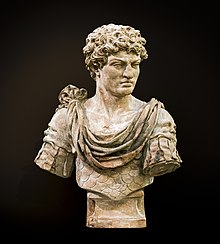
Gaius Rubellius Plautus (33–62 AD)
Titus Petronius Secundus (40–97) Quintus Petilius Secundus was a Roman legionary. He was born around 40 AD, probably in Milan and died 25 years later in Bonn.
Quintus Petilius Secundus
Empress Ma (馬皇后, personal name unknown) (40 – August 16, 79[1])https://en.wikipedia.org/wiki/Frontinushttps://en.wikipedia.org/wiki/Dio_Chrysostom surat
Quintus Petilius Secundus was a Roman legionary. He was born around 40 AD, probably in Milan and died 25 years later in Bonn.
Quintus Petilius Secundus
Empress Ma (馬皇后, personal name unknown) (40 – August 16, 79[1])https://en.wikipedia.org/wiki/Frontinushttps://en.wikipedia.org/wiki/Dio_Chrysostom surat
Julia Iotapa or Julia Iotape (born around 45), daughter of King Antiochus IV of Commagene, was a Queen of Cetis, consort of Gaius Julius Alexander, son of Herodian prince Gaius Julius Tigranes.
 Drusilla of Mauretania (Greek: Δρουσίλλη, 38-79) was a Princess of Mauretania, North Africa and was the great grandchild of Ptolemaic Greek Queen Cleopatra VII of Egypt and Roman Triumvir Mark Antony.[1]
 Gaius Julius Archelaus Antiochus Epiphanes, also known as Julius Archelaus Epiphanes; Epiphanes; Gaius Julius Antiochus Epiphanes or simply known as Gaius (Greek: Γάιος Ἰούλιος Ἀρχέλαος Ἀντίοχος Ἐπιφανής, 38-92 AD
https://en.wikipedia.org/wiki/Josephus kurcaci
Lucius Annius Vinicianus (36[1] - 66) was a Roman senator during the later part of the first century. He is best known from a failed plot to overthrow Nero in 62 CE.

 Persius
Ban Chao (Chinese: 班超; pinyin: Bān Chāo; Wade–Giles: Pan1 Ch'ao1; 32–102 CE),

Roman aureus struck under Trajan, c. 115. The reverse commemorates both Trajan's natural father and Ulpia's brother, Marcus Ulpius Traianus (right), and his adoptive father, the Deified Nerva (left).
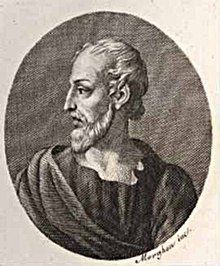 (c. 28 – c. 103 CE
Silius Italicus

a forged denarius of Vindex, minted in born AD 68, around the time of his rebellion.
https://en.wikipedia.org/wiki/Joseph_Li_Jing
Tiberius Julius Caesar Nero Gemellus, known as Tiberius Gemellus (Latin: Tiberius Caesar Drusus filius Tiberius Augustus nepos divus Augustus pronepos;[1] 10 October AD 19–37/38)
Junia Lepida (Classical Latin: IVNIA•LEPIDA, PIR2 I 861, ca AD 18 - 65)
 Decimus Junius Silanus Torquatus (16 AD-64 AD)
Tiberius Claudius Drusus (Classical Latin: CLAVDIVS•DRVSVS or CLAVDIVS•DRVSVS•CLAVDII•FILIVS;[1] c. AD 16 – AD 20
Vitellius (/vɪˈtɛliəs/; Latin: Aulus Vitellius Germanicus Augustus;[a] 24 September 15 – 22 December 69 AD)[1] was Roman Emperor for eight months, from 16 April to 22 December 69 AD
 skull
skull
Vitellius' denarius, minted in 69 AD during the Year of the Four Emperors. Obverse: A. VITTELIVS GERMANICVS IMP. Reverse: victory seated left holding patera and palm branch.
Lucius Verginius Rufus (AD 15-97Thumelicus (born 15 AD; died before 47 AD, probably in 30 or 31
Ennia Thrasylla,[1] also known as Ennia Naeva or Ennia Naevia,[2][3] Ennia the wife of Macro,[4] Ennia[5] and Eunia (about 15[6] – 38,[
Marcus Junius M. f. M. n. Silanus (AD 14-54)
Titus Vinius (12–69)
https://en.wikipedia.org/wiki/Gaius_Silius_(consul_designatus_49_AD)
https://en.wikipedia.org/wiki/Penitent_thief jesus
Guo Shengtong (郭聖通; 6-52 CE) 
Gaius Manlius Valens (AD 6 - 96)
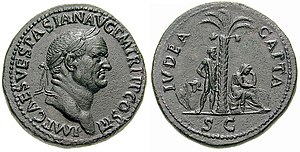
Vespasian sestertius, struck in 71 to celebrate the victory in the first Jewish-Roman war. Obverse: IMP. CAES. VESPASIAN AVG. P. M., TR. P., P. P., COS. III. The legend on the reverse says: IVDEA CAPTA, "Judaea conquered" – S. C.

The so-called "Pseudo-Corbulo", once thought to be the portrait of Gnaeus Domitius Corbulo, actually a portrait of an unknown personage of the 1st century BC. Parian marble. (Centrale Montemartini, Rome)
 https://en.wikipedia.org/wiki/Antoninus_Pius
en.wikipedia.org/wiki/Lucius_Caecilius_Iucundus
 gangga
Map of the Characene Kingdom.
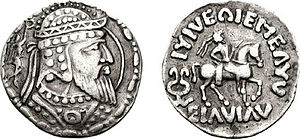
Coin of Artav
Martyrdom of Saint Andrew in the Nuremberg Chronicle
https://en.wikipedia.org/wiki/Publius_Aelius_Hadrianus_Afer
rusa
Fannia (fl. around 100 AD)
https://en.wikipedia.org/wiki/Tiberius_Julius_Alexander
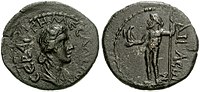 ikan
ikan
Valeria Messalina[1] (Latin pronunciation: [waˈlɛrɪ.a mɛssaːˈliːna]; c. 17/20–48)
Gnaeus Pompeius Longinus (died AD 105)
Pythagoras, a freedman of the Roman emperor Nero, was married in a public ceremony in which the emperor took the role of bride.[1][2][3][4]
Lucius Junius Gallio Annaeanus or Gallio was a Roman senator and brother of the famous writer Seneca. He is best known for his impartial judgment of a legal case involving Paul the Apostle in Corinth. born 5 bc
Geng Yan (Chinese: 耿弇; 3–58 AD) was a Chinese general of the Eastern Han Dynasty.
Tiberius Claudius Balbillus Modestus (AD 3-79),
Coin of Vologases II, Seleucia mint
Marcus Valerius Probus, also known as M. Valerius Probus Berytius or Probus the Berytian[1] (c. 20/30 – 105 AD), was a Roman grammarian and critic, who flourished during Nero's reign.[2]Quintus Marcius Turbo was prefect of the Praetorian Guard and a close friend and military advisor to both emperor Trajan and Hadrian during the early 2nd century.

Sporus was a young boy whom the Roman Emperor Nero supposedly favored, had castrated, and married.
Rabel II Soter (ar-Rabil) was the last ruler of the Nabataean Kingdom, ruling from 70 to 106.[Quintus Sosius Senecio (fl. 1st century) was a Roman senator who was favored by the emperors Domitian and Trajan. As a result of this relationship, he was twice ordinary consul, an unusual and prestigious honor: first in 99, with Aulus Cornelius Palma Frontonianus as his colleague; and again in 107 as the colleague of Lucius Licinius Sura, who was himself consul for the third time. babi buddha homo patkay
Soranus of Ephesus (Greek: Σωρανός ὁ Ἑφέσιος; fl. 1st/2nd century AD)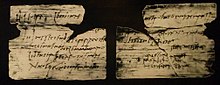
Possibly the earliest extant words written by a woman in Latin
M. Salvidenus was the governor of the Roman Iudaea Province (c. 80)https://en.wikipedia.org/wiki/Gaius_Musonius_Rufus bikin surat
was a puppet emperor
Ofonius Tigellinus, also known as Tigellinus Ofonius, Ophonius Tigellinus, Sophonius Tigellinus and Gaius Ofonius Tigellinus (c. 10–69),
Lucius Vipstanus Poplicola Messalla[1] (c. 10 – aft. 59)
Lucius Junius Caesennius Paetus (c. 20 - 72?
Faustus Cornelius Sulla Felix (22–62 AD)
Berenice of Cilicia, also known as Julia Berenice and sometimes spelled Bernice (Greek: Βερενίκη, Bereníkē; 28 AD – after 81)
Emperor Ming of Han (15 June 28 – 5 September 75),
Publius Aelius Hadrianus Marullinus (c. 31 – c. 91 AD)
Rubellia Bassa (born between 33-38)
| Claudia Antonia | |
|---|---|
 | |
| Born | AD 30 |
| Died | AD 66 |
| Spouse | Gnaeus Pompeius Magnus Faustus Cornelius Sulla Felix |
| Issue | son |
| House | Julio-Claudian Dynasty |
| Father | Claudius |
| Mother | Aelia Paetina |
Marcus Vettius Bolanus (c. 33 – 76)
Jia Kui (30–101 CE)
King Mobon of Goguryeo (30 – 53, r. 48–53)
| Ban Chao keledai | |
|---|---|

Statue of Ban Chao in Kashgar
|
Ban Gu
| |
|---|---|

Ban Gu, 1st-century Chinese poet, historian, and compiler of the Book of Han
| |
| Born | ad 32 |
| Died | ad 92 (aged 59–60) |
| Other names | Mengjian |
| Occupation | Historian, poet, politician |
| Known for | Book of Han |
| Relatives | Ban Biao (father) Consort Ban (grand-aunt) Ban Chao (brother) Ban Zhao (sister) |
Euphrates
Euphrates the Stoic
Quintus Junius Arulenus Rusticus (c. 35 – 93 AD
Gaius Nymphidius Sabinus (c. 35–68)
Marcus Fabius Quintilianus (c. 35 – c. 100 AD anak yang di belah
| Statilia Messalina | |||||
|---|---|---|---|---|---|

Statilia Messalina, third wife of Nero
| |||||
| Empress of the Roman Empire | |||||
| Reign | AD 66 – 9 June AD 68 | ||||
| Born | c. AD 35 | ||||
| Died | after AD 68 (age c. 33 or older) | ||||
| Spouse | Marcus Julius Vestinus Atticus Nero | ||||
| Issue | a son | ||||
| |||||
| House | Julio-Claudian Dynasty (by marriage) | ||||
| Father | Titus Statilius Taurus | ||||
| Galeria Fundana | |||||
|---|---|---|---|---|---|

Galeria Fundana from Promptuarii Iconum Insigniorum]].
| |||||
| Empress of the Roman Empire | |||||
| Reign | 69 | ||||
| Predecessor | Statilia Messalina | ||||
| Successor | Domitia Longina | ||||
| Spouse | Emperor Vitellius | ||||
| Issue |
| ||||
| |||||
Pedanius Dioscorides
| |
|---|---|

Dioscorides receives a mandrake root, an illumination from the 6th century Greek Juliana Anicia Codex
| |
| Born | c. 40 AD |
| Died | c. 90 AD |
| Other names | Dioscurides |
| Occupation | Army physician, pharmacologist, botanist |
| Known for | De Materia Medica |
Gnaeus Julius Agricola
tanah wilayah | |
|---|---|

A statue of Agricola erected at the Roman Baths at Bath in 1894
| |
| Born | 13 June 40 Gallia Narbonensis |
| Died | 23 August 93 (aged 53) Gallia Narbonensis |
| Allegiance | Roman Empire |
| Years of service | 58–85 |
| Rank | Proconsul |
| Commands held | Legio XX Valeria Victrix Gallia Aquitania Britannia |
| Battles/wars | Battle of Watling Street Battle of Mons Graupius |
| Awards | Ornamenta triumphalia |
Pope Saint
Sixtus I
| |
|---|---|
| Bishop of Rome | |
 | |
| Papacy began | c. 115 |
| Papacy ended | c. 124 |
| Predecessor | Alexander I |
| Successor | Telesphorus |
| Personal details | |
| Birth name | Sixtus or Xystus |
| Born | 42 Rome, Roman Empire |
| Died | 125 Rome, Roman Empire |
| Sainthood | |
| Feast day | 6 April |
| Title as Saint | Martyr |
| Other popes named Sixtus | |
| Britannicus | |||||
|---|---|---|---|---|---|
 | |||||
| Born | 12 February AD 41 Rome | ||||
| Died | c.11 February AD 55 (aged 13) Rome | ||||
| Burial | |||||
| |||||
| House | Julio-Claudian Dynasty | ||||
| Father | Claudius | ||||
| Mother | Valeria Messalina | ||||
 Quintus Petilius Secundus was a Roman legionary. He was born around 40 AD, probably in Milan and died 25 years later in Bonn.
Julia Iotapa or Julia Iotape (born around 45), daughter of King Antiochus IV of Commagene, was a Queen of Cetis, consort of Gaius Julius Alexander, son of Herodian prince Gaius Julius Tigranes.
Publius Metilius Nepos (c. 45–127)
Marcia Servilia Sorana or commonly known as Servilia (40s-66)
https://en.wikipedia.org/wiki/Lucius_Flavius_Silva gunung
Lucius Antistius Rusticus (c. 48[1] - 93)
Lucius Aelius Lamia Plautius Aelianus (c. 45 - 81/96)
 Lucius Calpurnius Piso Frugi Licinianus (38 – 15 January 69)
https://en.wikipedia.org/wiki/Lucius_Flavius_Silva gunung
Lucius Antistius Rusticus (c. 48[1] - 93)
Lucius Aelius Lamia Plautius Aelianus (c. 45 - 81/96)
| Titus homo | |||||||||
|---|---|---|---|---|---|---|---|---|---|
| Augustus | |||||||||

Bust of Emperor Titus, in the Capitoline Museum, Rome
| |||||||||
| Emperor of the Roman Empire | |||||||||
| Reign | 23 June 79 – 13 September 81 | ||||||||
| Predecessor | Vespasian | ||||||||
| Successor | Domitian | ||||||||
| Born | 30 December 39 Rome, Italia | ||||||||
| Died | 13 September 81 (aged 41) Rome, Italia | ||||||||
| Burial |
Rome
| ||||||||
| Spouse | Arrecina Tertulla (c.62 AD; her death) Marcia Furnilla (c.63–65 AD; divorced) | ||||||||
| Issue | Julia Flavia | ||||||||
| |||||||||
| Dynasty | Flavian | ||||||||
| Father | Vespasian | ||||||||
| Mother | Domitilla | ||||||||
| Julia Drusilla | |
|---|---|
| Born | mid–AD 39 Rome, Roman Empire |
| Died | 24 January AD 41 (aged 1) Palatine Hill, Rome, Roman Empire |
| Burial | |
| Dynasty | Julio-Claudian |
| Father | Caligula |
| Mother | Milonia Cæsonia |
Lucan
hujan | |
|---|---|

Modern bust of Lucan in Córdoba. There are no ancient likenesses.
| |
| Born | AD 3 November 39 Corduba, Hispania Baetica, Roman Empire |
| Died | AD 30 April 65 (aged 25) |
| Occupation | Poet |
| Spouse | Polla Argentaria |
Lucius Calpurnius Piso Frugi Licinianus (38 – 15 January 69) Drusilla of Mauretania (Greek: Δρουσίλλη, 38-79) was a Princess of Mauretania, North Africa and was the great grandchild of Ptolemaic Greek Queen Cleopatra VII of Egypt and Roman Triumvir Mark Antony.[1] Gaius Julius Archelaus Antiochus Epiphanes, also known as Julius Archelaus Epiphanes; Epiphanes; Gaius Julius Antiochus Epiphanes or simply known as Gaius (Greek: Γάιος Ἰούλιος Ἀρχέλαος Ἀντίοχος Ἐπιφανής, 38-92 AD
| Nero birdcage red or blue | |||||
|---|---|---|---|---|---|
| Augustus | |||||

Bust of Nero at the Musei Capitolini, Rome
| |||||
| Emperor of the Roman Empire | |||||
| Reign | 13 October 54 AD – 9 June 68 AD (13 years and 8 months) | ||||
| Predecessor | Claudius | ||||
| Successor | Galba | ||||
| Born | Lucius Domitius Ahenobarbus 15 December 37 AD Antium, Italia | ||||
| Died | 9 June 68 AD (aged 30) Outside Rome by assisted suicide | ||||
| Burial |
Mausoleum of the Domitii Ahenobarbi, Pincian Hill, Rome
| ||||
| Spouse | |||||
| Issue | Claudia Augusta | ||||
| |||||
| House | Julio-Claudian dynasty | ||||
| Father |
| ||||
| Mother | Agrippina the Younger | ||||
| Religion | Roman paganism | ||||
Lucius Annius Vinicianus (36[1] - 66) was a Roman senator during the later part of the first century. He is best known from a failed plot to overthrow Nero in 62 CE.
Decimus Valerius Asiaticus (35-after 69 AD) was a Roman Senator who served as a Legatus of Gallia Belgica.[1]

Persius, in full Aulus Persius Flaccus (/ˈpɜːrʃiəs, ˈpɜːrʃəs/; 4 December 34, in Volterra – 24 November 62)
| Otho | |||||
|---|---|---|---|---|---|
| Augustus angin | |||||

Bust of Otho
| |||||
| Emperor of the Roman Empire | |||||
| Reign | 15 January 69 – 16 April 69 (3 months) | ||||
| Predecessor | Galba | ||||
| Successor | Vitellius | ||||
| Born | Marcus Salvius Otho 28 April 32 Ferentium, Italy | ||||
| Died | 16 April 69 (aged 36) Brescello | ||||
| Spouse | Poppaea Sabina (forced by Nero to divorce her) | ||||
| |||||
| Dynasty | Year of Four Emperors | ||||
| Father | Lucius Otho | ||||
| Mother | Terentia Albia | ||||
Gnaeus Arrius Antoninus (born AD 31)
Quintus Petillius Cerialis Caesius Rufus,[1] otherwise known as Quintus Petillius Cerialis (born ca. AD 30—died after AD 83)
| Poppaea Sabina | |||||||||
|---|---|---|---|---|---|---|---|---|---|
| Augusta | |||||||||

Bust of Poppaea Sabina at Palazzo Massimo alle Terme
| |||||||||
| Empress of the Roman Empire | |||||||||
| Tenure | AD 62 – AD 65 | ||||||||
| Born | AD 30 Pompeii | ||||||||
| Died | AD 65 (aged 34–35) Rome | ||||||||
| Burial |
Mausoleum of Augustus, Rome
| ||||||||
| Spouse | Rufrius Crispinus Otho Nero | ||||||||
| Issue | Rufrius Crispinus Claudia Augusta | ||||||||
| |||||||||
| House | Julio-Claudian Dynasty (by marriage) | ||||||||
| Father | Titus Ollius | ||||||||
| Mother | Poppaea Sabina the Elder | ||||||||
| Nerva edo tensei | |||||||||
|---|---|---|---|---|---|---|---|---|---|
| Augustus | |||||||||

Marcus Cocceius Nerva Caesar Augustus
| |||||||||
| Emperor of the Roman Empire | |||||||||
| Reign | 18 September 96 – 27 January 98 (15 months) | ||||||||
| Predecessor | Domitian | ||||||||
| Successor | Trajan | ||||||||
| Born | 8 November 30 Narni, Italy | ||||||||
| Died | 27 January 98 (aged 67) Gardens of Sallust, Rome | ||||||||
| Burial |
Mausoleum of Augustus, Rome
| ||||||||
| Issue | Trajan (adoptive) | ||||||||
| |||||||||
| Dynasty | Nervan-Antonine | ||||||||
| Father | Marcus Cocceius Nerva | ||||||||
| Mother | Sergia Plautilla | ||||||||

 (c. 28 – c. 103 CE
Petronius
| |
|---|---|
 | |
| Born | c. 27 AD Massalia (ancient Marseille) |
| Died | c. 66 AD Cumae |
| Occupation | Novelist |
| Notable works | The Satyricon |
| Herod Agrippa II | |||||
|---|---|---|---|---|---|
| king in parts of Judea | |||||
 | |||||
| Born | 27/28 AD | ||||
| Died | c. 92 or 100 | ||||
| |||||
| Dynasty | Herodian dynasty | ||||
| Father | Herod Agrippa I | ||||
| Mother | Cyprus | ||||
Pliny the Elder
Gaius Plinius Secundus | |
|---|---|

Statue of Pliny the Elder on the facade of Cathedral of S. Maria Maggiore in Como
| |
| Born | AD 23 or 24 |
| Died | October AD 79 (aged 55) |
| Citizenship | Roman |
| Education | Rhetoric, grammar |
| Occupation | Lawyer, author, natural philosopher, naturalist, military commander, provincial governor |
Notable work
| Naturalis Historia |
| Children | Pliny the Younger (nephew, later adopted son) |
| Parent(s) | Celer and Marcella |
| Marcus Ulpius Trajanus (the Elder) | |
|---|---|

Bust of Marcus Ulpius Traianus at the National Museum of Serbia, Belgrade
| |
| Born | c. 29 AD Italica |
| Died | before 98 AD (aged around 69) Unknown |
| Spouse | Marcia |
| Father | Unknown |
| Mother | Unknown |
.jpg)
Gaius Julius Vindex
Hero of Alexandria
machine | |
|---|---|

17th-century German depiction of Hero
| |
| Born | c. 10 AD |
| Died | c. 70 AD |
| Citizenship | Alexandria, Roman Egypt |
| Known for | Aeolipile |
| Scientific career | |
| Fields | Mathematics , Physics |
| Lollia Paulina | |
|---|---|

Lollia Paulina from Promptuarii Iconum Insigniorum.
| |
| Empress of the Roman Empire | |
| Reign | 38 |
| Predecessor | Livia Orestilla |
| Successor | Milonia Caesonia |
| Born | 15 Rome |
| Died | 49 |
| Spouse | Consul Publius Memmius Regulus, then Emperor Caligula |
| Issue | Gaius Memmius Regulus |
| Father | Marcus Lollius |
| Mother | Volusia Saturnina |
https://en.wikipedia.org/wiki/Joseph_Li_Jing
Tiberius Julius Caesar Nero Gemellus, known as Tiberius Gemellus (Latin: Tiberius Caesar Drusus filius Tiberius Augustus nepos divus Augustus pronepos;[1] 10 October AD 19–37/38)
Junia Lepida (Classical Latin: IVNIA•LEPIDA, PIR2 I 861, ca AD 18 - 65)
| Julia Drusilla | |
|---|---|

Drusilla, Munich Glyptothek (Inv. 316)
| |
| Born | 16 September AD 16 Abitarvium, Germany |
| Died | 10 June AD 38 (aged 21) Rome |
| Spouse | Lucius Cassius Longinus Marcus Aemilius Lepidus |
| House | Julio-Claudian Dynasty |
| Father | Germanicus |
| Mother | Agrippina the Elder |
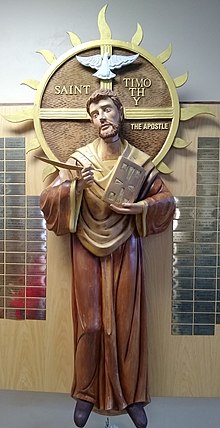
Timothy
| |
|---|---|

Icon of Saint Timothy
| |
| Bishop, Martyr | |
| Born | c. AD 17 Lystra |
| Died | c. AD 97 (aged 79/80) Macedonia |
| Venerated in | Roman Catholic Church Eastern Orthodox Church Oriental Orthodoxy Anglican Communion Lutheran Church |
| Feast | January 22 (Eastern Christianity) January 26 (Roman Catholic Church, Lutheranism) January 24 (some local calendars and pre-1970 General Roman Calendar) 23 Tobi (Coptic Christianity)[1] 27 Tobi (Relocation of Relics - Coptic Christianity)[2] |
| Attributes | pastoral staff[3] |
| Patronage | invoked against stomach and intestinal disorders |
| Julia Livilla | |
|---|---|

Julia Livilla, daughter of Germanicus
| |
| Born | AD 18 Lesbos, Greece |
| Died | late AD 41/early AD 42 (aged 23 or 24) Pandataria |
| Burial |
Pandataria, later the Mausoleum of Augustus
|
| Spouse | Marcus Vinicius |
| Father | Germanicus |
| Mother | Agrippina the Elder |
Decimus Junius Silanus Torquatus (16 AD-64 AD)Tiberius Claudius Drusus (Classical Latin: CLAVDIVS•DRVSVS or CLAVDIVS•DRVSVS•CLAVDII•FILIVS;[1] c. AD 16 – AD 20
Vitellius (/vɪˈtɛliəs/; Latin: Aulus Vitellius Germanicus Augustus;[a] 24 September 15 – 22 December 69 AD)[1] was Roman Emperor for eight months, from 16 April to 22 December 69 AD
 skull
skull
Saint John the Evangelist
falcon | |
|---|---|

Miniature of Saint John from the Grandes Heures of Anne of Brittany (1503–8) by Jean Bourdichon
| |
| Evangelist, Apostle | |
| Born | c. AD 15 |
| Died | c. AD 100[1] |
| Venerated in | Roman Catholic Church Eastern Catholic Churches Oriental Orthodox Churches Eastern Orthodox Church Anglican Communion Aglipayan Church |
| Feast | 27 December (Western Christianity); 8 May and 26 September (Repose) (Eastern Orthodox Church) |
| Attributes | Eagle, Chalice, Scrolls |
| Major works | Gospel of John Epistles of John Revelation |
Ennia Thrasylla,[1] also known as Ennia Naeva or Ennia Naevia,[2][3] Ennia the wife of Macro,[4] Ennia[5] and Eunia (about 15[6] – 38,[
| Yin Lihua | |||||
|---|---|---|---|---|---|
 | |||||
| Born | 5 AD | ||||
| Died | 64 (aged 58–59) | ||||
| Spouse | Emperor Guangwu of Han | ||||
| Issue | Emperor Ming of Han | ||||
| |||||
| Salome | |
|---|---|
| Queen of Chalcis and Armenia Minor | |
.jpg)
Salome with the Head of the Baptist, 1761, Mariano Salvador Maella
| |
| Spouse | Philip the Tetrarch Aristobulus of Chalcis |
| Father | Herod II |
| Mother | Herodias |
| Agrippina the Younger | |
|---|---|
| Augusta | |

A bust at the National Museum, Warsaw
| |
| Empress of the Roman Empire | |
| Reign | 1 January AD 49 – 13 October AD 54 |
| Born | 6 November AD 15 Oppidum Ubiorum (Cologne) |
| Died | 23 March AD 59 (aged 43) Misenum |
| Burial | |
| Spouse | Gnaeus Domitius Ahenobarbus Gaius Sallustius Crispus Passienus Claudius |
| Issue | Nero |
| House | Julio-Claudian Dynasty |
| Father | Germanicus |
| Mother | Agrippina the Elder |
Casperius Aelianus
| |
|---|---|
| Born | 13 AD Unknown |
| Died | 98 AD (aged 84-85) Rome |
| Allegiance | Roman Empire |
| Years of service | 84–98 |
| Rank | Praetorian prefect |
| Commands held | Praetorian Guard |
| Caligula nama terkenal | |||||
|---|---|---|---|---|---|
| Augustus | |||||
 | |||||
| Emperor of the Roman Empire | |||||
| Reign | 16 March 37 – 24 January 41 AD (3 years and 10 months) | ||||
| Predecessor | Tiberius | ||||
| Successor | Claudius | ||||
| Born | Gaius Julius Caesar 31 August 12 AD Antium, Italia | ||||
| Died | 24 January 41 AD (aged 28) Palatine Hill, Rome | ||||
| Burial |
Mausoleum of Augustus, Rome
| ||||
| Spouse | |||||
| Issue |
| ||||
| |||||
| House | Julio-Claudian dynasty | ||||
| Father | Germanicus | ||||
| Mother | Agrippina the Elder | ||||
| Religion | Ancient Roman religion | ||||
https://en.wikipedia.org/wiki/Penitent_thief jesus
Saint John the Apostle[1]
| |
|---|---|

St John by Pieter Paul Rubens (c. 1611)
| |
| Apostle | |
| Born | c. AD 6[2] Bethsaida, Galilee, Roman Empire |
| Died | c. AD 100 (aged 93–94) place unknown,[3][4] probably Ephesus, Roman Empire[5] |
| Venerated in | All Christian denominations which venerate saints Islam (named as one of the disciples of Jesus)[6] |
| Nero Julius Caesar Germanicus | |
|---|---|

Nero Julius Caesar, National Archaeological Museum of Tarragona
| |
| Born | c. AD 6 |
| Died | AD 31 (aged 24-25) Ponza |
| Burial | |
| Spouse | Julia |
| House | Julio-Claudian dynasty |
| Father | Germanicus |
| Mother | Agrippina the Elder |
Marcus Aemilius Lepidus, (6–39)
Gaius Manlius Valens (AD 6 - 96)
Titus Flavius T. f. T. n. Sabinus (d. December 20, AD 69)

Vespasian
| Drusus Caesar | |
|---|---|
 | |
| Born | AD 8 [1] |
| Died | AD 33 (aged 24-25) |
| Burial | |
| Spouse | Aemilia Lepida |
| House | Julio-Claudian Dynasty |
| Father |
|
| Mother | Agrippina the Elder |

Publius Acilius Attianus
| |
|---|---|
| Allegiance | Roman Empire |
| Years of service | ??–119 |
| Rank | Praetorian prefect |
| Commands held | Praetorian Guard |
 https://en.wikipedia.org/wiki/Antoninus_Pius
| Apostle | |
|---|---|
| Born | AD 5 - AD 10 Galilee, Roman Empire |
| Died | 62[citation needed] Patras, Achaia, Roman Empire |
Saint Apollinaris
| |
|---|---|

Portrait Mosaic of Saint Apollinaris at the Basilica of Sant'Apollinare in Classe, Ravenna
| |
| Martyr | |
| Born | Antioch, Syria (now Antakya, modern-day Turkey) |
| Died | Ravenna, Italy |
| Venerated in | Roman Catholic Church, Eastern Orthodox Church |
| Feast | July 20 (Roman Catholic Church) July 23 (pre-1969 General Roman Calendars, Eastern Orthodox Church) |
| Attributes | Sword |
| Patronage | epilepsy; gout; Emilia-Romagna region (Italy) Aachen, Burtscheid, Düsseldorf, Ravenna, Remagen |
| Artabanus III 𐭍𐭐𐭕𐭓 | |
|---|---|
| Arsaces, Great King | |
,_Seleucia_mint.jpg)
Coin of Artabanus III, minted at Seleucia in 80/1.
| |
| Rival Parthian king | |
| Reign | 79/80 – 81 |
| Predecessor | Pacorus II |
| Successor | Pacorus II |
| Died | 81 |
| Father | Vologases I |
| Religion | Zoroastrianism |
 gangga
Artav of Khwarazm
.jpg)
Saint Charbel (died 107 AD)
| Claudia Octavia | |||||
|---|---|---|---|---|---|

Portrait head of Claudia Octavia, National Museum of Rome
| |||||
| Empress of the Roman Empire | |||||
| Reign | 13 October AD 54 – 8 June AD 62 | ||||
| Born | late AD 39/early AD 40 Rome | ||||
| Died | 8 June AD 62 (age c. 22) Pandateria | ||||
| Spouse | Nero | ||||
| |||||
| House | Julio-Claudian Dynasty | ||||
| Father | Claudius | ||||
| Mother | Valeria Messalina | ||||
Domitia was a Roman noble woman who lived in the 1st century. She was the eldest daughter to Roman Consul and General Gnaeus Domitius Corbulo and Cassia Longina, who was daughter of Junia Lepida. Her younger sister was Domitia Longina, a future Roman Empress who would marry the future Roman Emperor Domitian. Her paternal aunt was Roman Empress Milonia Caesonia.
Domitia was born sometime towards the middle of the first century. By 63 ad
Aulus Cornelius Palma Frontonianus (died AD 118
Damis (Greek: Δάμις) was a student and lifelong companion of Apollonius of Tyana, the famous Neopythagorean philosopher and teacher who lived in the early 1st up to the early 2nd century AD.
Claudia Dicaeosyna (Latin: CLAVDIAE DICAEOSYNAE, Claudia in Greek: η Κλαυδία) was a Greek freedwoman who lived in the 1st century. She was a freedwoman to the Roman Emperor Claudius. Her husband was the wealthy, powerful and influential Greek freedman Tiberius Claudius Narcissus. Her name has been found on a Latin inscription accompanying her name with Narcissus’ name. Unfortunately little is known on her life.
Eleazar ben Simon was a Zealot leader 70 ad died
Saint Eleuchadius (died 112)
Saint Eustace and companions
| |
|---|---|

Greek Orthodox icon of St. Eustathios
| |
| Martyrs | |
| Died | 118 AD |
| Venerated in | Anglican Church; Roman Catholic Church; Eastern Orthodox Church; Oriental Orthodoxy |
| Feast | September 20 (Western Christianity, Byzantine Christianity) Thout 22 (Coptic Christianity) |
| Attributes | Christian Martyrdom, bull; crucifix; horn; stag; oven |
| Patronage | against fire; difficult situations; fire prevention; firefighters; hunters; hunting; huntsmen; Madrid; torture victims; trappers |
Pope Saint
Evaristus
| |
|---|---|
| Bishop of Rome | |
.jpg) | |
| Diocese | Rome |
| See | Rome |
| Papacy began | c. 99 |
| Papacy ended | c. 107 |
| Predecessor | Clement I |
| Successor | Alexander I |
| Personal details | |
| Birth name | Evaristus or Aristus |
| Born | 17 April 44 Bethlehem, Judea |
| Died | c. 107 Rome, Roman Empire |
| Sainthood | |
| Feast day | 26 October |
Gaius Vitorius Hosidius Geta (/ˈɡɛtə/) was a Roman who lived in the 1st century and 2nd century

https://en.wikipedia.org/wiki/Tiberius_Claudius_CogidubnusGaius Claudius Severus was a Roman senator who lived in the second half of the 1st century AD and the first half of the 2nd century AD. He originated from a family of Pontian Greek descent. Severus was born and raised in Pompeiopolis, a city in the Roman province of Galatia.
https://en.wikipedia.org/wiki/Pope_Clement_I jangkar
Halafta or Rabbi Halafta was a rabbi who lived in Sepphoris in the Galilee during the late 1st and early 2nd century CE (

Hadrian (/ˈheɪdriən/; Latin: Publius Aelius Hadrianus Augustus; 24 January 76 – 10 July 138)
Halafta or Rabbi Halafta was a rabbi who lived in Sepphoris in the Galilee during the late 1st and early 2nd century CE (
Hadrian (/ˈheɪdriən/; Latin: Publius Aelius Hadrianus Augustus; 24 January 76 – 10 July 138)
| Julia Iotapa | |
|---|---|

Coins of Antiochus IV Epiphanes of Commagene and his wife Julia Iotapa
| |
| Queen of Commagene | |
| Predecessor | Sames II Theosebes Dikaios |
| Successor | Antiochus I Theos of Commagene |
| Spouse | Antiochus IV of Commagene |
| Issue | Prince Gaius Prince Callinicus Iotapa, Queen of Cetis |
| Dynasty | Orontid Dynasty |
| Father | Antiochus III of Commagene |
| Mother | Iotapa (spouse of Antiochus III) |
Julia Livia (c.7–43 AD)
| Lucius Julius Gainius Fabius Agrippa | |
|---|---|
| gymnasiarch, Pontifex Maximus | |
| Born | 1st c. |
| Died | 2nd c. |
| Dynasty | Herodian dynasty |
| Father | Gaius Julius Agrippa |
| Mother | Fabia 109 ad |
Titus Julius Maximus Manlianus was a Roman senator active in the early second century who held a number of offices in the emperor's service. He was suffect consul for the nundinium July–September 112 as the colleague of Publius Stertinius Quartus.[1] His complete name was Titus Julius Maximus Manlianus Brocchus Servilianus Aulus Quadronius [Verus?] Lucius Servilius Vatia Cassius Cam[ars].[2]
Juvenal
| |
|---|---|
 | |
| Born | 1st century AD Aquinum (modern Aquino) |
| Died | 2nd century AD |
| Occupation | Poet |
| Nationality | Roman |
| Genre | Roman Satire topeng |
Saint Mark the Evangelist
| |
|---|---|

Miniature of Saint Mark from the Grandes Heures of Anne of Brittany (1503–1508) by Jean Bourdichon
| |
| Evangelist, Martyr | |
| Born | 5 AD Cyrene, Pentapolis of North Africa, according to Coptic tradition[1] |
| Died | 25 April 68 (aged 62–63) Cyrene, Libya, Pentapolis (North Africa), now Shahhat, Jabal al Akhdar, Libya |
| Venerated in | All Christian churches that venerate saints |
| Major shrine | St Mark's Basilica |
| Feast |
|
| Patronage | Barristers, Venice, Egypt, Mainar |
| Major works | Gospel of Mark |
Martial
| |
|---|---|
 | |
| Born | March, between 38 and 41 AD Augusta Bilbilis (now Calatayud, Spain) |
| Died | Between 102 and 104 AD Rome |
| Occupation | Author |
| Nationality | Roman |
| Genre | Satire |
| Notable works | Epigrams |
ikanValeria Messalina[1] (Latin pronunciation: [waˈlɛrɪ.a mɛssaːˈliːna]; c. 17/20–48)
Melankomas, or Melancomas (Greek: Μελανκόμας or Μελαγκόμας), was an Ancient Greek[1] boxer from Caria and victor in the 207th Olympiad (AD 49)https://en.wikipedia.org/wiki/Saint_Matthias Locusta or Lucusta (died 69)
"Locusta testing in Nero's presence the poison prepared for Britannicus", painting by Joseph-Noël Sylvestre, 1876
Lucius Licinius Sura was an influential Roman Senator from Tarraco, Hispania, a close friend of the Emperor Trajan and three times consul, in a period when three consulates were very rare for non-members of the Imperial family, in 102 and 107
Libo Rupilius Frugi (died 101),
Onkelos (Hebrew: אֻנְקְלוֹס ’unqəlōs), possibly identical to Aquila of Sinope, was a Roman national who converted to Judaism in Tannaic times (c. 35–120 CE). He is considered to be the author of the famous Targum Onkelos (c. 110 CE).https://en.wikipedia.org/wiki/Lucius_Neratius_MarcellusNeophytus was a freedman of the Roman emperor Nero. He was one of the four companions on the emperor's late journey in June 68, with Epaphroditos, Phaon and Sporus, and was with him at his death.Nehunya ben HaKanah[pronunciation?] (Hebrew: נחוניה בן הקנה) was a tanna of the 1st and 2nd centuries.
.jpg) Locusta or Lucusta (died 69)
Locusta or Lucusta (died 69)Libo Rupilius Frugi (died 101),
Manius Laberius Maximus was a Roman senator and general, who was active during the reign of Domitian and Trajan. He was twice consul: the first time he was suffect consul in the nundinium of September–December 89 as the colleague of Aulus Vicirius Proculus;[1] the second time as ordinary consul in 103 as colleague to the Emperor Trajan.[2]
He was a member of a family that originated in Lanuvium, where his presumed grandfather, Lucius Laberius Maximus, was a magistrate. His father, also Lucius Laberius Maximus, was a high equestrian official who was successively praefectus annonae, Prefect of Egypt and Praetorian prefect in the years 80-84. His mother is unknown. Lucius' achievements enabled his son Manius to be adlected to the senatorial order.
Lucius Mindius is an unattested Roman Aristocrat who lived in the Roman Empire in the second half of the 1st century. Mindius was a Roman Senator of Consular rank. Little is known on his origins. In 84, Mindius married a noblewoman called Salonina Matidia as her second husband. She was the niece of future Roman Emperor Trajan. Matidia was previously widowed from her first marriage to suffect consul Lucius Vibius Sabinus, who left Matidia a daughter Vibia Sabina.
| Mithridates III | |
|---|---|

Coinage of Tiberius Julius Mithridates
| |
| King of the Bosporan Kingdom | |
| Reign | 38–45 AD |
| Predecessor | Aspurgus |
| Successor | Cotys I |
| Born | Bosporan Kingdom |
| Died | 68 AD Unknown |
| House | Mithridatid |
| Father | Aspurgus |
| Mother | Gepaepyris |
| Religion | Greek Polytheism |
| Pacorus II huruf a | |
|---|---|
| King of Kings | |
,_Seleucia_mint.jpg) | |
| King of the Parthian Empire | |
| Reign | 78 – 110 |
| Predecessor | Vologases I (predecessor) Vologases II (rival king) Artabanus III (rival king) |
| Successor | Vologases III (successor) Osroes I (rival king) |
| Born | c. 61/2 |
| Died | 110 (aged 48 or 49) |
| Issue | Vologases III Axidares Parthamasiris Meredates |
| House | Arsacid dynasty |
| Father | Vologases I |
| Religion | Zoroastrianism |
Phaon was an imperial freedman and confidant of the Roman emperor Nero.[1][2] He, with Epaphroditos, Neophytus and Sporus, took Nero to his own villa in the suburban area of Rome where the emperor would commit suicide subsequently.
Pope Saint
Pius I
| |
|---|---|
| Bishop of Rome | |
 | |
| See | Holy See |
| Papacy began | c. 140 |
| Papacy ended | c. 155 |
| Predecessor | Hyginus |
| Successor | Anicetus |
| Pompeia Plotina | |||||||||
|---|---|---|---|---|---|---|---|---|---|
| Augusta | |||||||||

Pompeia Plotina coin, celebrating the Fides on the reverse.
| |||||||||
| Empress of the Roman Empire | |||||||||
| Tenure | 98–117 | ||||||||
| Predecessor | Domitia Longina | ||||||||
| Successor | Vibia Sabina | ||||||||
| Born | Tejada la Vieja (Hispania) | ||||||||
| Died | 121/122 | ||||||||
| Spouse | Emperor Trajan | ||||||||
| |||||||||
| Father | Lucius Pompeius | ||||||||
| Mother | Plotia | ||||||||
Saint Prosdocimus
| |
|---|---|

Saint Prosdocimus, from the San Luca Altarpiece
| |
| Died | c. 100 AD |
| Venerated in | Roman Catholic Church |
| Major shrine | Santa Giustina Basilica, Padua |
| Feast | November 7 |
| Attributes | Depicted as a bishop holding a jar. Sometimes he is shown with Saint Justina of Padua to whom he was a spiritual father according to a medieval source. He may be depicted wearing a Benedictine habit. |
| Patronage | Padua |
Saint Quirinus of Neuss
| |
|---|---|

Saint Quirinus and Saint Balbina
| |
| Died | 30 March 116 Rome, Italy |
| Venerated in | Roman Catholic Church, Eastern Orthodox Church |
| Major shrine | Neuss |
| Feast | April 30; March 30[1] |
| Attributes | military attire; knight with lance, sword, hawk; banner or sign with nine balls[2] |
| Patronage | Neuss; Correggio, Italy; invoked against the bubonic plague, smallpox, and gout; afflictions associated with the legs, feet, ears; paralysis; ulcers; Goiter; skin conditions; diseases affecting cattle and horses;[1] patron saint of animals;[3] patron saint of knights, soldiers, and horsemen[4] |
| Sanatruk | |
|---|---|

Sanatruk and Avde after three days in snow storm
| |
| King of Armenia | |
| Reign | 88–110 AD |
| Predecessor | Tiridates I |
| Successor | Axidares |
| House | Arsacid |
St. Stephen
| |
|---|---|

Saint Stephan by Carlo Crivelli
 | |
| Deacon and protomartyr | |
| Born | AD 5 |
| Died | AD 34 (aged 29) Jerusalem, Judaea, Roman Empire |
| Venerated in | Roman Catholic Church Eastern Catholic Churches Eastern Orthodox Church Oriental Orthodox Churches Assyrian Church of the East Anglican Communion |
| Feast | 25 December (Armenian Christianity) 26 December (Western) 27 December (Eastern) Tobi 1 (Coptic Christianity) |
| Attributes | Red Martyr, stones, dalmatic, censer, miniature church, Gospel Book, martyr's palm frond. In Eastern Christianity he often wears an orarion |
| Patronage | Altar Servers [1];Acoma Indian Pueblo; casket makers; Cetona, Italy; deacons; headaches; horses; Kessel, Belgium; masons; Owensboro, Kentucky; Passau, Germany; Kigali, Rwanda; Dodoma, Tanzania; Serbia; Republic of Srpska; Prato, Italy [2] |
Saint Thecla
| |
|---|---|
 | |
| Virgin and Martyr | |
| Born | 30 AD Iconium, modern-day Konya, Turkey |
| Died | 1st century AD |
| Venerated in | Oriental Orthodoxy Roman Catholic Church Eastern Orthodox Churches The Episcopal Church |
| Feast | September 23 (Roman Catholic Church, The Episcopal Church) September 24 (Eastern Orthodox Churches) Thout 23 (Coptic Christianity)[1] |
Thaddeus of Edessa
Saint Addai ܡܪܝ ܐܕܝ api | |
|---|---|
 | |
| Born | c. 1st century AD |
| Died | c. 2nd century AD |
| Venerated in | Assyrian Church of the East Roman Catholic Church Chaldean Catholic Church Syro-Malabar Catholic Church Syriac Orthodox Church Eastern Orthodox Church Oriental Orthodox Church Church of Caucasian Albania |
| Feast | August 5 |
Saint Thomas the Apostle
| |
|---|---|

Saint Thomas the Apostle, Diego Velázquez 1619
| |
| Apostle, preacher, Christian martyr | |
| Born | 1st century AD Galilee, Roman Empire (present-day Israel) |
| Died | 3 July AD 72 Parangimalai, Chennai, Chola Empire (present-day St. Thomas Mount, Tamil Nadu, India)[1] |
| Venerated in | Saint Thomas Christians and all Christian Churches that venerate Saints |
| Canonized | Pre-congregation |
| Major shrine | St. Thomas Cathedral Basilica in Chennai, India Basilica of St. Thomas the Apostle in Ortona, Italy |
| Feast |
|
| Attributes | The Twin, placing his finger in the side of Christ, spear (means of his Christian martyrdom), square (his profession, a builder) |
| Patronage | India, Saint Thomas Christians, Sri Lanka, and Pula in Croatia |
| Tiridates I | |
|---|---|

17th-century statue by Antoine André in the gardens of the Palace of Versailles, modeled after one of the Farnese Captives and said to depict either Tiridates or a Barbarian prisoner[1]
| |
| King of Armenia[2] | |
| Reign | 52–58 62–88 |
| Coronation | 66, in Rome by Nero |
| Predecessor | Tigranes |
| Successor | Sanatruk |
| Born | 28 |
| Died | 88 |
| Issue | Died without legitimate issue |
| House | Arsacid |
| Father | Vonones II of Parthia (51) |
| Religion | Zoroastrianism[3][4][5] |
Titus
| |
|---|---|
.jpg) | |
| Bishop and Martyr | |
| Born | 1st century AD |
| Died | 96 or 107 AD Gortyn, Crete |
| Venerated in | Catholic Church Eastern Orthodox Church Eastern Catholic Churches Lutheranism Anglican Communion |
| Canonized | Pre-Congregation |
| Major shrine | Heraklion, Crete |
| Feast | August 25 (Eastern Orthodox Liturgical Calendar) January 26 (General Roman Calendar) |
| Patronage | Crete |
Saint Veronica
| |
|---|---|

Saint Veronica, by Hans Memling, c. 1470.
| |
| Born | 1st century AD Caesarea Philippi or Jerusalem, Judea |
| Venerated in | |
| Canonized | Pre-Congregation |
| Feast | July 12[1] |
| Attributes | Cloth that bears the image of Christ's face |
| Patronage | images; laundry workers, pictures, photos, photographers,;[2] Santa Veronica, San Pablo City, Laguna |
Lucius Junius Moderatus Columella
| |
|---|---|

Portrait of Lucius Junius Moderatus Columella from Jean de Tournes, Insignium aliquot virorum icones, Lyon, 1559
| |
| Born | 4 AD Gades, Hispania Baetica |
| Died | c. 70 AD |
| Citizenship | Roman |
| Notable works | De Re Rustica |

Geng Yan (Chinese: 耿弇; 3–58 AD) was a Chinese general of the Eastern Han Dynasty.
Tiberius Claudius Balbillus Modestus (AD 3-79),
Ban Biao (Chinese: 班彪; pinyin: Bān Biāo; Wade–Giles: Pan1 Piao1, 3–54 CE),
Zhao Xi (simplified Chinese: 赵憙; traditional Chinese: 趙憙; pinyin: Zhào Xǐ; 4-80 CE)
King Daemusin of Goguryeo (4–44, r. 18–44)
Scribonius Largus (c. 1-c. 50)Izates II (Ἰζάτης), son of Monobaz (Μονόβαζος), or Izates bar Monobaz (also known as Izaates, Persian: ایزد or Hebrew: זוטוס בן מונבז) (ca. 1-55 CE). Izates was a king of the Parthian client kingdom of Adiabene who became a proselyte to Judaism. He was the son of Queen Helena of Adiabene and King Monobazus I of Adiabene. Queen Helena was also said to be the wife of King Abgarus of Edessa and thus the queen of Edessa too.[1]
Sextus Afranius Burrus (born AD 1 in Vasio, Gallia Narbonensis;[1] died AD 62)
Deng Yu
鄧禹 | |
|---|---|
| Born | 2 CE |
| Died | 58 CE (aged 56) |
| Other names | Zhonghua (仲華) |
Quinctilius Varus
| |
|---|---|

Quinctilius Varus from Guillaume Rouillé's Promptuarii Iconum Insigniorum
| |
| Born | 4 AD |
| Died | 27 AD (aged 22-23) |
Saint Habib the Carpenter
| |
|---|---|
| Martyr | |
| Born | c. 5 C.E. Antioch |
| Died | c. 30-40 C.E. Antioch |
| Venerated in | Islam |
| Major shrine | Mosque and Tomb of Habib Al-Najjar, Antioch |
| Influences | Jesus |
King Daemusin of Goguryeo (4–44, r. 18–44)
Scribonius Largus (c. 1-c. 50)Izates II (Ἰζάτης), son of Monobaz (Μονόβαζος), or Izates bar Monobaz (also known as Izaates, Persian: ایزد or Hebrew: זוטוס בן מונבז) (ca. 1-55 CE). Izates was a king of the Parthian client kingdom of Adiabene who became a proselyte to Judaism. He was the son of Queen Helena of Adiabene and King Monobazus I of Adiabene. Queen Helena was also said to be the wife of King Abgarus of Edessa and thus the queen of Edessa too.[1]
Sextus Afranius Burrus (born AD 1 in Vasio, Gallia Narbonensis;[1] died AD 62)
jin Vologases II was a Parthian prince who competed against his brother Pacorus II (r. 78–110) for the Parthian crown from 78, until his defeat in 80.[1][2]
 Vologases II was a Parthian prince who competed against his brother Pacorus II (r. 78–110) for the Parthian crown from 78, until his defeat in 80.[1][2]
| Trajan ular | |||||||||
|---|---|---|---|---|---|---|---|---|---|
| Augustus | |||||||||

Marble bust of Trajan
| |||||||||
| Emperor of the Roman Empire | |||||||||
| Reign | 27 January 98 – 8 August 117 | ||||||||
| Predecessor | Nerva | ||||||||
| Successor | Hadrian | ||||||||
| Born | 18 September 53 Italica, Hispania Baetica, now Province of Seville, Andalusia, Spain | ||||||||
| Died | 8 August 117 (aged 63) Selinus, Cilicia, now Gazipaşa, Antalya Province, Turkey | ||||||||
| Burial | |||||||||
| Wife | |||||||||
| Issue | Hadrian (adoptive) | ||||||||
| |||||||||
| Dynasty | Nerva–Antonine | ||||||||
| Father |
| ||||||||
| Mother | Marcia | ||||||||
Sporus was a young boy whom the Roman Emperor Nero supposedly favored, had castrated, and married.
Rabel II Soter (ar-Rabil) was the last ruler of the Nabataean Kingdom, ruling from 70 to 106.[Quintus Sosius Senecio (fl. 1st century) was a Roman senator who was favored by the emperors Domitian and Trajan. As a result of this relationship, he was twice ordinary consul, an unusual and prestigious honor: first in 99, with Aulus Cornelius Palma Frontonianus as his colleague; and again in 107 as the colleague of Lucius Licinius Sura, who was himself consul for the third time.
babi buddha homo patkaySoranus of Ephesus (Greek: Σωρανός ὁ Ἑφέσιος; fl. 1st/2nd century AD)

Saint Paul the Apostle
| |
|---|---|

Saint Paul, by Bartolomeo Montagna
| |
| Apostle to the Gentiles Martyr | |
| Born | c. 5 AD[1] Tarsus, Cilicia, Roman Empire[2] |
| Died | c. 64 or c. 67 AD (aged 61–62 or 64–65)[3][4][5][6] Rome, Roman Empire[3][4] |
| Venerated in | All Christian denominations that venerate saints |
| Canonized | Pre-Congregation |
| Feast |
|
| Attributes | Christian martyrdom, sword, book |
| Patronage | Missionaries, theologians, evangelists, and Gentile Christians |
Paul the Apostle
| |
|---|---|
| Education | School of Gamaliel [8] |
| Occupation | Christian missionary |
| Years active | c. 5 AD – c. 64 or c. 67 AD |
Notable work
| Epistle to the Romans Epistle to the Galatians 1st Epistle to the Corinthians 2nd Epistle to the Corinthians 1st Epistle to the Thessalonians Epistle to Philemon Epistle to the Philippians |
| Theological work | |
| Era | Apostolic Age |
| Language | Latin, Greek and Hebrew |
| Tradition or movement | Paulinism, Trinitarianism |
| Main interests | Torah, Eschatology, Soteriology, Christology, Ecclesiology |
| Notable ideas | Pauline privilege, Law of Christ, Holy Spirit, unknown God, Divinity of Jesus, thorn in the flesh, Pauline mysticism, biblical inspiration, supersessionism, non-circumcision, salvation |


Comments
Post a Comment